

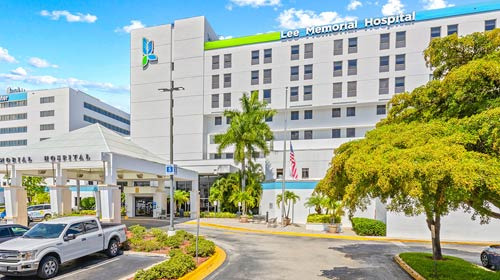
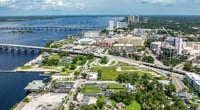
Fort Myers is a city with a large retiree population, making hospitals very important. When you're younger, you might think having an Urgent Care nearby is enough, but after 60, you need to consider treatments for heart issues, strokes, cancer, and joint problems. To understand healthcare in Fort Myers, you first need to know about Lee Health.
Lee Health is a nonprofit healthcare system that started in 1916 and now has over 2 million patient interactions annually, with more than 17,000 employees. It operates hospitals, emergency rooms, specialty clinics, and rehabilitation facilities throughout Fort Myers and Lee County, making it the center of healthcare in the area.
The oldest facility is Lee Memorial Hospital. Located on Cleveland Avenue, it has been serving Fort Myers for over 100 years. Currently, it has 336 acute care beds and offers services in emergency medicine, general surgery, neurology, neurosurgery, and vascular surgery. It is designated as a Chest Pain Center and is a Primary Stroke Center capable of treating strokes. This is a hospital that many residents in downtown Fort Myers encounter in emergencies.
However, for major accidents or severe emergencies, remember the name Gulf Coast Medical Center. It is located on Doctors Way in Fort Myers, not Estero, and is easily accessible from I-75 and the airport in South Fort Myers.
This hospital is the largest in Lee Health, with 699 licensed beds, including 70 emergency room beds and 22 operating rooms. Most importantly, it has a Level II Trauma Center, which treats serious injuries from traffic accidents or falls, and is the only Level II Trauma Center between Sarasota and Miami.
It is also an important hospital for stroke patients. It operates as a Comprehensive Stroke Center with a Neuroscience Institute, providing neurosurgery and interventional treatments. It also offers orthopedic, cancer, heart, and vascular surgery services. In simple terms, it plays a central role in handling major emergencies that local hospitals may struggle with.
If you are a retiree concerned about heart disease, it's good to know about HealthPark Medical Center. Located in South Fort Myers, it has 326 beds and is home to Lee Health's main heart program, also serving as a Chest Pain Center. Right next door is Golisano Children's Hospital, which is worth remembering if you have children or grandchildren living with you.
If you live in Cape Coral, there is Cape Coral Hospital, which has 303 beds and operates a 24-hour emergency room. For those in Estero or Bonita Springs, Lee Health Coconut Point is a convenient option. This facility offers 24-hour emergency care, as well as primary care, specialists, imaging, outpatient surgery, and a pharmacy all in one place.
Heading south, there is Naples Comprehensive Health, commonly referred to as NCH, another major healthcare system. It is an important option for residents of Naples and Collier County, and if you live in southern Fort Myers or Bonita Springs, you might consider it based on proximity.
In the future, healthcare facilities will expand even more. Lee Health is constructing a new Lee Health Fort Myers campus on a 53-acre site near Colonial Boulevard, aiming for phase one to open in 2028. Initially, it plans to start with a hospital of about 550,000 square feet featuring 260 private patient rooms.
However, just because a hospital is good doesn't mean you can go there without consideration. In the U.S., insurance networks are very important. Even within Lee Health, the availability of doctors and facilities can vary depending on your Medicare Advantage or employer insurance plan. If you're retiring and moving to Fort Myers, it's wise to check whether your primary care physician, nearby emergency room, and specialists in cardiology, oncology, and orthopedics are covered by your insurance before you settle on a home. It's much easier to have a healthcare plan in mind when you're healthy than to find a hospital after an emergency arises.
 PowerPuff
 MintStar
 NightMoon

 Diana Blues |

 Dragon Lee |
 Churros Train Conductor |

 Tora Tora |

 neroyo |

 Way to easy |
 Florida Gario |
 seouljung |
 hot chocolate |
 SODA MAKER |
 james kim |
 All About Cars |
 lomira98 |
 calmbridge |
 oneonly |
 Brighto |
 racuse |
 Total Beauty |
 crystal |
 Good Hotels |
 raspberry7 |
 Que que |
 Well Done Sir |
 dance dance |
 sweetpepe |
 vegas mom |
 Olivia's Blog |
 cathywhite |