
Do you remember the election in November 2024? Kentucky residents rejected Constitutional Amendment 2, known as the school choice amendment, by a significant margin.
According to official counts, 64.79% opposed it while 35.21% supported it. There was not a single county among the 120 where support exceeded opposition.
However, this year, news emerged that Kentucky decided to participate in the Federal Scholarship Tax Credit program. At first glance, one might wonder, "Why pursue something that residents rejected?"
To put it simply, the structure is completely different. This program is funded by federal tax credits, not state budget funds.
First, let's outline the timeline. The state House passed House Bill 1, and by the end of February, the state Senate approved it with a vote of 33 to 5.
Governor Beshear exercised his veto on March 13, stating that public funds should only be used for public education.
However, on March 16, the House overturned the veto with a vote of 77 to 14, and the next day, the Senate followed suit with a vote of 31 to 5. Given the Republican supermajority, this outcome was expected.
The roots of this program lie in the One Big Beautiful Bill Act, which passed through Congress last year. The newly established Federal Scholarship Tax Credit, abbreviated as FSTC, is the key component.
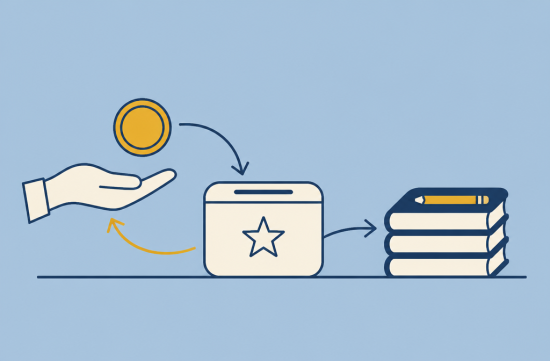
Here's how it works: When an individual donates cash to a scholarship granting organization (SGO), they receive an immediate deduction from their federal income tax.
The limit is up to $1,700 per person. For couples filing jointly, each can claim $1,700, totaling a maximum of $3,400, according to IRS guidelines.
It's important to note that this is a credit, not a deduction. Paying $1,700 reduces your tax bill by $1,700 in a dollar-for-dollar structure.
However, it is not refundable. If your tax liability is less than that amount, you won't receive a refund for the difference.
Additionally, you cannot claim a charitable donation deduction for the same funds. It's best to avoid trying to double-dip on benefits.
The program starts in the 2027 tax year. Donating now won't reduce your taxes for this year, so don't get confused.
From a parent's perspective, the more pressing question is about the recipients. The scholarships are available to K-12 students who qualify to attend public schools.
There are also income criteria. Household income must not exceed 300% of the area median income (AMGI), according to organizations like EdChoice.
300% is a more generous threshold than one might think. This means that not only low-income families but also many middle-class households could qualify.
Eligible expenses are not limited to private school tuition. According to Kentucky reports, tutoring, educational materials, and internet costs may also be included.
This means that even children attending public schools could benefit from tutoring or educational materials. I believe this is the biggest difference from the 2024 amendment.
Within Kentucky, the law mandates that the Secretary of State's office oversee the program. This was one of the reasons the governor opposed it.
It's also fair to address the opposing arguments. Democrats criticize this as a first step toward supporting private and charter schools.
Kentucky has precedent for this. In December 2022, the state Supreme Court unanimously ruled that the state tax credit-based scholarship program (EOA) was unconstitutional.
On the other hand, the House Speaker countered that not a single dollar of state funds would be at risk. This time, since it involves federal taxes, it avoids the controversy of state constitutional Article 184.
From a numerical standpoint, I lean toward supporting it. What residents rejected was using state funds for private education, not the opportunity to receive federal tax credits.
According to the Heritage Foundation, Kentucky became the 28th state to participate in this program. With over half of the states involved, if we opt out, it means that the federal taxes paid by Kentuckians would benefit children in other states.
Honestly, I see little reason not to participate. Of course, we'll need to keep an eye on whether the program operates transparently.
So, what should parents do now? First, check if your household income falls within 300% of the median income for your county.
Next, gather the list of approved SGOs. Each organization may have different eligibility criteria and funding amounts, and additional IRS guidance is expected to be released.
If you're considering donating, plan ahead for your 2027 tax strategy. Tax situations vary by household, so it's wise to consult with a CPA.
If it were me, I would focus on gathering information now and act as soon as the list of organizations and application timelines are released. In situations like this, the early bird gets the worm.
 CocoDreams
 Forest 98








 Texas Migration Story |

 seadoll |

 Round and Round Children's Song Kingdom |

 new sugar |

 Way to easy |

 skyblue |

 yolanda78 |

 Cahty Chung |

 US Regional Information Blog |

 ssome |
 skykong |
 Shining Our Own World |
 gardener 007 |
 golfmaster |
 Nanana Nanana Nanana |
 Who's watching? |
 endone |
 RockStar |
 Casa Mia |
 You Only Live Once |
 Hardworking CPA |
 Joyce 77 |
 Runner Kim |
 My Town My Way Blog |
 My Miami Stories |
 Entip |
 Tony Park |
 Jean Claude Bundang Blog |
 DJ DC BLOG |