
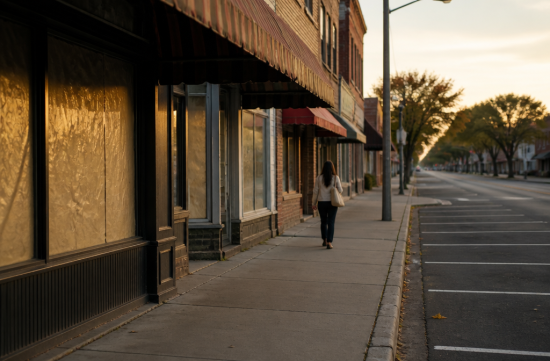
Last month, while passing through a small town in southern Georgia, I parked in front of a closed pharmacy. The sign was still hanging, but the inside was empty, and the hardware store next door had its shutters down as well. In a town of just over two thousand people, the only remaining store was a convenience store. It used to be a place where people gathered every Saturday morning to greet each other, but now there wasn't a single car in the parking lot.
After working in healthcare for a long time, this kind of scene doesn't feel like someone else's story. Since 2010, more than 150 rural hospitals have closed across the United States. When an emergency room disappears, young families with children are often the first to decide to leave that town. If the nearest emergency room is a forty-minute drive away, wouldn't anyone seriously consider moving? I know that this is a reality faced daily, beyond just statistics.
However, this isn't just a problem of one hospital or one store. Recent data shows that about half of rural counties in the U.S. have seen a population decline in recent years. During the same period, only about one in four urban areas experienced a population drop. Looking into the causes, it appears that natural decrease, where deaths outnumber births, plays a significant role. Young people leave, and those who remain age, leading to a paradox where the need for hospitals increases, but hospitals are disappearing.
The story of factories closing and jobs decreasing due to agricultural mechanization is already old news. When a big box store opens next to a highway, several downtown shops quietly close, a pattern seen in many towns. Yet, I believe this issue cannot be explained solely by economic logic. Conservatives talk about excessive regulations and tax burdens, while progressives discuss corporate monopolies and investment imbalances. From what I see on the ground, both sides have a point, but the causes are intertwined in multiple layers.
Interestingly, there are small towns that have survived, or even thrived, amidst this situation. A small city in Washington with a population of just over four hundred and a town in Iowa reportedly have almost no vacant buildings on their main streets. An old factory town in Montana has seen its downtown revitalized in recent years. The common thread among these towns is surprisingly simple: they preserved their unique identity. They repaired old buildings instead of tearing them down and supported locally owned shops instead of chains. They didn't skimp on funding for schools. Ultimately, whether a young couple decides to move there hinges on the strength of the school district.
In the end, the power to retain people comes not from flashy policies like attracting large factories or tax breaks, but from basic necessities like schools and hospitals where children can be safely cared for, and walkable shopping areas. In 2023 alone, over $5.68 billion has been reinvested in local communities through main street revitalization projects, so it's clear that small towns can't afford to be complacent. What is needed even more than money are people who believe that this town is worth preserving.
I believe that rather than framing the issue of a town's survival in ideological terms, we should consider whether the community still has the power to decide what it wants to protect. When a pharmacy or a hospital closes, it's not just a matter of one less number; it's the moment someone decides to leave that town for the next generation. As someone who has observed this for a long time, I want to emphasize that this is a human issue before it is a political one.
 330iforever
 GlowLaundry




 Korea Tiger News |
 Alpha and Omega World |
 Florida King |
 AH LALA |
 Victory 1988 |
 Macon Boy |



 sweetfox |
  ceporta |
  H Leader |
  My tracks |
  Yes Dorian |
  novent |
  calviro |
  Enjoying Samba at Home |
  Once in a Lifetime |
  novapixel |
  Banana |
  rouge88 |
  toffee |
  King County |
  DREAM BIG |
  Good News Good Thoughts |
  peelynew |
  Helpful Life Stories |
  chicpo |