
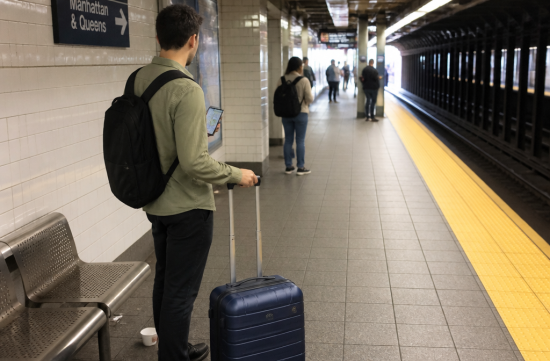
While planning a trip with friends to attend an away game in another city, I started by searching for rental cars, but after seeing the estimate, I wondered if I needed to rethink my plans.
I thought the phrase stating that economy cars start at $45 a day was reasonable, but the final amount turned out to be much higher than that.
Upon further research, I found that the average daily rental rate for cars in the U.S. in 2026 is between $55 and $95.
During the summer peak season, the average jumps to $82.90 a day, which is over a 13 percent increase compared to the same time last year.
In winter, rates are relatively lower, averaging around $62.25, but it's still not a trivial amount.
And that's not all; taxes and various fees can add an additional 15 to 40 percent on top of the displayed price.
If you pick up at the airport, you can expect an extra 20 to 30 percent charge, but you can avoid this markup by picking up at a downtown location, so it's worth remembering.
When I tried to register additional drivers since there were several of us, I found out that the extra driver registration fee adds $13 a day, so I scrapped that plan.
If you're under 25, there can be a young driver fee ranging from $15 to $40 a day, so it's important to consider the ages of your group.
Speaking of insurance, the full coverage insurance you sign up for at the counter, commonly known as CDW, can also be quite pricey.
The cost varies widely, ranging from $15 to $45 a day, with an average of about $30.
There's a significant difference between companies; some charge $31 a day, while third-party insurers like Allianz may only charge $13, which is more than double the difference.
Even if you add $30 for insurance to the $45 for an economy car, you're already at $75, and with taxes, it can reach around $90 a day.
Gas is an additional cost; this September, the national average gas price rose to $4.47 per gallon, the highest level for September on record, making long-distance travel even more burdensome.
At around $90 a day for a week, you're looking at nearly $630, and that doesn't even include gas and taxes yet.
Even for a short four-day trip, you could easily spend over $300 just on the car rental.
However, most people think that's where it ends, but renting a car also incurs parking fees at your accommodation, which is another variable.
In major cities, hotel parking fees typically range from $25 to $35 a day, and depending on the location, it can go up to $70.
Especially in New York, overnight parking can exceed $100, which is quite shocking.
Parking near stadiums often incurs additional charges, so if you're on a sports trip, this is another cost to consider, and at this point, the additional costs can be more daunting than the rental car fees themselves.
On the other hand, public transportation is much simpler to calculate; in New York, subway and bus fares are around $2.90 to $3, with a 7-day unlimited pass costing $34 and a monthly pass only $132, making it easy to get around for a week with just one pass.
LA is even cheaper, with single fares ranging from $1.75 to $2, and a day pass for unlimited use costing $7, while a monthly pass is around $100, which is less than a tenth of the daily rental car rate.
Honestly, when I first compared these numbers side by side, I felt a bit deflated.
Getting an Uber or Lyft from the airport to your accommodation typically costs between $27 and $33, and in distant cities like New York, it can go up to $42, but that's still less than the cost of a weekly public transportation pass.
So, it seemed most practical to use rideshare just for the airport and rely on public transportation for the rest of the trip.
Of course, this only applies in cities with dense public transport networks; in national parks or small towns with sparse routes, not having a car can leave you stranded.
These days, I check the public transportation routes before deciding on accommodations when planning a trip.
Considering the stress of searching for parking in an unfamiliar city and driving on unfamiliar roads, it's not just about the money.
If there are many people and you can share a ride in one car, renting might actually be cheaper, so this is something to consider based on the size of your group.
If four of us share a $90 car, it comes out to just over $22 per person, which could be similar to or even cheaper than the daily public transportation fare in some cities.
Ultimately, there's no one-size-fits-all answer; whether to rent a car or use public transportation depends on your travel itinerary.
However, for city-centric trips, I now tend to favor a combination of public transportation and rideshare over renting a car.
 MacaronJoyfl








 Silent Sea |
 Pointy |
 Idaho's Sumi's House |
 holy cheese |
 Michigan Enthusiast |
 calvix |
 Rynex |
 Missouri Kings News Information |
 Kansas City Representative Singer |
 novent |
  calviro |
  Enjoying Samba at Home |
  Once in a Lifetime |
  novapixel |
  Korea Tiger News |
  Banana |
  rouge88 |
  toffee |
  King County |
  DREAM BIG |
  Good News Good Thoughts |
  peelynew |
  Helpful Life Stories |
  chicpo |
  monorama tone |
  Kentucky Fried Chicken |
  bloomberg |
  morninpo |
  my town K blog |