
When you meet people who have saving habits, it's interesting to see that their patterns often overlap. Rather than focusing on what they save, looking at what they completely avoid spending on reveals their consumption habits much more clearly.
Among these, there are three types of spending that frequently come up: subscription services, extended warranties, and the tendency to increase spending in line with income.
First, let's look at subscription services. As you add accounts for one streaming service, one cloud service, and one health app, there comes a moment when your credit card statement starts to look unfamiliar.
According to research, American adults spend an average of $219 a month on subscription services, while they believe they only spend about $86. This indicates a discrepancy of more than 2.5 times between perceived and actual spending.
This level of misunderstanding is significant. About 42 percent of respondents reported that they had subscriptions they didn't even realize they were paying for.
Additionally, 70 percent had experiences where they missed the end date of a free trial and automatically transitioned to a paid subscription. Research also shows that the average amount lost in this way was about $34.
People who have saving habits are definitely different at this point. They don't avoid subscriptions entirely; instead, they review their credit card statements quarterly and keep only what they actually use.
Interestingly, these individuals do pay for services like Netflix or YouTube Premium without hesitation. However, they absolutely do not tolerate subscriptions they might use again someday or gym memberships that charge automatically without being used.
The second type is extended warranties. This is the product that cashiers always ask about when purchasing a new refrigerator, laptop, or washing machine.
In a survey of people who purchased extended warranties for cars, it was found that 55 percent of buyers never used the warranty even once.
The same goes for electronics. Among laptop buyers who purchased extended warranties, only 15 percent of general PC buyers and 7 percent of Apple product buyers actually used them for repairs.
From the numbers, it seems that the sellers of warranties benefit while the buyers incur losses. This is typical for insurance-type products, but when the probability is this low, it makes sense not to buy them.
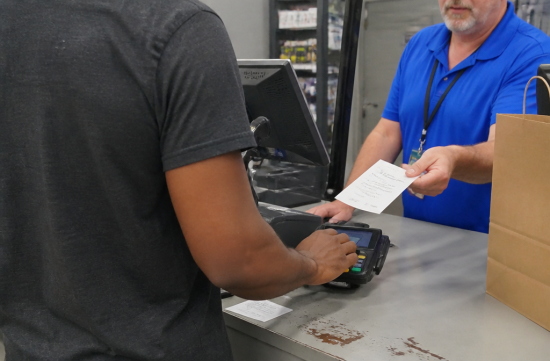
People who have saving habits do not show any change in expression when that question comes up at the register. They almost reflexively say, "No, thank you."
Instead, what they do is set aside a fixed amount of money each month in an emergency fund, and if something breaks, they use that money to cover it. Statistically, most years, that money remains untouched.
The third type is actually the most concerning. This is the phenomenon where spending increases in direct proportion to income.
When salaries rise or people change jobs, it often leads to changing cars, upgrading homes, and increasing dining out frequency, which seems quite natural.
However, the catch is that this isn't just a story about low-income individuals. A survey conducted in 2025 found that among households earning over $500,000, 40 percent still reported living paycheck to paycheck.
If fixed expenses increase along with income, the bank balance may grow in number but not in actual surplus, or it may even become tighter.
In fact, 32 percent of Americans admitted that their living expenses exceed their income. Furthermore, 59 percent reported having made purchases they knew they couldn't afford.
People who have saving habits use the moment their salary increases as an opportunity to boost their savings rate. They transfer the increase directly into savings or investment accounts while maintaining their previous standard of living.
From the outside, this may seem frustrating. If someone gets promoted but keeps the same car and house, it might seem boring.
However, after a few years, comparing bank balances reveals who benefited from that frustration.
When you look at these three types of spending side by side, one commonality stands out: they are all expenses that don't seem significant at first.
A few dollars for subscriptions, a few tens of dollars for warranties, and a few hundreds of dollars for increased spending may not seem like much in a single month. But when accumulated over a year or five years, the situation changes completely.
If you crunch the numbers, it becomes clear. Even if you leak just $15 a month on subscription fees, that adds up to $900 over five years, and when you combine that with the money lost from not using extended warranties, it could easily cover the cost of a decent vacation.
Personally, I think organizing subscription fees is the easiest of the three. It only takes ten minutes to check your statement, so it wouldn't hurt to take a look tonight.
Managing extended warranties and spending requires a bit more commitment. Especially with spending, it's not something that can be fixed overnight, making it more challenging.
However, after seeing those statistics, saying "No, thank you" at the register will likely come more easily. That small change is enough to start with.
 OhMyOz



 Silent Sea |
 Pointy |
 Idaho's Sumi's House |
 holy cheese |
 Michigan Enthusiast |
 Indiana Jones |
 Now or Never |
 Diana Blues |
 Yellow Snowman |
 Banana |
  rouge88 |
  toffee |
  King County |
  DREAM BIG |
  Good News Good Thoughts |
  peelynew |
  Helpful Life Stories |
  chicpo |
  monorama tone |
  Kentucky Fried Chicken |
  bloomberg |
  morninpo |
  my town K blog |
  bravik31 |
  Various Knowledge and Information in the USA |
  orvik90 |
  San Gabriel Mountains |
  quanta7 |
  Fransco Family |