
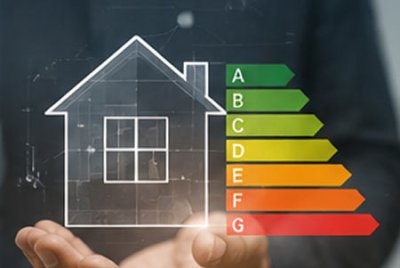
I often meet people who ask whether they should buy a condo or a single-family home in Minneapolis with the same budget. When you lay out both options side by side, the answer becomes a bit clearer. It's also worth noting that both markets have experienced their own shifts in recent years.
As of March 2026, many condos near downtown were listed in the low $200,000s, while the median price for central Minneapolis was $332,500 as of February 2026. By specific areas, the price in Lowry Hill is around $240,000, while Downtown East is about $695,000, showing a significant variance. In contrast, single-family homes in Edina, adjacent to Eden Prairie, are priced in the mid $500,000s to $700,000s, while those in Minnetonka range from the high $400,000s to around $500,000. Comparing the two options, condos may have a lower initial purchase cost, but the monthly fixed costs diverge significantly.
At first glance, condos seem to have a lower entry barrier, but they come with monthly maintenance fees that single-family homes do not have. The median condo maintenance fee in the Twin Cities was $278 per month as of 2025, which accounts for about 13 percent of the typical monthly mortgage payment for a house. Looking at specific downtown buildings, fees range from $558 at Sable to $641 at Riverwalk Lofts, $693 at Crossings, $786 at Riverwest, $795 at 5th Avenue Lofts, and up to $998 at Bassett Creek Lofts. This indicates a wide gap depending on the age of the building and amenities offered.
While single-family homes do not have maintenance fees, owners must individually cover maintenance costs for roofs, boilers, landscaping, and more. Condos share these costs through maintenance fees, making monthly expenses predictable, but this also means taking on the risk of special assessments based on the financial health of the association. There are concerns that the burden of these fees has deterred initial buyers in the Twin Cities, where condo sales have been sluggish in recent years. Choosing a single-family home means no fixed monthly maintenance fee, but if a roof or boiler fails simultaneously, it can lead to a significant one-time expense, indicating that both options carry their own risks.
In Minnesota, associations are not legally required to conduct professional reserve studies. However, under the Minnesota Common Interest Ownership Act (MCIOA), associations must budget for replacement reserve funds based on the remaining lifespan of common elements and reassess their adequacy at least every three years. Some associations determine reserve funds based on their own judgment without a professional study, so it's advisable to request recent reassessment records before purchasing. Regardless of whether you choose a condo or a single-family home, it's wise not to skip this document verification process. If you're a household weighing these two options, consider whether you have plans to move in the next few years. If your stay is short or you might move soon, a condo with predictable fees may be better, while a single-family home might be more suitable for long-term living where you can control maintenance.
- Comparison of condo maintenance fees and estimated maintenance costs for single-family homes
- Check the association's reserve fund reassessment records
- If for rental purposes, check rental demand and maintenance fee variations by building
- Verify the percentage of delinquent units and loan eligibility
If you're considering rental income or resale, a building with lower maintenance fees isn't always advantageous. A complex that maintains low fees while lacking a sufficient reserve fund may later impose special assessments. Families moving to Minnesota from other states should also check the property tax system, as it may differ. This article is not investment advice, and it's recommended to consult a professional before making any contracts.
 HamCheeseDrop
 LuckyForest82






 cheesepup |
 breezem |
 yentra |
 virex |
 vexon87 |
 Minnesota Lakes and Clouds |
 Minnesota Sonata N |
 chiobase |

 breezelove |
  hazelnut |
  Korean News American Blog |
  AH LALA |
  Savion |
  pintos |
  Good Good |
  oh my salami |
  Lemonade Cider Planning Director |
  Way to easy |
  American Hardcore Band |
  Dala Dala |
  Pointy |
  Springs Korea |
  nixon |
  mini hometown |
  Gleeee |
  MacMorningBlog |