
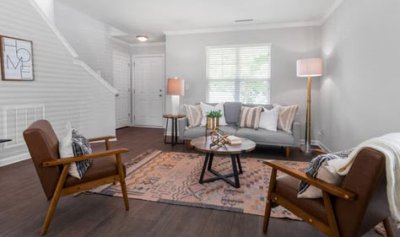
I often meet people who are contemplating whether to buy a home in Phoenix with their savings and rent it out, or continue living in a rental while investing that money elsewhere. Both options have their merits, making it difficult to arrive at a clear answer.
To navigate this dilemma, we first need to understand the current state of home prices and rent in Phoenix. According to Zillow, as of the end of June 2026, the average home value in Phoenix is $410,222, which is a 2.1% decrease from a year ago. This indicates that home prices have actually dipped slightly.
What about rent? According to data released by Apartment List in August 2026, the overall average rent in Phoenix is $1,257, which is down 3.7% from a year ago. We are experiencing a rare period where both home prices and rent are declining together.
A useful concept to consider during this time is the price-to-rent ratio, which compares home prices to rental costs. This ratio is calculated by dividing the home price by the annual rent. Generally, a ratio below 15 favors buying, while a ratio above 21 often favors renting. For Phoenix, dividing the home price of $410,222 by the annual rent of $15,084 gives us a ratio of 27.2, indicating a slight preference for renting statistically.
To better grasp this ratio, it helps to convert it into actual monthly expenses. Assuming a 20% down payment and a 30-year fixed interest rate, the estimated monthly principal and interest for a $410,222 home would be around $2,100. When you add property taxes, insurance, and maintenance costs, the gap between this and the rent of $1,257 becomes quite significant. However, this is just an example based on specific interest rates, so it's advisable to check your own conditions through a mortgage consultation.
That said, it's premature to draw conclusions based solely on this number. The better option really depends on how much down payment you have saved and how long you plan to stay in the home. If you have more than a 20% down payment and plan to stay for over five years, the mortgage payments that build equity may feel more comfortable than simply losing the rent each month. Conversely, if your down payment is still lacking or you might move again in a few years, staying in a rental during this period seems like a safer choice.
We should also consider the advantages of renting. If the air conditioning or plumbing breaks, the landlord takes care of it, and if you need to move due to work or family reasons, you can do so relatively easily at the end of your lease. Considering the summer cooling costs in Arizona and the expenses of home maintenance, the actual difference in monthly out-of-pocket costs may be closer than it appears on paper.
If you're approaching this as an investment, you need to calculate whether the rent you collect exceeds the combined costs of the mortgage, property taxes, and insurance. Arizona's property tax rate is generally lower than California's, but it varies by county, so be sure to check the actual rate for the address before purchasing.
Another common question is whether to invest the lump sum you would use for a down payment elsewhere instead of putting it into a home purchase. You could invest in stocks or funds and expect an average annual return, but that also comes with the risk of principal loss. On the other hand, buying a home secures your living space each month, despite price fluctuations, making it a fundamentally different choice. Which option is better depends on your personal risk tolerance and financial planning.
If you're moving to Phoenix from another state, judging based on the standards of your previous state may lead to missing important details. Arizona has limited areas that require flood insurance, but there may be additional insurance costs related to roof and cooling system damage from hail or extreme heat, so it's wise to check in advance. If you're buying your first home, it's also worth looking into down payment assistance programs.
Ultimately, Phoenix is currently in a unique situation where both home prices and rent are stagnant, making renting statistically more favorable. However, this is not investment or legal advice, and before making any contracts, it's important to review your financial situation with a real estate professional.
 HotSeatDrum
 ShrimpPower




 Sugar Cream Door Bulletproof Noodles |
 urbanmint |
 |
| 
 Premium Gas Camp |
 CA Real Estate |
 Kitchen Ideas |
 Toaster Pizza Magic Show |


 Things to know |
  UCLA Captain |
  lattecu |
  dynamite |
  frostingline |
  Hakuna Matata |
  Your Curiosity Resolved |
  Way to easy |
  Chino Min |
  nexabyte |
  moonshine 7 |
  Sunset Oregon |
  victoria 68 |
  golfmaster |
  Montgomery Mom |
  squidogame |
  Noodle Noodle |
  Rhode Island Good People |
  Big North |
  Famous Attractions in the United States |
  Jin Soo V |