
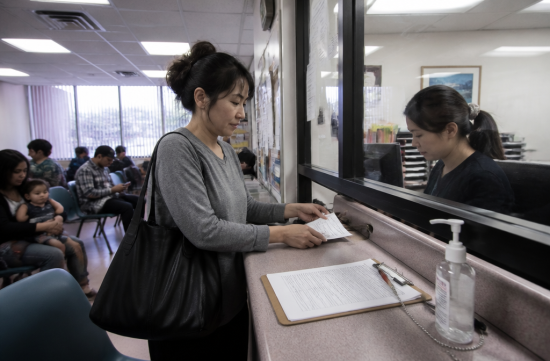
If you suddenly have a fever or run out of blood pressure medication without insurance, what's the first thought that comes to mind? "I heard going to the ER costs thousands of dollars." This leads many to delay seeking help, and I see this happen more often than you'd think.
Today, I want to share a practical solution to that concern: the nonprofit clinic KHEIR in Koreatown, LA.
KHEIR stands for Korean Health, Education, Information and Research Center. It operates as a nonprofit community clinic in the Wilshire Center area of Koreatown.
The key point is that this clinic is an FQHC, or Federally Qualified Health Center. It receives federal HRSA funding and is listed as an HRSA-funded health center in the federal 340B database.
Why is being an FQHC important? Because federal regulations require these centers to operate a sliding fee discount program that reduces costs based on income.
According to the HRSA compliance manual, individuals with incomes at or below 100% of the federal poverty guideline (FPG) can only be charged a nominal fee, which is a very low basic charge.
For those between 100% and 200%, the discount varies based on income brackets. If your income exceeds 200%, you won't qualify for discounts. So, knowing what percentage of the poverty line your household income falls under is the starting point.
This clinic is not exclusively for those without insurance. It also accepts patients with Medi-Cal and Medicare, as well as those without insurance.
There are two main locations to remember. The main site is at 3727 W. 6th St. Suite 200, and the other is at the Wilshire Clinic located at 3255 Wilshire Blvd.
On the 6th Street side, there is also a separate site for dental and optometry services. The main phone number is 213-235-2500.
The directories list services such as pediatrics, women's exams, mental health counseling, flu shots, and dementia assessments. Being able to consult in Korean is also a significant advantage.
Honestly, I found this aspect to be the most reassuring. It's quite common to miss important details when explaining symptoms in English.
However, there are some points to be cautious about. The clinic hours and whether an appointment is necessary can vary by site and information source. Some places state they require appointments, while others say they accept walk-ins.
The suite numbers may also differ slightly across directories. So, don't just rely on internet information; be sure to call and confirm first.
So, how do you actually proceed? Here's the order I recommend.
First, call and clearly state, "I'm a new patient without insurance and would like to apply for the sliding fee." Ask if Korean consultation is available at this time.
Second, gather documents to prove your income. This could include pay stubs, tax returns, or a letter from your employer showing household income. It's best to confirm with the clinic what documents they require.
Third, prepare your ID and proof of address as well. If you ask in advance what's needed, you won't have to make multiple trips.
Fourth, on the day of your appointment, also inquire about your eligibility for Medi-Cal. Community clinics often provide assistance with insurance enrollment.
There's an important change to note. Starting January 1, 2026, California will freeze new enrollments for full-scope Medi-Cal for undocumented adults (ages 19 and older).
If you are already enrolled, you can maintain your coverage as long as you renew on time. However, if you miss the renewal, it will be difficult to re-enroll, and you will only have access to emergency and pregnancy-related services.
Children under 19 and pregnant women are exempt from this freeze. So, don't ignore renewal documents that come in the mail.
Some of you may remember My Health LA, which was previously run by LA County. This program ended on January 31, 2024. There are still posts circulating about it, but it's best not to trust them as they differ from the county's official guidance.
If you're not eligible for Medi-Cal, it's worth checking if you qualify for a subsidized plan through Covered California. It's currently open enrollment season, making it a good time to verify your options.
I can somewhat understand the rationale behind these policy changes, considering financial conditions. However, I believe everyone should know where safety nets like FQHCs are located.
One more thing: this article outlines how to find healthcare facilities, not a recommendation for specific treatments. Always consult a doctor or pharmacist regarding symptoms or medications.
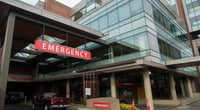
If you experience emergency situations like chest pain or difficulty breathing, don't wait for a clinic appointment; go to 911 or the emergency room. Emergency rooms cannot refuse emergency care based on your ability to pay.
In summary, don't avoid hospitals just because you don't have insurance; start by calling your local FQHC. If it were me, I would call 213-235-2500 this week to check the conditions for new patient registration.
 EndureRL
 my heart




 fruitflash |
 Anjollinya Blog |
 United States Army |
 premium |
 The Emperor Must Grow |

 Valley Hong |
 There Are Such Things in the World |

 Noodle Noodle |
 strawberry |
 US Regional Information Local News |
 USA Business News |
 Blondee |
 E whisper |
 Potato House |
 freshmint |
 Ansaso |
 Golado |
 babybay |
 honeycom |
 French Macarons |
 Exploring American Life Information |
 Sunshine Blog |
 Community Cross |
 Sayonara H |
 What can make money? |
 Information Search LifeMAN |
 morvex37 |
 neontrail |