

There was a family looking into two neighborhoods in Chicago with the same budget. Neighborhood A had an assigned elementary school score of 10, while Neighborhood B had a score of 6. Based on the scores alone, the answer seemed clear. However, when comparing property prices, Neighborhood A was significantly more expensive than Neighborhood B, and the commute distance was also longer in Neighborhood A. There were many variables to consider beyond just the scores.
Chicago is a city with over 745 elementary school options (according to GreatSchools). As a result, there is a wide range of score variations by neighborhood. Schools like Longfellow Elementary School, Decatur Classical Elementary School, and Alcott College Prep received a GreatSchools score of 10, and these schools are generally located in neighborhoods like Lincoln Park, Lakeview, and North Center. Conversely, there are neighborhoods within Chicago that are assigned schools with much lower scores. Ultimately, comparing neighborhoods is not much different from comparing school districts.
When looking at Neighborhood A and Neighborhood B side by side, it becomes clear. Neighborhood A has higher scores but also higher property prices and more competition. Neighborhood B has relatively lower scores but offers more budget flexibility and a potentially easier commute. Which option is better depends on each family's priorities. For families that prioritize test scores, Neighborhood A may be more advantageous, while those who value budget and daily commute may find Neighborhood B to be a viable option.
However, when comparing the two neighborhoods, it's important to look beyond just the scores and consider the underlying components as well. The GreatSchools score is a composite value that includes test scores, academic growth, college readiness, and equity indicators. If the score of a school in Neighborhood B is low but has been trending upward in recent years, that changes the narrative. Conversely, if a school in Neighborhood A maintains a score of 10 but has a high student-to-teacher ratio, the actual classroom environment may differ from expectations. Additionally, the school assignment process can vary by neighborhood in Chicago, so if you have a property in mind, it's best to check the actual assigned school for that address on the Chicago Public Schools website.
If a family is considering both renting and buying, this comparison becomes even more complex. If buying, the assigned school remains fixed for several years, but if renting, the assigned school can change with each lease renewal. Therefore, if the planned residence is short-term or there's a possibility of moving in the future, it may not be necessary to place too much weight on score differences. On the other hand, if planning for long-term residency, the advantages of a stable, high-scoring area like Neighborhood A may become more significant. Chicago also has varying property tax rates and condo association fee structures by neighborhood, so comparing these aspects alongside school scores is a balanced approach.
Ultimately, this family decided to visit both neighborhoods once more. They wanted to check the neighborhood atmosphere, commute routes, and local amenities like parks and libraries in person before making a decision. What started as a numerical comparison led to a process of firsthand verification. Rather than concluding based on a single score seen online, taking this extra step can help reduce future regrets.
Here are the items to consider when comparing the two neighborhoods:
- Components of the GreatSchools scores for each neighborhood's assigned schools
- Score trends over the past 3-5 years
- Student-to-teacher ratios
- Commute and living conditions relative to property prices
- Actual assigned schools based on address (check district website)
A higher-scoring neighborhood is not always the right answer, nor is there always a reason to avoid a lower-scoring neighborhood. This article is not investment or legal advice, and it is recommended to verify with the Chicago Public Schools and real estate professionals before making any actual agreements.
 SunnyField74
 PowerPuff








 moo moo |
 ultron78 |
 garlic bread |
 Sugar Cream Door Bulletproof Noodles |
 urbanmint |
 Khan Film Blog Production |
 Illinois Mom |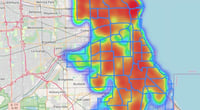
 Rice Shop Uncle BLOG |
 allstar realty |
 Enjoyable American Life Diary |
  round1 |
  Way to easy |
  musicque |
  road98 |
  Churros Train Conductor |
  gleeful |
  Burbank Lee |
  Olivia's Blog |
  Bushing Around Life |
  Active |
  Cherokee Rose |
  Kor. Master |
  Holey Moley |
  Conflite Teacher |
  Hodong Prince Over Flex |
  Mist inn |
  citrus pop |
  Onion Ring |
  phoenixia |
  viewtop |