

This blog provides general legal information that may help the Korean community. However, the application may vary depending on individual circumstances, so if you encounter actual issues, it is recommended to consult a professional directly. WEB PROMO does not guarantee the content of this article and assumes no responsibility for any results arising from this information.
On April 12 last year, I went to The Outlaw Music Festival at Dickies Arena with my roommate, both wearing cowboy hats.
It was a concert worth attending for country music lovers, but it was a hot and noisy day due to the large crowd.
Still, I think it wasn't bad just to hear Willie Nelson's voice right in front of me.
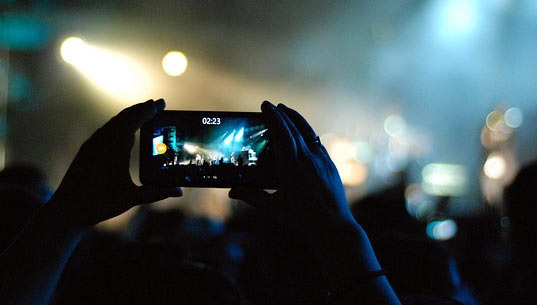
That day, I recorded videos and took photos with my phone during the performance, and after returning home, I found the video quality was better than I expected, and the sound wasn't bad either.
Just as I thought, "Hey, I could upload this to YouTube!" my friend who came with me suddenly said something seriously.
"If you upload that to YouTube, you'll be in big trouble. It's a copyright issue."
"Huh? I filmed it, so why?"
My friend sighed and began to explain. It turns out that taking photos or videos with a phone inside the concert venue is fine for personal use, but posting them online is a different matter. He even showed me an article about a singer who sued a fan for posting a video.
Bad Bunny hired a lawyer and filed a lawsuit when a fan uploaded a video of his concert to YouTube, claiming up to $150,000 per instance.
What? I could be sued just for sharing a video from a concert?
At this point, I started to feel a bit scared. In a country like the United States, where freedom of expression is abundant, I thought that even if I filmed the video, the music played at the concert is entirely the artist's work. So, if I had only filmed people dancing silently, it might have been okay, but if music is included, it could be interpreted as unauthorized distribution of the audio.
Moreover, nowadays, platforms like YouTube and Facebook have become stricter, and AI automatically detects and deletes or mutes content suspected of copyright infringement. In that process, warnings can be issued to the channel, and in severe cases, accounts can be suspended. So, someone like me, who just wanted to share memories with pure intentions, could end up losing their YouTube account and being summoned to court.
Of course, it's not that you can't take photos or videos at all during the performance.
It varies by event, but most festivals or concerts implicitly allow phone recording. Especially nowadays, everyone wants to capture something to post on Instagram or TikTok, so it's somewhat ambiguous to completely ban it. However, you need to be careful when posting it on social media. A few seconds of video might be fine, but posting an entire song is crossing the danger line.
In the end, I listened to my friend and only watched the video myself. Still, that moment filled with emotion is safely kept in my phone. I posted a few photos on Instagram, but I edited them carefully to ensure the background music wasn't audible. It may seem simple, but you must remember that all content related to performances has 'someone's rights' attached to it.
There are definitely many people like me who feel overwhelmed at a concert and want to film something.
But the thought of "I filmed it, so I can do whatever I want" does not hold true in a concert venue.
The law is surprisingly colder than emotions, and the YouTube algorithm is even more ruthless.







 horse |
  MBTI Detective Agency |
 kevin Kim |
 jaxter |
 manchester |
  constant |
  Leapfrog Move |
  vibranto |
  Tora Tora |
  yellowbutter |
  Dolly |
  US Embassy |
  NYC saladbar |
  Finding Superfoods |
  lightyear |
  song bang |
  vexomo |
  Indiana Jones |
  meloncat |
  novapixel |
  mortrix |
  Esther 1983 |
  fortbliss |
  Moscow Kim |