
Recently, after church, I was having coffee when a friend let out a deep sigh. They received an offer from a contractor company but hadn't heard anything for weeks during the background check stage.
"Sister, I don't have any criminal record, so why is this taking so long?" Hearing that felt all too familiar. In our neighborhood, there are so many government-related companies that this kind of concern is really common.
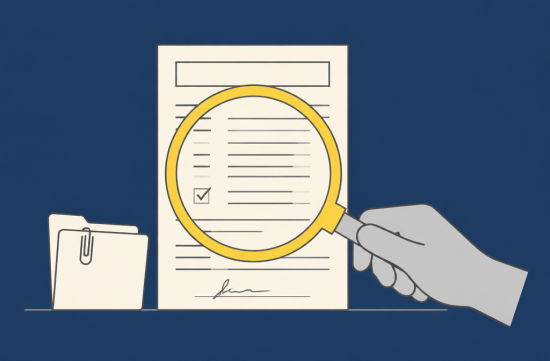
So today, I want to summarize where people typically get stuck in background checks and what they should check in advance. First, it's important to know that there are two types of background checks.
One is a background check done by a general company through an external agency. The other is a security clearance required for positions handling government secrets. The criteria and points of concern differ quite a bit.
Let's start with general background checks. Surprisingly, the most common issue isn't a criminal record but discrepancies between the resume and actual records.
This could be inflating the employment duration, listing a degree not actually obtained, or slightly exaggerating a job title. Even if you think it's no big deal, companies may see it as an honesty issue.
The standard for criminal records is governed by the federal law FCRA. Background check companies cannot include arrest records older than seven years in their reports. However, since the amendment in 1998, there is no time limit for convictions.
There are exceptions. If the salary is $75,000 or more, or expected to be, the seven-year limit does not apply. This means that for higher-paying positions, older records may still come up.
Virginia also has a state law. Since July 1, 2020, employers cannot ask applicants about arrests or convictions for simple marijuana possession. Violating this can lead to a Class 1 misdemeanor for each infraction.
And there's something important to remember. If a company wants to disqualify you based on the report, they must send a prior notice. They need to provide a copy of the report and a summary of FCRA rights, and give you time to dispute any incorrect information.
This is particularly important for us. Common last names like Kim, Lee, and Park can lead to mix-ups with records of people with the same name. If you receive such a notice, don't just give up; check the copy right away.
Now, let's move on to clearance. The evaluation criteria are based on the SEAD 4 guidelines, which have been in effect since June 8, 2017. They assess individuals based on 13 guidelines from A to M.
The most common reason for disqualification that I hear on the ground is financial issues, specifically guideline F. If there are multiple overdue debts or a year without tax filings, you can be immediately disqualified.
Why do financial issues lead to disqualification? It's believed that someone burdened by debt may be more susceptible to temptation or pressure. Honestly, it seems a bit harsh.
However, having debt doesn't necessarily mean it's the end. If you create a repayment plan and actually stick to it, it can be recognized as a mitigating factor.
Even more concerning is guideline E, personal conduct. Among these, lying or omitting information on the SF-86 questionnaire can be fatal. Often, the hidden facts become a bigger issue than the original problem.
Be cautious with marijuana as well. Even if it's legal in the state, it remains illegal under federal law, which can still pose problems during clearance evaluations.
The SF-86 drug questions include inquiries about recent use within the last seven years and whether you've ever used it at all. The December 2021 guidelines from the Office of the Director of National Intelligence stated that past use is considered, but it alone does not determine the outcome. Ultimately, when and how often it occurred is key.
For immigrants, guideline B, foreign influence, is a concern. Having family in Korea alone won't disqualify you, but they will ask about contact frequency, assets in Korea, and financial accounts.
This is where many make mistakes. They might think that having a bank account in Korea or assets under their parents' names is no big deal and fail to report it. If it comes to light later, it can be seen as concealment.
Evaluators look at the whole person concept, meaning they assess the individual as a whole. They consider whether the issues are old, whether they are recurring, and whether things have changed now.
So what can you check in advance? I'll share what I told my friend.
First, pull your credit report to see if there are any delinquencies or collection records. If there are any unfiled tax returns, get those sorted out now.
Make sure to align your addresses, jobs, and employment dates from the past few years with documentation. Relying on memory can lead to inaccuracies.
Also, prepare a list of contact information for family and acquaintances in Korea, as well as any overseas accounts and assets. And if you're unsure, it's safer to disclose it. That's the safest approach.
I honestly have some dissatisfaction with a system where a single mistake can follow someone for life. So I'm glad there are mechanisms like the dispute process and mitigating factors.
However, those mechanisms only work if I've been honest in my disclosures. If it were me, I would check my credit report before receiving an offer. Preparing to explain rather than hide is ultimately the quickest path.
 RudolphBig







 korvex93 |

 Yellow Snowman |


 Alpha and Omega World |

 Choripipari and Blog |



 Victory 1988 |

 Atlanta Business Information |

 Exploring American Life Information |

 Franco Family |

 Home Run King Byeon Seung-yeop Blog |
 silents |
 Korean American National Foundation Promotion Blog |
 PETRO Vatican Shrine |
 American Food Information & Calories |
 Sammy Beach |
 monalisa blog |
 Pronunciation Yo |
 Softy |
 rigid |
 Website Design Artisan |
 Raccoon Ramen Night |
 Folding Instructions |
 hulu 1978 |
 musicque |
 average life |
 Casa Mia |
 aaoaa |
 Mr. Midwest America |
 Taek Jun |
 molten |