
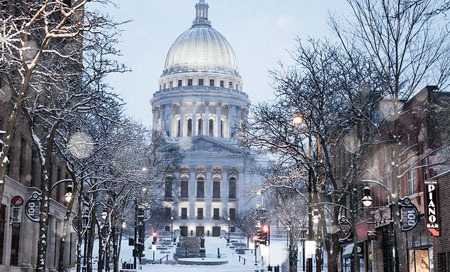
Winter in Madison, Wisconsin is characterized by cold temperatures and heavy snowfall. This area has a humid continental climate, resulting in long and cold winters. Winters in Madison are known for extremely cold weather and frequent snowfall.
Temperatures
- Average Temperature: Winter in Madison lasts from November to March, with December, January, and February being the coldest months.
- High Temperature: Daytime winter temperatures average between -1°C and 2°C (30°F to 35°F).
- Low Temperature: Nighttime winter temperatures average between -7°C and -12°C (20°F to 10°F), with severe cold persisting.
- Temperature Variations: Occasionally, extremely cold weather can persist, especially during cold waves when temperatures can drop below -15°C (5°F).
Snow
- Winters in Madison see frequent snowfall, with an average accumulation of 90 to 120 cm (35 to 50 inches) from December to March.
- Snowy Days: On average, Madison experiences about 20 to 30 days of snowfall during winter.
- Heavy Snowfall: Madison can occasionally experience powerful snowstorms, which can disrupt transportation and outdoor activities.
Winter Weather Characteristics
Cold Winds: During winter, cold winds frequently blow, making temperatures feel lower than they actually are. Especially when winds are strong, the wind chill can drop to below -15°C (5°F).
Winter Precipitation: In addition to snow, there are also days with rain during winter, and mixed precipitation such as sleet or freezing rain can occur. Such weather can make roads slippery and dangerous, so caution is advised.
Winter Activities
Madison's winter provides an environment for enjoying winter sports due to heavy snowfall. Many people engage in winter sports such as skiing, snowboarding, ice fishing, and sledding. Especially operator sports or hiking can also be popular in winter.
Heating
Due to the long and cold winters, heating is a very important factor in Madison. Most homes use gas heaters or central heating systems to get through the winter. Winter heating costs are somewhat higher compared to other regions, but costs can be reduced depending on the insulation and heating efficiency of the home.
Winter Preparedness
- It is advisable to prepare for driving on snowy roads or to have winter equipment (chains, snowplows, etc.) ready.
- Additionally, winter clothing is very important. When going out, it is essential to wear warm coats, gloves, hats, and scarves.
Madison's winter is characterized by extremely cold weather and frequent snowfall, and it can experience snowstorms or cold waves over the long term.
However, the cold weather of winter also provides good opportunities to enjoy winter sports and natural scenery, and with proper preparation, this season can be enjoyable.







 celtics |
 candytip |
 Gold Bar |
 Pirate Ship Popcorn Maker |
 Montgomery Mom |
 middlekick |
 Wiscon Shin Blog |
 Forever Coco is Bangga |
 Superman Cat Blog |
 My Love Bambino Alaview |
  apricotla |
  Soy Angelino |
  nati8 |
  NE Hodori Preik |
  washington mom |
  Balancework |
  round1 |
  Way to easy |
  musicque |
  road98 |
  Churros Train Conductor |
  gleeful |
  Burbank Lee |
  Olivia's Blog |
  Bushing Around Life |
  Active |
  Cherokee Rose |
  Kor. Master |
  Holey Moley |