

Recently, I spoke with an investor who was reviewing a rental property in Anchorage. While calculating the potential profits from purchasing a three-bedroom single-family home to rent out, they became curious about whether buying the house now or renting it would be more advantageous. To answer this question, we need to first look at how home prices and rental costs are actually moving in this city.
According to Redfin data, as of May 2026, the median sale price in Anchorage is $428,000, which is a 3.1% increase from a year ago. The average home value in Anchorage, as reported by Zillow, is also up 3.1% year-over-year, at $394,266 during the same period. In contrast, rental prices, based on Zumper data, show that the consolidated median rent for all bedroom types in May 2026 is $1,750, with little fluctuation in the past month and a gradual annual change of around 3% across various reports. While home prices are steadily rising, rental prices are relatively stable.
A useful concept to consider here is the price-to-rent ratio, which is the ratio of the purchase price to the annual rent. The calculation is straightforward: divide the home price by the annual rent. In Anchorage, this means dividing $428,000 by $1,750 multiplied by 12, which equals $21,000, resulting in a ratio of about 20.4. Generally, if this number is below 15, buying is considered more favorable, while a ratio above 21 suggests renting is relatively better. A ratio of 20.4 falls just below that threshold, making it difficult to definitively say which option is more advantageous.
When we look at the monthly cash flow, it becomes clearer. Assuming a 30-year fixed mortgage rate of 6.65% as of August 20, 2026, as reported by Freddie Mac, and a 20% down payment, the monthly payment for principal and interest would be about $2,200. This does not include property taxes and insurance. If renting, the monthly cost would be $1,750, making rent seem lighter in terms of simple monthly expenses. However, the difference is that rent is money that disappears each month, while the portion of the mortgage payment that goes toward principal builds your asset.
Thus, the criteria for making a decision ultimately narrow down to two factors: whether you can afford the down payment and how long you plan to live in the city. If you can manage the down payment and closing costs and plan to stay for more than five years, buying often becomes the more favorable option. Conversely, if your stay is short or you anticipate moving soon, renting appears to be a more stable choice when considering initial costs and selling fees.
Within Anchorage, South Anchorage and Eagle River have slightly different vibes. South Anchorage is often mentioned for its school district reputation, leading to stable buying demand, while Eagle River has relatively larger lots available, resulting in lower entry prices. Regardless of which neighborhood you consider, it is safe to estimate closing costs at around 2 to 5 percent of the sale price. Additionally, since Alaska is in an earthquake-prone area, homeowners insurance rates are often higher than in other states, so this should also be factored into monthly expenses.
If the purpose is investment, it becomes a bit more complex. Rather than deciding to purchase based solely on rental yield, you should also consider vacancy periods, maintenance costs, and property tax rates to see the actual profit. Anchorage experiences patterns of fluctuating rental demand due to military-related population movements, so it is realistic to budget for a longer vacancy period. Recent market trends suggest that in areas like Anchorage, where home prices are gradually rising, a strategy relying on stable rental demand is often more realistic than expecting significant price appreciation. However, this is just a general trend and does not guarantee profits for specific properties.
Tax and mortgage conditions can vary by county and lender, so if you are considering a purchase, please verify the latest figures. This article is not investment or legal advice, and it is recommended to consult a real estate professional before proceeding with any contracts.
 ChocoTime
 BirthSandra









 urbanmint |
 |
| 
 Premium Gas Camp |
 CA Real Estate |
 Sunny's Travel in America |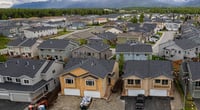
 AL ALASKA |
 Alaska Salmon Buyer |

 Information on Area Codes in the Americas |
  UCLA Captain |
  lattecu |
  dynamite |
  frostingline |
  Hakuna Matata |
  Your Curiosity Resolved |
  Way to easy |
  Chino Min |
  nexabyte |
  moonshine 7 |
  Sunset Oregon |
  victoria 68 |
  golfmaster |
  Montgomery Mom |
  squidogame |
  Noodle Noodle |
  Rhode Island Good People |
  Big North |
  Famous Attractions in the United States |
  Jin Soo V |