


Alaska's largest city, Anchorage, has a unique housing market driven by military bases and resource industries. Recent market trends show a clear temperature difference by area, indicating that the flow of prices and investment characteristics can vary significantly depending on the neighborhood within Anchorage. Key factors influencing prices include school districts, accessibility to military bases, and winter living infrastructure.
Eagle River has single-family homes priced in the low $400,000s to mid $500,000s, with steady transactions thanks to its proximity to Joint Base Elmendorf-Richardson (JBER) and family demand. The Bear Valley and Rabbit Creek areas in South Anchorage feature large homes with views, often exceeding $600,000, and in some cases, listings can surpass $800,000. The Turnagain and Sand Lake regions to the west are priced around $500,000 and offer good access to coastal walkways and parks. The Muldoon area is relatively affordable, with prices in the low to mid $300,000s, attracting first-time homebuyers and investors.
Looking at trends from the past year or two, higher-priced neighborhoods like Bear Valley and Rabbit Creek show a stable or slightly increasing trend, while Eagle River maintains a solid upward trend based on school district demand. In contrast, the Muldoon area is experiencing price adjustment pressures due to increased inventory, suggesting that buyers should carefully consider their timing.
From an investment perspective, Eagle River stands out. There is consistent rental demand from military families near JBER, and the school district ratings are stable, resulting in relatively low vacancy risks. The Turnagain area is also noteworthy for its ongoing improvements in living infrastructure, such as access to downtown and coastal walkways, making it a region to watch in the medium to long term.
In terms of rental yield, areas like Muldoon, with lower purchase prices, tend to show favorable total rental yields. However, it is essential to consider tenant management, vacancy risks, and maintenance costs like winter heating expenses to accurately gauge real returns.
Risk factors include Anchorage's continued reliance on military and energy industries. Fluctuations in oil prices or base personnel relocations could impact local demand, and the costs of maintenance during extreme cold and rising insurance premiums could eat into net profits.
For Korean households, Eagle River and South Anchorage remain preferred for their school districts and community accessibility. If looking to lower initial investment burdens, areas like Muldoon may be worth considering for rental purposes.
Ultimately, Anchorage has a market where each neighborhood has distinct characteristics, so it seems safer to first distinguish between residential and investment purposes before approaching the market.
 DownVulture
 JellyFishery







 garlic bread |
 Sugar Cream Door Bulletproof Noodles |
 urbanmint |
 |
| 
 Premium Gas Camp |
 Information on Area Codes in the Americas |
 Sunny's Travel in America |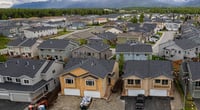
 AL ALASKA |
 Omelet Rice for Strength |
 novapixel |
  mortrix |
  ollege Mom |
  Esther 1983 |
  Arizona AZ Cowboy |
  fortbliss |
  Moscow Kim |
  My Two Way |
  toastyfox |
  FLORIDA Acus |
  tracker |
  TONTON COFFEE |
  sunrise |
  ultron78 |
  uplifted |
  Folding Instructions |
  same same life |
  USA Hyundai Kia |
  morvex37 |
  BOL SA RAM |