
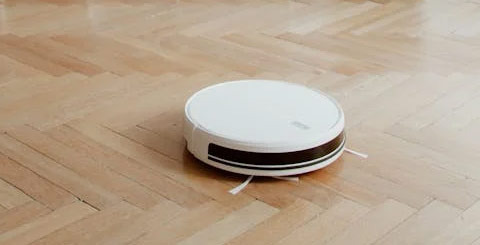
Robot vacuums are appliances that minimize user intervention and automatically perform floor cleaning, categorized into various types based on different technologies and features. Most robot vacuums are designed to clean both hard floors and carpets. However, efficiency and performance can vary by model. Below is information on the main types of robot vacuums and their characteristics.
Basic Robot Vacuum
- Features: Uses simple sensors to detect walls or obstacles and cleans by moving randomly across the floor.
- Advantages: Affordable and simple structure, suitable for beginners.
- Disadvantages: Difficult to set efficient cleaning paths, which may result in longer cleaning times.
- Examples: Early Roomba models
Mapping Function Robot Vacuum
- Features: Uses cameras or LiDAR sensors to map the home structure and set efficient cleaning paths.
- Advantages: Saves time with efficient cleaning path settings, supports designated area cleaning.
- Disadvantages: Relatively high price.
- Examples: Roomba i7, Xiaomi Robot Vacuum
Mop and Vacuum Robot
- Features: Models that include mopping functions along with vacuuming. Some products have built-in water tanks and spraying functions.
- Advantages: Can simultaneously remove dust and mop the floor.
- Disadvantages: Limited water tank capacity, requires mopping cloth cleaning.
- Examples: Roborock S7, LG CordZero R9
Pet-Specific Robot Vacuum
- Features: Equipped with strong suction power and specialized brushes to efficiently remove pet hair.
- Advantages: Effectively solves pet hair problems.
- Disadvantages: More expensive than standard models and may be noisy.
- Examples: Roomba j7+
Smart AI Robot Vacuum
- Features: Utilizes artificial intelligence (AI) for real-time obstacle recognition, object avoidance, and specific area cleaning.
- Advantages: High autonomy and precision maximize cleaning efficiency.
- Disadvantages: Very high price.
- Examples: Samsung JetBot AI+, Dyson 360 Heurist
Commercial Robot Vacuum
- Features: Large robot vacuums designed for cleaning large areas, used in airports, hotels, shopping malls, etc.
- Advantages: Powerful performance and large-capacity batteries allow for cleaning large spaces.
- Disadvantages: Larger size and price compared to home products.
- Examples: Brain Corp Autonomous Cleaning Robot
Considerations When Choosing a Robot Vacuum
- Space Size: Basic models are sufficient for small spaces, but mapping functions are advantageous for larger areas.
- Floor Material: Consider suction power and mopping functions based on floor materials like carpet, wood, and tile.
- Additional Features: Smartphone integration, automatic trash emptying, voice commands, etc., are also factors to consider.
- Budget: Price varies significantly based on features and brands, so it's important to choose a suitable product.
Robot vacuums can be effectively used on both hard floors and carpets, but selecting the right product for the environment and setting it up properly can lead to even more effective cleaning.





 Northeastern |

 Nationally Certified Lightning Charcoal Review |
 sparkling |
 American Grape Shine Muscat |
 U.S. Weather Bureau News |
  US Embassy |
  Korean Mom |
  My NYC |
  moo moo |
  Mr Oh |
  forevergee |
  festival |
  manchester |
  constant |
  Leapfrog Move |
  vibranto |
  Tora Tora |
  yellowbutter |
  Dolly |
  NYC saladbar |
  Finding Superfoods |
  lightyear |
  song bang |
  vexomo |
  Indiana Jones |