
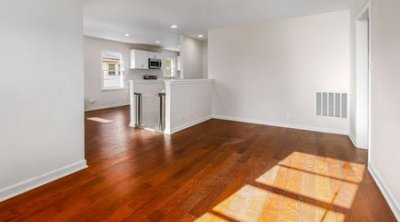
A family living in Cheyenne recently received their rent bill and was puzzled. They felt that while home prices had not changed much, their rent seemed to have increased significantly. Upon looking at the numbers, it turned out their feeling was not entirely wrong.
A useful concept to consider in this situation is the price-to-rent ratio, which is the ratio of home prices to rent. Simply put, it's the number you get when you divide the home price by the annual rent. The smaller this number, the more favorable the home purchase is compared to renting, and the larger it is, the more favorable renting becomes.
According to Zillow, the median home value in Cheyenne is $392,827, which has increased by 3.4% over the past year. In contrast, the average rent reported by Zumper is $1,297, which has risen by over 16% in the same period. If this terminology is unfamiliar, think of it this way: home prices have increased, but the speed at which rent is rising is much faster. As the monthly expenses noticeably increase, the burden felt by residents also grows.
This is why the family felt that home prices seemed stable. A 3.4% increase is hard to notice on a monthly basis, but a rent increase of over 16% is immediately apparent in their monthly payments. When annualized, the rent amounts to about $15,564, and dividing the home price by this amount gives a ratio of about 25. Based on the guideline that a ratio below 15 favors buying and above 21 favors renting, it still leans towards renting, but considering the speed of rent increases, this situation may not last indefinitely.
If they were to buy a $392,000 home with a 20% down payment and finance the rest with a 30-year loan, the monthly payment at current interest rates would still be higher than the rent of $1,297. However, if rent continues to rise at this pace, the gap could narrow in a few years.
To break it down with numbers: buying a $392,827 home with a 20% down payment means a loan principal of about $314,000. At current interest rates, just the principal and interest would result in a monthly payment of around $2,100, and when property taxes and insurance are added, it could exceed $2,400. Compared to the rent of $1,297, this results in a difference of over $1,000 per month, but if rent continues to rise at over 16%, this gap could noticeably decrease in the coming years. However, since rent increases can fluctuate significantly each year, it's hard to conclude that this pace will continue based on just one year's statistics. Therefore, it's important to develop a habit of checking the latest market rates each time a lease is renewed.
Ultimately, the criteria for judgment come down to two factors: how much cash is available for a down payment and how long one plans to stay in the area. If cash is limited, it may be safer to take some time to save more rather than stretching the loan too thin. Conversely, if cash is ready and there are plans to settle for more than five years, it may be worth considering buying during a time when rent is rising quickly.
In Cheyenne, areas frequented by Korean families tend to be located in neighborhoods with high school ratings. However, school district boundaries change frequently, so if you are considering a purchase, be sure to check the assigned school for that address on sites like GreatSchools.
In summary, Cheyenne is a city where rent is rising much faster than home prices. While renting may be favorable at the moment, if this trend continues, the situation could change, so it's wise to assess both down payment readiness and living plans. This article is not investment or legal advice, and if you are about to enter into a contract or loan, it is advisable to consult a real estate professional.
 OriginDash
 urbancloudtraveler1921






 Sugar Cream Door Bulletproof Noodles |
 urbanmint |
 |
| 
 Premium Gas Camp |
 CA Real Estate |
 nixxon |
 Real Estate |
 logger |
  yenne |
 UCLA Captain |
  lattecu |
  dynamite |
  frostingline |
  Hakuna Matata |
  Your Curiosity Resolved |
  Way to easy |
  Chino Min |
  nexabyte |
  moonshine 7 |
  Sunset Oregon |
  victoria 68 |
  golfmaster |
  Montgomery Mom |
  squidogame |
  Noodle Noodle |
  Rhode Island Good People |
  Big North |
  Famous Attractions in the United States |
  Jin Soo V |