

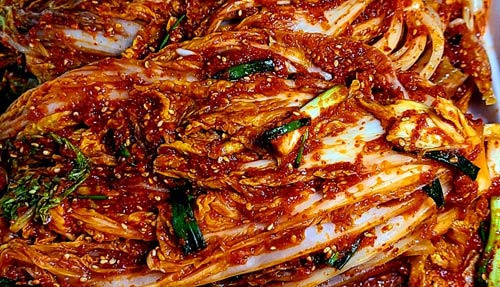
When I decided to try making kimchi, I found myself overwhelmed right from the start while searching online.
How many grams of red pepper powder, how many tablespoons of fish sauce, shrimp sauce, plum extract, cabbage juice, apple juice, and even glutinous rice paste.
Wait a minute.
Was kimchi always this complicated?
However, when I ask people who have made kimchi before, their answers are surprisingly simple.
"Choose the right cabbage first. And salt it properly."
That's right. The key to kimchi is already halfway done before making the seasoning.
First, let's look at the cabbage.
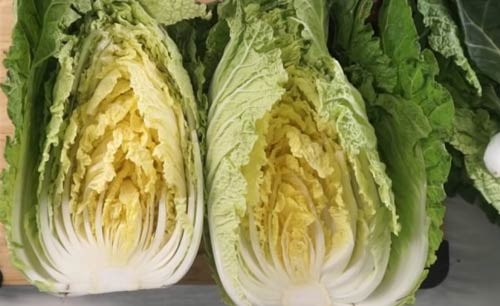
Just because it's big doesn't mean it's good. It should feel moderately heavy when you pick it up, with fresh outer leaves and a slightly yellowish interior.
A cabbage that is not too tightly packed between the leaves will absorb the seasoning better.
Once you've chosen the cabbage, the real important step is salting. This is where beginners often make mistakes.
In a rush to salt, they throw in a ton of salt. It might seem like it will speed things up, right?
But this can lead to a weird cabbage that is salty on the outside but not properly salted on the inside.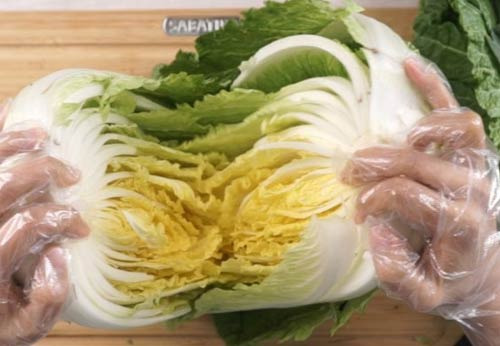
On the other hand, if you skimp on the salt, what happens? Starting the day after making kimchi, water will start to leak out of the cabbage.
The carefully made seasoning will gradually become bland, and the cabbage will start to smell grassy.
The trick is to make a brine with coarse salt to wet the entire cabbage, then sprinkle a little salt between the thick white stems. You don't need to sprinkle much on the thin leaf parts.
And then you wait. If you're an impatient person making kimchi, this is where it gets tough.
After a few hours, change the position of the cabbage a couple of times. Move the ones on top to the bottom and the ones on the bottom to the top for even salting.
But how long should you salt it? Instead of just watching the clock, you can bend the cabbage directly.
When you bend the thick white stem, does it bend smoothly without breaking? That's when the cabbage is ready for kimchi making.
However, you shouldn't let it get completely limp and mushy. What we want is crunchy kimchi, not cabbage mush.
Once it's well salted, rinse it two or three times in clean water. And here's another important point.
You need to drain the water properly.
Place the rinsed cabbage in a colander and let it drain thoroughly.
Now, the seasoning ingredients like red pepper powder, garlic, ginger, fish sauce, shrimp sauce, radish, and green onion come into play.
But there's something interesting.
If the cabbage is good and the salting is done properly, you don't need to make the seasoning too elaborate for the kimchi to taste good.
On the contrary, if you mess up the salting of the cabbage, no matter how much expensive red pepper powder or good fish sauce you add, it's hard to salvage it.
So if you want to make good kimchi, don't start by searching for seasoning recipes.
Choose good cabbage, salt it properly, take your time with the salting, and drain the water thoroughly.
Just remember these four things.
Kimchi experts don't touch the cabbage for no reason.
While kimchi may seem like a dish that starts with seasoning, the real battle begins with the salted cabbage.
 MintCreator
 LiveBold







 Kitchen Ideas |

 Yellow Snowman |

 Moscow Kim |
 Seattle - Emerald City |

 self-evaluation |

 Conflite Teacher |


 OC Real Estate Business Information |

 Choco Choco Star |

 There Are Such Things in the World |
 The Gelaton |
 Twist Kim |
 berlon93 |
 Physical Laws and Science |
 good thinking |
 Solo Yolo |
 Mr Oh |
 laro90 |
 San Diego TOP Idol |
 Round and Round Children's Song Kingdom |
 American Golf Course Travelogue |
 MEDBIO American Doctor Blog |
 Hot Seat Driver |
 bryvexi |
 koala organic farm |
 riverstone |
 My Antonio |
 California Information News |
 chilli chilli |
 Moon Su San |