

A family preparing to move to Madison was surprised by the lower-than-expected tuition rates they found in a private school tuition guide. This was after researching private school costs in other states. Following their process of selecting a school and neighborhood reveals the characteristics of the Madison area.
The family first considered Edgewood High School of the Sacred Heart and Madison Country Day School. Both schools are frequently mentioned among local parents as top choices for college preparation. According to Niche, the top private schools in the area have an overall rating of A+, with an average SAT score of 1340 and an average ACT score of 31. Niche ratings reflect academic achievement, student evaluations, and college readiness, making them a useful reference when comparing schools for the first time.
Upon checking tuition, the average private school tuition in Wisconsin is $6,519 for elementary and $11,597 for high school. Compared to other states, this is quite low. The average acceptance rate for private schools in the Madison area is 90%, similar to Wisconsin's overall average of 89%. After confirming that tuition was lower than expected, the family began to focus more closely on the school's curriculum and commuting distances.
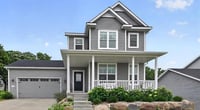
After selecting a school, they narrowed their search to neighborhoods within commuting distance. According to Zillow, the average home price in Madison is $435,430, which has increased by 2.1% over the past year, while Redfin reports a median sale price of $445,000 over the last three months, up 2.4% from the previous year. Madison, being a city that overlaps with the University of Wisconsin campus and the state government, tends to have a quicker turnover of properties in more stable school districts. After missing out on several listings, the family was finally able to secure their desired property after obtaining pre-approval for a loan from the bank.
Madison is a city by the lake, so commuting times can vary significantly depending on the neighborhood. After selecting a school, it is advisable to measure the actual time it takes to commute by car or school bus and narrow down the neighborhood accordingly. Wisconsin has long winters, so it is also wise to consider commuting conditions on snowy days.
As a city with both state government and a university, Madison attracts families not only relocating for jobs but also those moving for educational purposes. Consequently, information about school districts is generally well organized, and statistics for each school can be relatively easily found on the county education department's website. However, popular school districts often see properties go under contract as soon as they are listed, so obtaining pre-approval for a loan in advance can be advantageous.
Due to its college town nature, the rental market in Madison fluctuates significantly with the academic calendar. During the summer, when college students leave, rental listings increase, but just before the fall semester, properties tend to be quickly taken. For families with children, it may be more stable to first look at neighborhoods focused on single-family homes rather than areas densely populated with college students. It is also worth noting that neighborhoods near major roads that are well-plowed during snowy winters can reduce commuting burdens.
Ultimately, the family found a property within their budget in the school district and completed the contract. They identified three key factors during this process: the school's academic performance, the market prices in neighborhoods within the school district boundaries, and the property tax rate. Wisconsin has a property tax rate that is higher than the national average, so families moving from other states should factor this into their budget in advance.
School district boundaries can change over time, so it is advisable to check the assigned school for a specific address on the school district's website before signing a contract. This article does not constitute investment or legal advice, and it is recommended to consult both real estate and school representatives during the actual contracting and enrollment process.
 PinkCloud
 MackerelFly







 garlic bread |
 Sugar Cream Door Bulletproof Noodles |
 urbanmint |
 |
| 
 Premium Gas Camp |
 Forest Gump |



 My Love Bambino Alaview |
  Round and Round Children's Song Kingdom |
  Mia Flori |
  nova nova |
  healthy |
  leaves |
  sparkling |
  maryland park |
  persiste |
  conte |
  blueman |
  Going Once |
  Eldorado 88 |
  cherrydino |
  middlekick |
  Moscow Kim |
  nivex85 |
  quanta7 |
  Tomato Health Club blog |
  horse |