

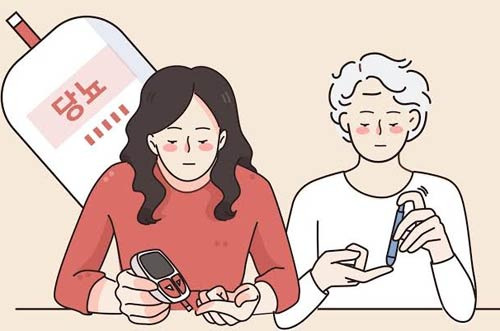
As I get older, it seems like I hear a lot about diabetes from those around me.
Even when I'm having a meal with friends, conversations naturally come up like, "I found out my HbA1c is high," or "My husband is in the pre-diabetes stage."
This made me curious. Is diabetes something that just naturally occurs as we age, like high blood pressure?
To put it simply, that's not the case. While it's true that the risk of type 2 diabetes increases with age, not everyone will develop diabetes just because they are older.
When we eat foods like rice, bread, or fruit, the glucose levels in our blood rise.
In response, the pancreas releases a hormone called insulin to help glucose enter the cells and be used for energy.
However, as we age, muscle mass tends to decrease, and physical activity often declines.
If visceral fat increases around the abdomen, the body may develop 'insulin resistance,' meaning it doesn't respond to insulin as effectively as before.
As a result, the pancreas works harder to produce more insulin to lower blood sugar levels.
For the first few years, the body can manage, but if this state continues for a long time, it becomes difficult to maintain normal blood sugar levels.
This process is often how type 2 diabetes develops.
So, even if it seems like diabetes suddenly appears in your 50s or 60s, it may not have developed overnight.
Particularly if you have a family history of diabetes, carry excess weight around your belly, or have issues with blood pressure or cholesterol, you need to be more vigilant.
Koreans should also be cautious. Asians can be at risk for type 2 diabetes even if they don't weigh as much as Westerners.
It's not unusual to see someone who doesn't look overweight but has high blood sugar levels during health check-ups.
Moreover, the scary part about diabetes is that in the early stages, there are often no noticeable symptoms.
You might feel fine, eating well and going to work, but tests can reveal high fasting blood sugar or HbA1c levels.
If it progresses severely, symptoms like excessive thirst, frequent urination, fatigue, or unexplained weight loss may occur.
Therefore, as we age, it's more important to look at our overall lifestyle rather than just cutting out sweets.
Eating a balanced diet with appropriate portions of rice, vegetables, and protein, managing weight, and maintaining regular walking can be beneficial.
Especially since muscles are crucial for using glucose, light strength training becomes important as we age, in addition to walking.
Also, during health check-ups, don't overlook your blood sugar numbers.
It's good to check not only fasting blood sugar but also HbA1c levels if necessary to know whether you're normal or in the pre-diabetes stage.
So, it's not something to brush off with, "Everyone gets diabetes as they age."
While we can't change our age, we can still manage our weight, exercise, and eating habits.
I've come to realize that while living a long life is important, enjoying the foods I love and being able to move around well is even more crucial.
 OceanFlower
 SleepIsBest







 Tora Tora |
 neroyo |
 nivex85 |
 Old English |
 nixxon |
 victoria jung |
 Virginia Butterfly Mom |
 monica hong |
 round1 |
  Way to easy |
  musicque |
  road98 |
  Churros Train Conductor |
  gleeful |
  Burbank Lee |
  Olivia's Blog |
  Bushing Around Life |
  Active |
  Cherokee Rose |
  Kor. Master |
  Holey Moley |
  Conflite Teacher |
  Hodong Prince Over Flex |
  Mist inn |
  citrus pop |
  Onion Ring |
  phoenixia |
  viewtop |