
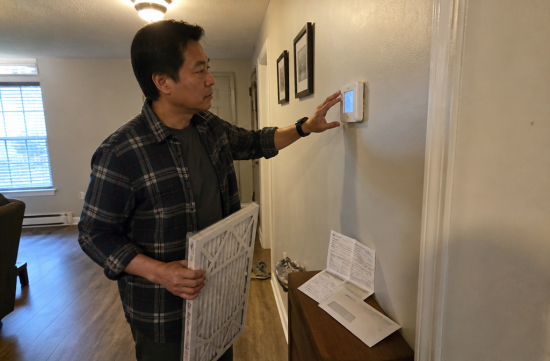
After finishing my Thanksgiving shopping and coming home, I found this month's utility bill in my mailbox. Even though it's not yet the peak of winter, I can already see the numbers creeping up.
So, I looked into what this winter's heating costs might be. To cut to the chase, it varies significantly depending on what fuel you use for heating.
The data comes from the U.S. Energy Information Administration (EIA), which released the 2026-27 Winter Fuels Outlook on October 6. This report forecasts household heating costs for the five months from November to March next year.
First, the good news. Homes heated with natural gas are expected to use an average of 9% less than last winter, according to the EIA.
Homes using propane gas are also projected to see an average decrease of about 3%. Since about half of U.S. households rely on these two fuels as their primary heating sources, this is welcome news for many.
The reason is simple: fuel prices have dropped. The EIA predicts that the Henry Hub natural gas price will average $3.16 per MMBtu in 2027, which is 9% lower than this year.
The EIA also forecasts that natural gas inventories at the start of winter will be 2% higher than the five-year average. Production is steadily increasing, so even with rising LNG exports, prices are expected to remain somewhat stable.
On the other hand, homes heated with electricity are facing a different situation. The average heating cost over the five months is projected to be $1,196, which is a 4% increase from last winter.
Homes using heating oil will see an even steeper rise. Expenses are expected to increase by 21%, with prices per gallon projected to rise by nearly 34%.
However, heating oil primarily affects those in the Northeast, so residents in the South don't need to worry too much. What really matters for us is electricity.
The EIA also noted that electric heating is widely used in the South. Many homes rely on a heat pump to handle both summer cooling and winter heating.
So, will homes in Alabama face the full 4% increase in electric heating costs? There's one point to check here.
The Alabama Public Service Commission approved a rate freeze for Alabama Power on December 2, 2025. This means the basic rate structure will remain at its current level until the end of 2027.
However, this doesn't mean that bills won't go up. Alabama Power has clearly stated that monthly charges can vary based on usage, taxes, and seasonal rate adjustments.
Ultimately, while the rate per unit is frozen, how much I use is entirely up to me. Honestly, I think this is the most realistic point to consider.
Let's also take a look at the weather forecast. The EIA expects this winter's national temperatures to be similar to last winter and the recent ten-year average.
The South and Midwest are expected to be similar to last year, while the West may be colder than last winter, which could lead to slightly higher gas prices. So, this outlook is more influenced by prices than by weather.
And there's one important thing to keep in mind. The EIA clarified that these figures are merely a guide for changes compared to last year, not numbers meant for comparing costs between fuels.
So, just because gas prices are down 9%, there's no immediate need to switch from electricity to gas. The calculations can vary significantly based on home structure, equipment age, and insulation condition.
So, what should electric heating homes do? I'll summarize what I've actually tried and found effective.
First, thermostat settings. Keep it around 68 degrees when you're home, and lower it a bit when sleeping or out.
If you have a heat pump, avoid raising the temperature drastically all at once. Sudden increases can trigger the auxiliary heat, known as emergency heat, which consumes a lot of electricity.
Second, change the filters. Clogged filters make the system run longer unnecessarily. I always replace mine before the season starts.
Third, check for drafts around doors and windows. Just buying a few weather strips from Home Depot can make a noticeable difference. It's a small investment that pays off throughout the winter.
Fourth, check for equal billing plans. Alabama Power offers a Budget Billing option that averages monthly charges, which is useful for those wanting to avoid high bills in January and February.
If you're in a tight financial situation, you might also want to look into the federal Low-Income Home Energy Assistance Program (LIHEAP). In Alabama, applications are processed through local community action agencies.
The EIA updates its forecasts monthly, so the figures may change slightly. However, the overall trend of gas prices decreasing and electricity prices increasing is likely to continue for the foreseeable future.
If it were me, I'd start by changing the filters this weekend and reworking the thermostat schedule. While I can't control the rates, I can control my usage. I hope everyone stays warm and smart this winter.
 SunrayPlus
 3RamenClear





 Nevada Vegas UNLV |

 Things to know |
 West Kong |

 havero70 |

 Grow Your Gut Bacteria Well |

 Alabama Bang |


 Skyline |

 Victory 1988 |
 noraro |
 korando9 |
 Scade Studio |
 flingstone |
 Rynex |
 Mint Star |
 Dalsabet dolstar |
 Winter bear |
 FLORIDA Acus |
 Anytime Journey |
 Information on All Regions of the United States |
 Lim Ario |
 Mr Oh |
 Lululala |
 Atlanta Business Information |
 Yo Lock Me Up |
 Joyce 77 |
 ANSLO NEWS |
 maplebyte |