
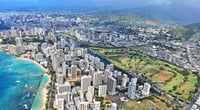
When you land at Honolulu Airport and head toward Waikiki, you briefly catch a glimpse of the harbor scenery. I've passed that way several times, but it wasn't until much later that I learned it was the spot where Korean immigration to America began.
As Thanksgiving approached, someone asked a group of acquaintances when Koreans first came to America in groups. I felt a bit embarrassed not being able to answer accurately at that moment.
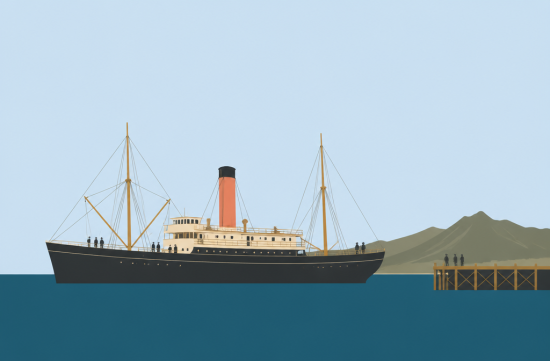
So, I did some proper research. To cut to the chase, the date was January 13, 1903, the ship was the SS Gaelic, and the destination was Honolulu.
On that day, there were a total of 102 Koreans who disembarked. Records from the U.S. Congress and various historical documents confirm the same number: 56 men, 21 women, and 25 children.
I paused for a moment at the fact that there were 25 children. This means that it wasn't just men going to earn money, but families who were moving their lives altogether.
At that time, Hawaii had only recently become a U.S. territory. Therefore, I see the arrival of this ship as the starting point for Koreans settling in America.
The reason they went to Hawaii was quite practical. Sugarcane plantations were urgently looking for labor.
In 1882, the Chinese Exclusion Act had blocked the influx of Chinese laborers, and plantation owners needed to find workers from other countries. Among those who filled that gap were Koreans.
Records indicate that missionaries who were in Korea were also involved in the recruitment process. Perhaps that's why there were quite a few church members among the early immigrants.
Most of the arrivals scattered to various plantations. They spent their days cutting and hauling sugarcane under the hot sun, enduring in a place where they couldn't even communicate.
Honestly, when I first came to America, I struggled just to handle paperwork. But thinking about those who started anew in a plantation dormitory without knowing a word of English over 120 years ago makes my struggles seem trivial.
The SS Gaelic was not the end. Ships continued to arrive, and records from the University of Hawaii list Korean passengers who arrived in Honolulu from 1903 to 1905.
This first wave ended in 1905. It is widely known that immigration to Hawaii was halted that year when Japan made Korea a protectorate.
The number of people who crossed during that short period varies slightly across sources. One estimate puts the total at 7,226 by 1905, but what's more important than the number is that these few years formed the backbone of the Korean American community.
Afterward, so-called picture brides came over. These were women who decided to marry after exchanging just one photograph, and most arrived between 1910 and 1924.
The numbers of picture brides also vary greatly depending on the source. Therefore, I prefer not to specify a number for this part.
One of the first things the early immigrants established was a church. The Korean Methodist Church in Honolulu began with prayer meetings among a few immigrants in 1903.
The church was not just a place of worship. It was a community where people who spoke the same language gathered to share information, educate children, and pool resources to help each other.
I believe that what we do today, like looking for rental information or getting hospital recommendations on Korean community bulletin boards or apps, is ultimately part of the same trend. The methods have changed, but the essence of relying on each other to settle remains the same.
January 13 is now celebrated as Korean American Day. There was a movement to designate it as a holiday in 2003, the 100th anniversary of immigration, and in 2005, both the U.S. Senate and House passed resolutions supporting it.
However, when I ask around, I find that surprisingly few people know this date. I can't say much since I was one of them, but it's a bit disappointing.
So, what can we do? I'll outline what I've actually done and what might be worth trying.
First, check out the Korean immigration resource page at the Korean Studies Center at the University of Hawaii at Manoa. You can find records like the passenger list of early immigrants online.
Second, if you have the chance to go to Honolulu, dedicate some time to exploring immigration history. It's much more memorable than just visiting the beach.
Third, celebrate January 13 with your children, even if it's just a small acknowledgment. Just talking about the SS Gaelic for five minutes at the dinner table that day would be enough.
Fourth, record the immigration stories of your elders now. We can read the records from over 120 years ago because someone preserved them.
I'm not one to advocate for grand commemorations of history. However, I believe that knowing where we come from can provide practical strength to endure in this country.
If that day when 102 people disembarked at the Honolulu dock hadn't happened, there wouldn't be a Korean community today. How about bringing up their stories at this year's Thanksgiving dinner?
 MayoBike








 moodansa 77 |
 Conflite Teacher |

 US Snowboard Information Exchange |

 There Are Such Things in the World |

 San Diego TOP Idol |

 HAWAII Korean Church News |

 Hawaiian Soft Tofu HASOON |
 cococo now |

 Hawaii Tourist Information |

 TEX MEX STAR |
 Yo Lock Me Up |
 Joyce 77 |
 ANSLO NEWS |
 maplebyte |
 Shining Our Own World |
 Raymond K. |
 gravity |
 714 Success Era Real Estate |
 Investment Beginner Company Information Encyclopedia |
 musicque |
 The Gelaton |
 ovelion |
 Chicagonian |
 Freedom Yea |
 AZ Road Master |
 glenix39 |
 Something is popping in the situation |
 orvella |
 vella |
 comets |