

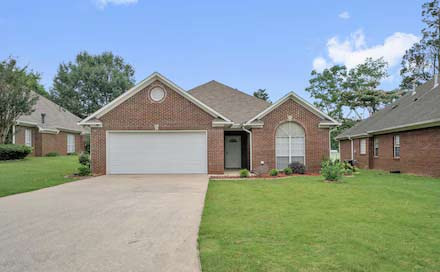
Birmingham is one of the southern U.S. cities where housing prices are quite favorable compared to income.
According to Zillow, the median home price in Birmingham is around $240,000, which is significantly lower than the national median (around $350,000).
Let's get into the specific calculations. With a 20% down payment, the loan principal would be about $192,000, and based on a 30-year fixed rate of 6.75%, the monthly principal and interest payment would be approximately $1,245.
Adding property tax (assuming 1.0% annually, Alabama has the lowest property tax rate in the nation) at about $240 per month and insurance at about $150 per month, the total housing cost would be around $1,635 per month.
Applying the DTI 28% rule, the required monthly income would be about $5,840, which translates to an annual income of about $70,085. This is certainly a manageable figure. Considering that the median household income in Alabama is about $59,000 according to census.gov, it appears that purchasing an average home in Birmingham requires a slightly higher income than the state median, but the gap is not significant.
What if it's a dual-income household? The answer is clear. If both individuals earn around $35,000 each, they easily surpass the required income threshold. Given that many Korean-American families operate businesses together in Birmingham, the market is assessed as having a relatively low barrier to entry.
- Median home price: about $240,000
- Total monthly housing cost: about $1,635
- Required annual income: about $70,085
Compared to nearby Montgomery, Birmingham has better job opportunities and school district infrastructure, while prices remain at about half the level of larger cities like Atlanta, indicating a clear value proposition. The low property tax rate also contributes to lower actual holding costs.
This is clear. Birmingham is a city where the burden of housing prices is low compared to income. However, in recent years, demand for relocation from other states has increased, leading to higher prices in popular school districts compared to the median, so it is necessary to approach the market with a more granular perspective.
For Korean households, it seems reasonable to set an annual income target of around $70,000 when planning.
 SunSparkle
 Baconator




 |
| 
 Premium Gas Camp |
 CA Real Estate |
 cheesepup |
 breezem |
 Information on All Regions of the United States |
 SteelOrbit |
 Alabama Bang |

 Sammy Beach |
  Bliss O |
  blue ocean |
  greenlight |
  Watanaka Karametibaksa |
  castle |
  xelton52 |
  vrixen73 |
  AZ Road Master |
  Victory 1988 |
  summita |
  business lim |
  Colorado Lee |
  Make My Day |
  Fros Pro |
  lioness |
  La Bean |
  American History This and That |
  Monte Sori |