
The Northridge earthquake was a powerful quake that occurred on January 17, 1994, in the LA area, centered around the San Fernando Valley near Los Angeles. The epicenter of this earthquake was in the Northridge area, with a depth of about 11 kilometers. It was recorded at a magnitude of 6.7 on the Richter scale, and the economic damage is estimated to be around $20 billion (approximately 24 trillion won).
After the Northridge earthquake, over $7 billion in insurance claims were filed, significantly increasing the financial burden on insurance companies. Many individuals and businesses filed claims due to the damage, and some small insurance companies faced bankruptcy. This situation led to increases in insurance premiums and changes in insurance policies, impacting the insurance market in the long term.
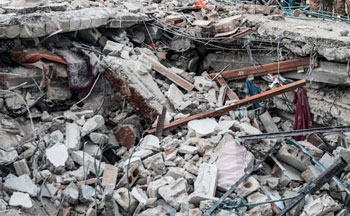
The sustained strong shaking from the Northridge earthquake caused significant damage to many buildings and infrastructure. Approximately 57 people died, and over 9,000 were injured. As a result, tens of thousands of people lost their homes and had to seek refuge in emergency shelters. The displaced individuals lived in temporary housing, and the community began recovery efforts amidst aftershocks.
There were many areas where freeways were severely disrupted. The 10 Freeway (Interstate 10) experienced cracks in several bridges, and some structures collapsed. This led to temporary closures of that section, and traffic congestion became severe as no alternative routes were provided until recovery work was completed. In particular, the section from Santa Monica to Hollywood saw a significant influx of vehicles, causing extreme local traffic for a time.
The 405 Freeway (Interstate 405) also suffered serious damage. Some overpass bridges collapsed or cracked, leading to the complete closure of the entire section, and numerous construction workers were deployed for recovery. As a result, many commuters had to find alternative routes, greatly limiting movement between urban and suburban areas.
The 5 Freeway (Interstate 5) and 210 Freeway also sustained significant damage. The 5 Freeway had several bridges and tunnels damaged, while some sections of the 210 Freeway collapsed, requiring recovery work. The 101 Freeway (US 101) was also affected. Notably, some structures collapsed in the interchange section from Santa Monica to Hollywood, leading to a long-term closure of that area.
The Northridge earthquake reaffirmed the importance of seismic design and building standards. Since then, efforts have been continuously made to enhance the seismic performance of buildings and improve disaster preparedness systems. These changes have contributed to reducing economic damage in future similar disasters and played a crucial role in enhancing the resilience of the community.
Despite the enormous economic damage caused by the Northridge earthquake, the lessons learned and the improved disaster preparedness systems have had a significant impact on future disaster management and urban planning. This experience has reportedly laid an important foundation for cities like Los Angeles to develop into safer and more resilient urban areas.






 Weekend Movie Blog |
 Beauty, Health, Lifestyle Blog |
 coloradoman |
 Superman Cat Blog |
 Awesome Blog |
  Tora Tora |
  yellowbutter |
  Dolly |
  US Embassy |
  NYC saladbar |
  Finding Superfoods |
  lightyear |
  song bang |
  vexomo |
  Indiana Jones |
  meloncat |
  novapixel |
  mortrix |
  Esther 1983 |
  fortbliss |
  Moscow Kim |
  My Two Way |
  toastyfox |
  FLORIDA Acus |
  tracker |