
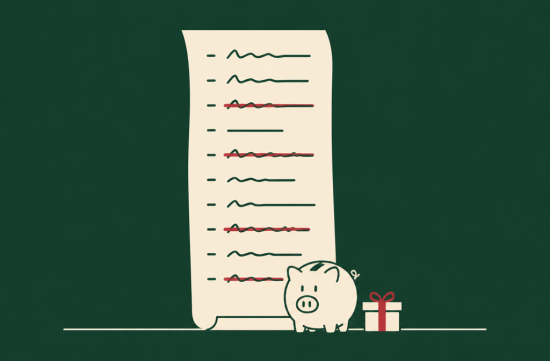
As Thanksgiving approaches, many households experience a familiar scene: a child brings a piece of paper listing everything they want.
In the past, I would have quietly filled the shopping cart with everything on that list. But this year, my perspective has changed.
I realized that the list itself serves as a teaching tool for money management. Today, I'll discuss this along with some numbers.
First, let's look at the current trends. Deloitte's 2026 Holiday Retail Survey estimates that the average household plans to spend $1,654 during the year-end season.
This is a 4% increase from last year's $1,595. It's important to note that this figure includes not just gifts but also food and travel expenses.
According to the same survey, the average number of gifts people plan to buy is 8, which is the same as last year.
While the number of gifts remains unchanged, spending has increased. Although the survey didn't specify the reasons, it aligns with the feeling that each shopping cart feels heavier, which honestly surprised me.
The NRF also predicts that retail sales in November and December will rise by 4.2% compared to last year, reaching $1.13 trillion. This signals that people are not completely closing their wallets.
If we were to buy everything on the child's list during this season, it might feel easier, but the January credit card statement would be anything but pleasant. Here's some data worth considering.
A 2018 survey by T. Rowe Price found that parents who try to fulfill their child's entire wish list reported higher levels of debt.
While we can't definitively say there's a causal relationship, it's reasonable to assume that the habit of fulfilling every item on the list can burden a household budget.
So, my recommended approach is simple: set a budget first and then review the list with your child.
The key is to make the budget the limiting factor, not the parents saying no. This way, emotional conflicts turn into discussions about numbers.
The first step is to set a total amount. Clearly tell your child how much the gift budget is. If the amount feels overwhelming, it's okay to express it in points or categories.
This is much more effective than vaguely saying something is too expensive. It gives the child a frame of reference, making negotiations more logical.
The second step is to write down prices next to each item on the list. You can look them up together online and fill in the details line by line. Including shipping costs and sales tax will yield a much more realistic total.
During this process, the child will often be surprised. They'll realize that many items are more expensive than they thought. I experienced this last year when we were both silent for a while after checking the price of a toy.
The third step is to prioritize the items. Encourage your child to categorize them into must-haves, nice-to-haves, and optional items.
This is my favorite step. It teaches the concept of trade-offs without needing to explain it verbally. It's a rare opportunity to show them that choosing one item means giving up another.
The fourth step is to calculate the total. Hand the calculator to your child. The key is to let them decide what to remove if they exceed the budget.
If parents make those decisions for them, the effectiveness is halved. Allow your child to feel disappointed and ponder their choices. I believe that emotional processing is part of the lesson.
Fifth, include gifts for others on the list. Set aside a budget for small gifts for family, friends, or teachers.
This encourages the child, who usually only thinks about receiving, to also consider giving. It illustrates the meaning of the season in numerical terms.
Many families also include a line for donations. Allowing the child to decide how much to give to a local food bank or toy drive adds another layer to their understanding of money's purpose.
If your child receives an allowance, consider having them contribute a portion of their own money. When their own funds are involved, their decision-making changes significantly.
Black Friday sales can also serve as a great teaching tool. By comparing regular prices to sale prices, they can practice evaluating whether a sale is truly beneficial. Looking at prices from a few weeks ago helps them understand that discounts aren't always what they seem.
However, it's important to avoid adding items to the list just because they're on sale. This is a common mistake even adults make, so I can't say much about it.
Decide in advance what to do with any leftover money. I recommend rolling it over to next year's budget or putting it in a savings jar. It's important for them to experience that saved money doesn't just disappear.
Finally, once the year-end season is over, revisit the list together. Reflect on whether they made good choices within the budget and how well they used what they bought. Think of it as a small retrospective similar to what companies do.
In summary, the order is budget, pricing, prioritization, total, and reflection. These five steps leave a much longer-lasting impact than grand financial education.
If it were up to me, I would definitely go through this process this year, even if it means reducing the number of gifts by one. I believe that a single list is worth more than years of nagging.
 NoPayBeauty
 SaveToBroke








 Augusta 90 |

 Pointy |

 rissa |

 Gomo Nim |

 lattepop |

 Silent Sea |

 Amber H |


 secretmo |

 Victory 1988 |
 noraro |
 korando9 |
 Scade Studio |
 flingstone |
 Rynex |
 Mint Star |
 Dalsabet dolstar |
 Winter bear |
 FLORIDA Acus |
 Anytime Journey |
 Information on All Regions of the United States |
 Lim Ario |
 Mr Oh |
 Lululala |
 Atlanta Business Information |
 Yo Lock Me Up |
 Joyce 77 |
 ANSLO NEWS |
 maplebyte |