
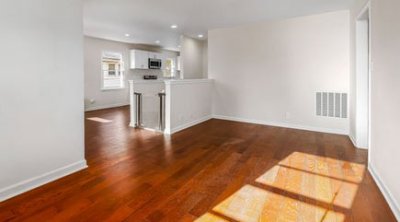
Even within Jersey City, downtown and the West Side have very different circumstances. Recently, a retired couple compared HOA fees and maintenance costs between a downtown condo and one on the West Side. They found that the sales prices and management fee structures of the two neighborhoods are significantly different, making it hard to group them under the same name of Jersey City.
Starting with prices, the median price for condos in Jersey City is around $677,000, and the median listing price is $696,500 (as of February 2026). By neighborhood, downtown is $710,000, the waterfront is $938,000, Journal Square is $544,749, and the West Side is $434,000, showing nearly a twofold difference even within the same city (based on 2026 data). The same goes for HOA fees. The average HOA fee in Jersey City is $1,070 per month, which is more than double the New Jersey state average of $423. Areas with more amenities on the waterfront tend to have higher HOA fees (based on HOA Costs 2026 data).
Looking at heating and cooling costs, electricity is supplied by PSE&G, and the all-in rate as of 2026 is 27 cents per kWh. This is 60 percent higher than the national average, with an average annual electricity bill of $2,910 per household. However, gas prices are expected to decrease by 5 percent starting in October 2026, which may ease winter heating costs (based on PSE&G, NuWatt Energy 2026 data). High-rise condos have smaller heating and cooling areas, resulting in less management burden compared to single-family homes, but the HOA fees largely offset that burden.
Property taxes in Hudson County are about 1.77 percent, while Jersey City itself varies between 1.5 percent and 2.1 percent depending on the data (based on Ownwell 2026 data). The effective tax rate can vary based on the reassessment timing and area, so it's best to check the most recent property tax bills for each listing. Seniors over 65 can receive a 50 percent property tax deduction through the Stay NJ program, with a maximum of $6,500 for those with an income under $100,000, and can apply with Senior Freeze using PAS-1.
What is included in HOA fees also varies by neighborhood. New condos in downtown or the waterfront include operating costs for amenities like doormen, fitness centers, and rooftop lounges in their HOA fees, resulting in higher costs. In contrast, older buildings in Journal Square or the West Side tend to have simpler amenities and relatively lower HOA fees. When calculating living expenses after retirement, it's practical to consider whether the monthly fixed HOA fees are reasonable compared to the frequency of amenity usage.
There are also differences in insurance costs. Condos are covered by HOA master insurance for the building's exterior, reducing personal liability, but homeowners need to secure separate insurance (HO-6) for the interior space, which applies regardless of the neighborhood.
Accessibility to public transportation is also an essential factor in housing choices after retirement. Downtown and the waterfront have many properties within walking distance to PATH stations, which can reduce car maintenance costs. In contrast, while the West Side and Journal Square have relatively lower sales prices and HOA fees, public transportation access may be somewhat limited, so it's advisable to prioritize based on your lifestyle.
It's also important to check the status of reserve funds for maintenance. Especially for older buildings, special assessments may arise when major repairs are needed, so it's wise to request HOA financial statements or reserve fund status before signing a contract.
Even within the same city, sales prices, HOA fees, and property taxes can vary by neighborhood. Rather than making a decision based solely on the name Jersey City, it's helpful to compare each neighborhood individually. This is not investment or legal advice, and it is recommended to consult with professionals before making any actual contracts.
 6PMMyCat
 MyHearts







 Sugar Cream Door Bulletproof Noodles |
 urbanmint |
 |
| 
 Premium Gas Camp |
 CA Real Estate |
 coffeee |
 quiet river |
 hoosierdaddy |
 Jersey City |
 horse |
  moodansa 77 |
  zymit |
  maplefox |
  Fun Flex Life |
  hopeful |
  Reeno |
  Coastal city |
  meonetoo |
  Winter bear |
  Peach Jam Eating Laughter |
  Nando Raldo |
  American Man in a Mask |
  wendra |
  silver |
  bada2002 |
  horizon |
  Nanana Nanana Nanana |
  victoria jung |
  Kkikki Ppappa Shout Out Loud |