
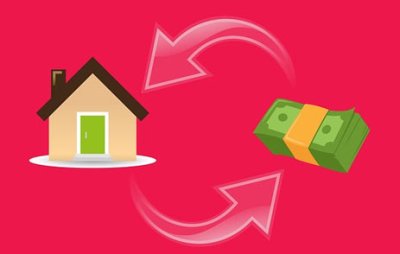
Last month, I spoke with a family who was considering two homes in North Dallas.
Both homes were priced in the low $300,000 range, so the price difference was minimal. However, their purposes were different.
One home was intended to be rented out from the start, while the other was planned to be lived in for a few years before being converted to a rental.
Initially, they asked, "Given the similar prices, which home is better?" But as we calculated the numbers one by one, the answer changed completely.
This is why it's essential to determine whether you're buying a home for investment or personal residence when purchasing in Dallas.
As of August 2026, the average rent in Dallas is about $1,995. According to Zillow, the average home value is approximately $311,000.
For easy calculations, let's assume you buy a $310,000 home and rent it for $2,000 a month.
This results in an annual rental income of about $24,000.
Dividing by the home price gives a return of about 7.7%.
"Oh? Isn't anything over 7% considered good?"
At first glance, it seems that way.
However, this figure does not account for any expenses.
Dallas County has a significant property tax burden. Assuming an effective tax rate of about 1.58%, you would pay around $4,900 annually on a $310,000 home.
Additionally, there are costs for homeowners insurance, repairs, management fees, and vacancies when tenants change.
To simplify calculations, applying the 50% Rule, which estimates operating expenses at about half of the rent, results in a net operating income (NOI) of about $12,000 per year.
This brings the cap rate down to about 3.8%.
It started at 7.7%, but after accounting for various expenses, it nearly halved.
But that's not the end of it.
There's still the mortgage to consider.
For an investment property, let's say you put down 25% and finance the rest with a 30-year fixed mortgage at around 7%. Your monthly principal and interest would be approximately $1,550.
Over a year, that totals more than $18,000.
However, the NOI we calculated earlier was about $12,000.
This means you won't have positive cash flow each month; instead, you'll need to contribute more money from your pocket.
This is the dilemma many face with rental investments in Dallas today.
While home prices are lower than in LA or New York and the rental income seems promising at first, when you factor in property taxes, insurance, and high mortgage rates, the actual cash flow may not be as favorable as it appears.
That's why I first look at the 1% Rule.
For a $310,000 home, the rent should be around $3,100 to meet the 1% standard.
However, if the average rent is around $2,000, it falls short of the 1% Rule from the start.
That doesn't mean it's necessarily a bad investment.
This is where the difference between the two homes I mentioned earlier comes into play.
If it's a home intended solely for rental, how much cash flow is left each month is crucial.
Thus, you might consider increasing the down payment from 25% to over 30% or negotiating the price to buy it for less.
On the other hand, if it's a home you'll live in for a few years, the calculation changes.
If it's in a good school district, has a convenient commute, and is in a family-friendly neighborhood, a low cap rate doesn't automatically mean it's a bad home.
Especially for Korean families, the school district is often a significant factor.
In neighborhoods with good schools, home prices tend to be higher, which can lower rental yields.
However, it may be relatively easier to find tenants, and there's a greater chance that home values will remain stable in the long run.
Another factor to consider is that the money you pay towards the mortgage each month doesn't just disappear.
A portion of it goes towards the principal, building your equity in the home.
If home values increase in 5 or 10 years, the final outcome could differ from what you calculated based solely on cash flow.
Thus, the family ultimately divided their approach.
For a rental-only home, they focused on maximizing cash flow, while for a home they would live in, they prioritized school districts and living conditions.
Even though it's the same $310,000 home, the purpose changes the criteria for what makes a good home.
Just because Dallas real estate is affordable doesn't mean rental income is guaranteed to be good, and a low cap rate doesn't automatically indicate a bad home.
Ultimately, the first question to answer is this:
"Do I want to make money each month from this home, or do I want to build assets in 10 years?"
Deciding this first and then crunching the numbers will clarify your criteria for evaluating homes.
 OrangeCmdr
 StarTalker





 |
| 
 Premium Gas Camp |
 CA Real Estate |
 cheesepup |
 breezem |
 NEXT ROUND |
 Gupabal MissKorea |
 Aura-Infused WACAM |

 American Blog Forge |
  shadow 007 |
  sun walker |
  Choco Choco Star |
  midnight blue |
  honeypot |
  summer |
  adventure77 |
  flexible |
  Shintongbangtong Shin Naerin James Park |
  truepixel |
  Kathy's Blog |
  Hae Naem |
  quatspace |
  Marisol |
  Glassroom |
  Granola |
  joyfull yang |
  Olivia's Blog |
  Living in America and Writing Essays |
  Piano Teacher Blog |