

In May 2020, when the COVID-19 pandemic began, I think everyone had similar experiences.
Most companies that used to operate closed their doors or reduced working hours, and we were stuck at home watching Netflix or YouTube.
I was also on an involuntary forced vacation in Atlanta due to COVID.
During that time, I started watching Naver Webtoon diligently.
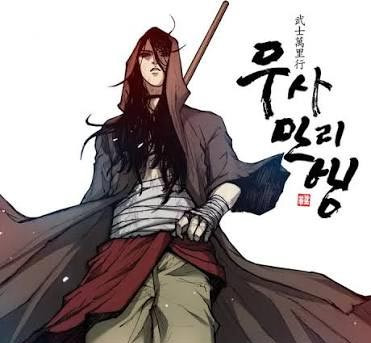
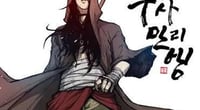
On June 3, 2020, a work titled 'Warrior's Journey' appeared on Naver Webtoon.
'Warrior's Journey'—doesn't that sound like the title of a Hong Kong martial arts movie from the 1980s?
However, I was a bit surprised when I read the initial setting.
The background is set in the late 2nd century, a whopping 2,000 years ago.
The story begins in a small country called Goryeo, part of the Mahan Confederacy, before the Three Kingdoms period even properly started.
Honestly, I don't know where Goryeo is. I wasn't a student who studied well enough to even know the name Goryeo in history class.
But this work starts from that unfamiliar ancient nation and takes the story to the Mediterranean, the Roman Empire, and the Middle East.
At first, it seemed absurd. A warrior from Mahan travels all the way to Rome?
It's not even a Goguryeo general advancing into the Chinese mainland; it's about a warrior from the southern part of the Korean Peninsula going to Europe and fighting Roman gladiators.
But as I read on, I gradually got drawn into this absurd setting.
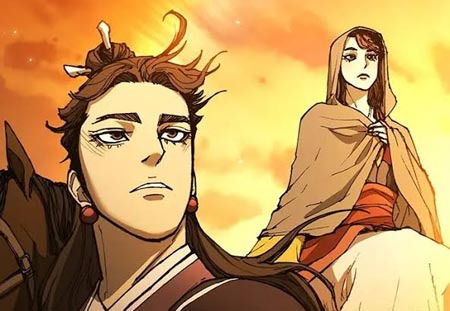
The protagonist, Naru, is a warrior from Goryeo. He swore to protect Princess Sodan with his life.
However, due to the betrayal of his trusted master, his country falls, and the princess goes missing.
What would an ordinary person do in this situation?
The country has fallen, the royal family has collapsed, and he doesn't even know where the princess is.
Honestly, one would think it would be fortunate just to save their own life.
But Naru is different.
He clings to the word that the princess has gone west and heads endlessly toward the west.
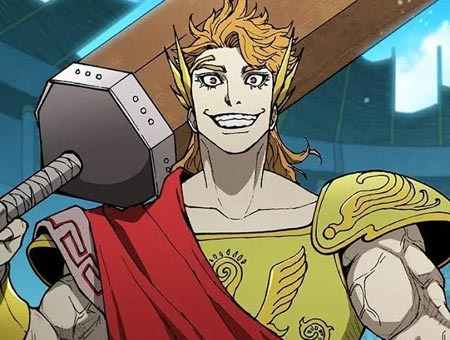
Eventually, he ends up in the Roman Empire, sold as a gladiator slave, and fights for his life.
This aspect is the greatest charm of 'Warrior's Journey.'
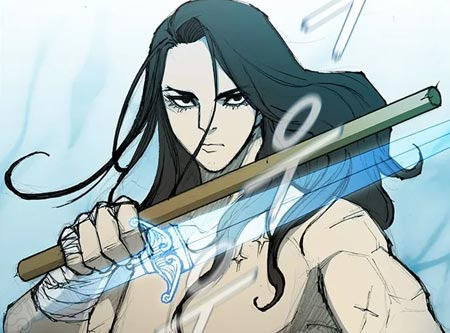
Naru is not just a strong person. Of course, if you look at his physical strength, he is almost a human weapon.
No matter how many Roman gladiators charge at him, it's not easy to deal with this person.
However, this incredible warrior cannot even take care of his own life.
He risks his life solely because of a promise he made long ago.
As a reservist who was discharged as a sergeant from the Republic of Korea Army, I find the themes of loyalty, command, betrayal, and righteousness among warriors particularly interesting.
Those who have served in the military know. Just because someone has a high rank doesn't mean they are respected, and not all orders are right.
There are truly trustworthy superiors, but there are also those who only demand sacrifices from their subordinates while looking out for their own promotions.
The joke that the most frightening thing in the military is an incompetent commander rather than the enemy isn't said for no reason.
Similar characters appear in 'Warrior's Journey' as well.
People who talk about loyalty while betraying others, those who emphasize righteousness while prioritizing their own interests, and those who sell out their comrades for power.
On the other hand, there are also those who keep their promises to the end without any compensation.
Naru is one such character.
In fact, Naru's loyalty seems a bit frustrating by modern standards.
If the country has fallen, shouldn't he be able to live freely now? He doesn't even know if the princess is alive, so is there really a reason to risk his life going to a foreign land?
In terms of modern workplace life, it's like an employee whose company has gone bankrupt and the boss has disappeared, traveling the world alone to find the boss.
And doing so without receiving a single paycheck. Yet, strangely, I find myself rooting for Naru.
The story that began in a small country of Mahan leads to the west and moves to the Roman gladiatorial arena.
As various regions surrounding the Mediterranean and the unfamiliar cultures of the Middle East appear, it becomes an adventure tale that is not just a simple Korean historical drama but a journey through a vast ancient world.
In the Roman gladiatorial arena, the very act of survival is the goal. Slaves have no freedom and no rights to guarantee tomorrow.
A warrior from Goryeo has been thrown into such a world.
However, Naru is not an ordinary gladiator slave as the Romans perceive. His fighting skills are different, and his reasons for living are different.
While victory, honor, money, and power are important to the Romans, finding Princess Sodan comes first for Naru.
Of course, the work is not without melodrama. Sometimes the emotional expressions can feel excessive.
When dealing with someone's sacrifice or separation, the unique tear-jerking moments of Korean dramas appear.
Yet, strangely, it doesn't annoy me much. It's because I've already grown attached to the characters.
Even with melodrama, it's a work that compensates with its entertainment value. Thinking about it, the world has changed a lot in the meantime.
The restaurants that closed due to COVID have reopened, and those who were working from home have returned to the office.
Yet, Naru is still fighting in a world 2,000 years ago to keep his promise.
I believe the reason this work is relatively underrated is that it differs slightly from the current trends in webtoons.
Looking at popular works these days, there are many settings involving regression, reincarnation, hunters, status windows, and leveling up.
The protagonist dies and comes back to life knowing the future or suddenly gains incredible abilities to wipe out enemies.
Of course, those works are also enjoyable. I enjoy them too.
But 'Warrior's Journey' is a bit different.
Naru is strong from the beginning, but he is not a character who can solve all problems with strength.
No matter how strong he is, he cannot prevent betrayal, and no matter how good he is at fighting, he cannot find the missing princess immediately.
He is a strong human, but there are moments when he is powerless in the face of his destiny.
This distinguishes the work from simple overpowered action stories.
And as I read 'Warrior's Journey,' I feel that humans have not changed much, whether 2,000 years ago or now.
People who become servile in front of power, those who betray friends for money, those who exploit the weak, and those who keep their beliefs to the end.
Whether in the Roman Empire or modern America, human nature is remarkably similar.
Living and interacting with people in Atlanta makes me feel this even more strongly.
There are those who smile and say nice things on the surface but are looking out for their own interests behind the scenes, and there are those who help when you least expect it.
Ultimately, the standard for judging people seems to be not the era but their actions.
If asked whether I could keep a promise to protect one person for a lifetime like Naru, I wouldn't be so sure myself.
Even in the military, I pledged to sacrifice my life for the country, but honestly, counting down the days until discharge was the most important thing when I was a sergeant.
Still, I enjoy stories with such a protagonist.
In a world where people avoid losses at all costs and cut off relationships at the slightest disadvantage, seeing someone who keeps their loyalty to the end brings a strange sense of satisfaction.
'Warrior's Journey' is not just a story about a Mahan warrior defeating Roman gladiators.
It is a work that asks what humans must ultimately uphold, even when their country disappears, their status crumbles, and the world changes.
Personally, I believe it would be a competitive work if adapted into an animation or drama.
However, the production cost would be an issue. They would need to create everything from the Mahan palace to the Roman gladiatorial arena, so most production companies would probably calculate the costs before even starting.
Anyway, if you haven't seen 'Warrior's Journey' yet, I recommend giving it a read.
Once you get past the unfamiliar historical setting at the beginning, a much larger story awaits you.
And as you read, you might also wonder:
If Naru, the warrior from Mahan 2,000 years ago, were born in modern society, how would he live?
He would probably be so rigid about following principles in his work life that he would be called a hardhead and would struggle in social situations.
But at least he wouldn't betray his own people.
In today's world, finding someone like that is not easy.
 MikyungMom
 MentalCare






 Moscow Kim |

 zanero |


 HAWAII Korean Church News |

 Karina's Blog |
 Tiger Milk Foam Research Institute |

 Dingho and USA News |

 Maximum Pro |

 Bearded Strawberry Smoothie |

 Let's Be Like a Salt-like City Person |
 strawberry |
 US Regional Information Local News |
 USA Business News |
 Blondee |
 E whisper |
 Potato House |
 freshmint |
 Ansaso |
 Golado |
 babybay |
 honeycom |
 French Macarons |
 Exploring American Life Information |
 Sunshine Blog |
 Community Cross |
 Sayonara H |
 What can make money? |
 Information Search LifeMAN |
 morvex37 |
 neontrail |