

I have been living in Chicago for two years now.
After graduating from university in Korea and coming here for my master's, I naturally began to compare myself between the two cultures.
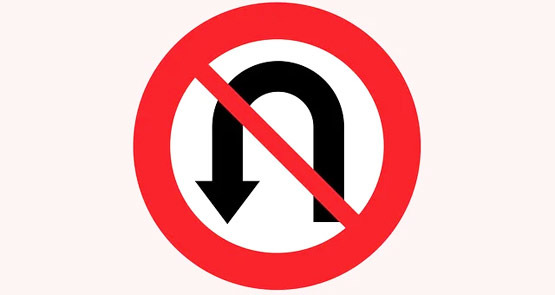
These days, a phrase that often comes to mind is the trendy word in Korea, 'no backing down.'
At first, I heard my friends laughing and saying, "He's totally no backing down haha," and I roughly understood it to mean "fearless."
However, I began to feel that this phrase was not just a trend or a joke, but rather a kind of social attitude, or perhaps a culture in itself.
No backing down. In other words, not retreating. Going straight ahead. When looking at posts in Korean communities or YouTube shorts these days, it is common to hear the phrase "no backing down" used proudly when a fight breaks out, when someone makes unreasonable claims, or when they push forward while ignoring social etiquette. It seems to contain a self-justification of "I still went straight ahead" even if it means ignoring others and breaking social norms.
In America, such an attitude does not work. Americans immediately draw the line by saying "rude" to those who act impolitely or selfishly.
Of course, America also has a strong sense of individualism and clear self-assertion, but that is done on the basis of basic respect, and they do not tolerate ignoring others and charging ahead.
But no backing down. Going straight ahead. No retreat. These days, in Korean communities, this kind of attitude is often consumed as something delightful or cool.
People shouting in the subway, those who react with "What did I do?" even when breaking rules. Comments like "Wow, that's a legendary no backing down haha" appear.
While this is amusing, the reality behind it is somewhat bittersweet.
However, this is not just a story unique to Korea. There is also a representative 'no backing down politician' in America. That is Donald Trump.
Regardless of what others say or how the media criticizes him, he does not retreat. His attitude of 'I push forward' has appeared to some Americans as 'an honest and brave leader,' and there are many who support him like a fandom. Just like in Korea, where rude behavior gets comments like "It's cool because it's no backing down."
One of the areas where Trump pushed the hardest was immigration policy. The 'Muslim Ban,' the border wall with Mexico, and attempts to abolish the DACA program were terrifying for immigrants living in America. As an international student, I felt the impact. Suddenly, visa renewals became more complicated, and entry inspections became much stricter than before.
Trump openly revealed his blatant exclusivism by stating, "America should exist for Americans," and within that, discrimination against Asian, Latino, and Muslim immigrants was openly evident. It would not be an exaggeration to say that it was 'no backing down terror politics' from the perspective of immigrants.
The problem is that this style was not just a political strategy, but was accepted as a kind of virtue among Trump's supporters. Behind the slogan of making America great again was a lack of 'consideration for others and other cultures' and 'no retreat.' That was the discomfort I felt in common between Korea's no backing down culture and America's Trump style.
In Korea, after passing the era where competition was fierce and patience was a virtue, there is now a prevalent atmosphere of "If you don't speak up, you lose." In America, as selfishness has increased with the mindset of 'as long as I do well,' people have emerged who are enthusiastic about leaders like Trump. Although the cultures are different, no backing down may be a reaction that arises from the hearts of weary people everywhere in the world.
However, when that spreads throughout society, conflicts grow, and coexistence becomes difficult. Whether in Korea or America, what is ultimately important is to raise one's voice while creating a balance of order and consideration that allows others to live together.
True coolness lies not in pushing forward, but in the courage to know when to stop—something I am increasingly realizing as an immigrant, an international student, living in this society.







 El Dorado |
 lightyear |
 Moscow Kim |
 coloradoman |
 Montgomery Mom |
 golfmaster |
 Smile Face |
 kuku 100 |

 DREAM BIG |
  frostbite |
  330 Forever My Love |
  dralix58 |
  Gorama Round |
  Skydiving |
  dreamport |
  Yellow Snowman |
  Toaster Pizza Magic Show |
  velvetnom |
  Anytime Journey |
  Mrs. Duluth |
  jaxter |
  Atlanta Mama |
  Baguette Blog |
  Tan Sol |
  US Embassy |
  Korean Mom |
  My NYC |