
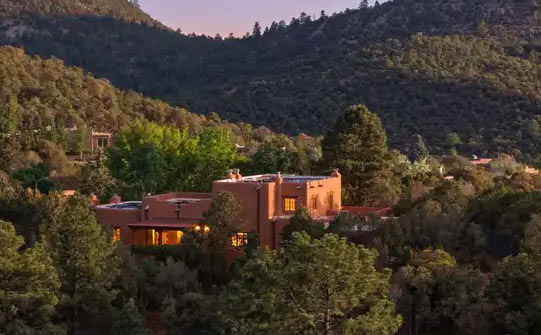
If you are considering moving to Albuquerque, it is advisable to understand the natural disaster characteristics of the area in advance.
While it is an inland plateau region far from hurricanes or large tornadoes, it does not mean that there are no natural disaster risks. There are various hazards such as wildfires, flash floods, sandstorms, earthquakes, and winter blizzards, and it is important to understand and prepare for each of these risks.
The most realistic natural disaster risk is wildfires. Due to New Mexico's dry and hot summer climate, the frequency of wildfires is high. Notably, the Hermits Peak/Calf Canyon Fire that occurred in 2022 was recorded as the largest wildfire in New Mexico's history, affecting areas east of the Sandia Mountains near Albuquerque. While the outskirts of the city are more at risk than the downtown area, during the wildfire season (April to July), strong westerly winds can carry smoke into the city, leading to a rapid deterioration in air quality. The U.S. Forest Service (USFS) and the Albuquerque Office of Emergency Management regularly announce wildfire risk levels, and real-time air quality (AQI) can be checked at AirNow.gov.
Flash floods are also a recurring risk in Albuquerque every year. During the summer monsoon season (July to September), heavy rains can fall in a short period, causing the dry desert soil to be unable to absorb the water, leading to rapidly rising water that pours into narrow valleys (Arroyo), under bridges, and into underpasses. The arroyos located throughout downtown Albuquerque can quickly turn into torrents during heavy rain, so it is crucial to avoid entering them. The National Weather Service (NWS) Albuquerque office frequently issues Flash Flood Watches/Warnings, and during these warnings, driving on low-lying roads should be avoided.
As for tornadoes, Albuquerque is located at the western edge of the U.S. Tornado Belt. While tornadoes do occur, their frequency is much lower than in areas like Kansas, Oklahoma, and the Texas Panhandle. On average, about 10 to 15 tornadoes are reported annually across New Mexico, most of which are small (EF0 to EF1). It is historically rare for a strong tornado to directly hit downtown Albuquerque. However, they can sporadically occur with strong spring thunderstorms, so it is essential to pay attention to NWS alerts.
Regarding earthquakes, New Mexico is situated on the Rio Grande Rift geological structure, so there is some seismic activity. However, compared to areas with large active fault lines like California or the Pacific Coast, the risk is lower. Minor earthquakes of magnitude 2 to 3 are occasionally detected near Albuquerque, and this level is generally difficult to feel in daily life. According to the USGS earthquake risk map, New Mexico falls into the below-average risk category.
Winter blizzards and snowfall should not be overlooked. Albuquerque is a plateau area, so it can experience snowfall in winter, and occasionally heavy snowfall occurs. In 2015 and 2020, there were instances where over 20 to 30 cm of snow accumulated in the city, paralyzing roads. The upper areas of the nearby Sandia Mountains can record snowfall of several meters in winter. Residents in this area often use winter tires or all-season tires and prepare basic winter emergency kits in their vehicles, including emergency blankets, drinking water, and flashlights. Those interested in emergency preparedness may find helpful information on the ReadyNewMexico.org website.
 StarLight
 DiabetoNaldo





 Rice Shop Uncle BLOG |
 Baguette Blog |
 solvix18 |
 novapixel |
 UNI Lover |
 Say Yes in English |
 New Mexico Friends MAX |
 Mrs New Mex |
 frostbite |
  Springs Korea |
  nixon |
  mini hometown |
  Gleeee |
  MacMorningBlog |
  ASURA |
  Elastico |
  shaket |
  vionoo |
  chocolate |
  Whisper |
  Star Voyager |
  InDiGo |
  Rocky Mountains |
  Whoever It Is, I Don't Know |
  Why Not Me |
  Plastic Rose |
  Victory 1988 |
  Gook Rule |