
Last week, a colleague in the break room sighed. They were worried that the money they had set aside in their FSA would just disappear at the end of the year, as they still had quite a bit left.
I asked them, why not get your glasses this weekend? Their expression was like someone who just found ribs they had forgotten in the back of the fridge.
An FSA is an account that allows you to use pre-tax money from your paycheck for medical expenses. The problem is that this money doesn't wait around.
It's often said, use it or lose it. Money not spent within the plan year generally goes back to the company, leaving you with nothing.
Of course, there are loopholes. According to IRS regulations, a company can choose either a carryover or a grace period.
They can't offer both. IRS Publication 969 states that plans that adopt a carryover cannot also have a grace period.
The grace period can last up to 2 and a half months after the plan year ends. For calendar-based plans, this typically means you can spend until March 15 of the following year.
The carryover allows some of the remaining funds to be rolled over to the next year, with a maximum amount of $680 for the 2026 plan year. This is an increase from $660 last year.
Here's a catch: $680 is just the legal limit, and the company can set a lower amount or not allow carryover at all.
So the first thing to do is not shopping, but checking. You need to find out from HR or the plan administrator's website whether your company's plan offers carryover, a grace period, or neither.
For reference, the contribution limit for the 2026 medical FSA is $3,400. This is an increase of $100 from $3,300 in 2025, as determined by IRS Rev. Proc. 2025-32.
If you've maxed out your contributions, you likely have a significant remaining balance. That's why the end of October is a great time to act. Waiting until December can lead to rushed appointments and stress.
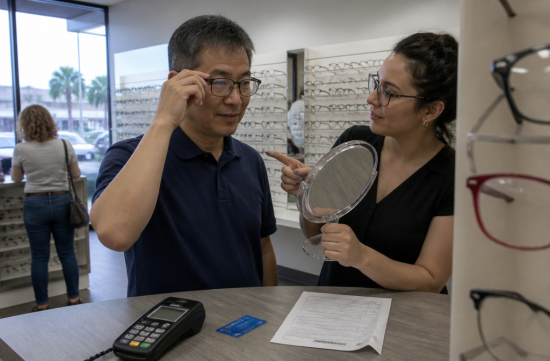
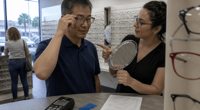
The first recommendation is for eye care. Eye exams, prescription glasses, and contact lenses are typical items you can purchase with your FSA.
If you have a prescription, prescription sunglasses or safety glasses often qualify as well. If you're like me and find yourself stretching your arm to read the newspaper, you might want to consider getting reading glasses too.
The second area is dental care. If there are out-of-pocket expenses that your insurance doesn't fully cover or if you have deferred treatments, it's better to schedule an appointment before the year ends.
The third area is pharmacies. Since the 2020 CARES Act, over-the-counter medications can also be purchased with FSA funds without a prescription.
This includes common medications like pain relievers, allergy medications, cold medicine, and digestive aids. Women's products like pads and tampons are also covered under the same law.
I recommend checking your first aid kit. If you find expired ointments and half-used band-aids lying together, that's exactly where your FSA funds could be used.
Be cautious with sunscreen. Many plans recognize certain conditions for sunscreen, but the criteria can vary by plan, so it's wise to check the administrator's list before purchasing.
On the flip side, there are definitely items that are not eligible. IRS Publication 502 states that items like toothpaste, general toiletries, and cosmetics cannot be counted as medical expenses.
Gym memberships are usually not covered either. While everyone knows exercise is good for health, tax laws don't classify it as a medical expense, which is an irony in American law.
If this were Korea, you would have collected receipts all year long like for year-end tax adjustments, but here, the date is more important than the receipt. When you bought something and when you received treatment are the key factors.
If you paid with cash or didn't use a card, make sure to keep the receipts. It's quite common for the administrator to request proof later.
You might wonder why it's necessary to go through all this. FSA money is money that avoids income tax, as well as Social Security and Medicare taxes, totaling up to 7.65%.
If you just let that money go to waste, it's like throwing away your principal while trying to save on taxes. It's like driving to the store to save with a coupon only to leave the coupon at home.
That doesn't mean you should hoard unnecessary items. Just having essential medications you'll use throughout the year, along with deferred glasses and dental work, is sufficient.
And for next year's contribution amount, I recommend looking at what you spent this year. If you consistently have leftover funds, it might be beneficial to lower your contribution a bit.
I would check the plan regulations this week and schedule eye and dental appointments by the end of November. I'd wrap up any remaining funds at the pharmacy in early December.
The scariest moment for a tax-saving account is the year-end deadline. Those who spend while there's still time will ultimately benefit.
 330iforever
 RapidStone70







 juicylol |

 Mr Song Song |
 Way to easy |
 holy cow |
 Soy Angelino |
 Kims Spring |

 Taco Bell Candy Note Blog |

 oh my salami |

 Good Riddle |
 ssome |
 skykong |
 Shining Our Own World |
 gardener 007 |
 golfmaster |
 Nanana Nanana Nanana |
 Who's watching? |
 endone |
 RockStar |
 Casa Mia |
 You Only Live Once |
 Hardworking CPA |
 Joyce 77 |
 Runner Kim |
 My Town My Way Blog |
 My Miami Stories |
 Entip |
 Tony Park |
 DJ DC BLOG |