

When consulting with those approaching retirement, discussions about assets often lead back to the home. While there are retirement accounts and Social Security benefits, the largest asset for most people is typically the home they have lived in for decades. One common question that arises in these discussions is about reverse mortgages.
To put it simply, a reverse mortgage is a way for homeowners aged 62 and older to borrow money against the equity in their home. Unlike a traditional loan, where you make monthly payments, in this case, the lender pays you. You can receive the funds as a lump sum, as monthly payments, or as a line of credit that you can draw from as needed. This money is repaid when the home is sold, the owner passes away, or the owner no longer lives in the home. A prominent product is the Home Equity Conversion Mortgage (HECM), which is insured by the Federal Housing Administration.
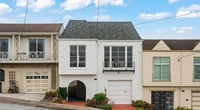
If you're in San Francisco, this topic becomes even more relevant. According to Zillow, as of May 31, 2026, the average home value in San Francisco is $1,393,773, which is a 7.6 percent increase from the previous year. If the terminology is unfamiliar, think of it this way: for long-time homeowners in an area where home values exceed a million dollars, the amount of usable equity is substantial.
However, it's important not to treat reverse mortgages as a cure-all in retirement planning. The initial costs can be significant. When you factor in origination fees, mortgage insurance premiums, and closing costs, which can add up to about 2 percent initially and an annual rate of 0.5 percent, the burden can be greater than that of a traditional mortgage. Over time, the equity remaining in the home decreases, which means the assets passed on to children will also diminish. Property taxes and insurance premiums must continue to be paid; California's average effective property tax rate is 0.71 percent, which is lower than the national average, but in high-value areas like San Francisco, the absolute amount is not insignificant. If these costs become unmanageable, there is a risk of default.
Let's also review the eligibility requirements. You must be at least 62 years old, the home must be your primary residence, if there is an existing mortgage balance, it must be at a level that can be paid off with the reverse mortgage funds, and you must pass a financial assessment to ensure you can continue to pay property taxes and insurance. If the terminology is new, think of it this way: the bank is not just lending money; they are verifying that you have the capacity to manage taxes and insurance moving forward.
There are certainly benefits as well. Because of the non-recourse structure, if the home value falls below the loan balance later on, heirs are not required to pay the difference. Additionally, creating cash flow for living expenses or medical costs without the burden of monthly repayments is an advantage.
To compare simply: selling your home and moving to a smaller place allows you to cash out your equity all at once, but you would have to leave your familiar neighborhood. Using other loans that leverage your equity, like a home equity line of credit, still leaves you with monthly repayment obligations. A reverse mortgage can be seen as a middle-ground option. You can stay in your home while accessing funds without monthly repayments, but in exchange, your equity decreases, and the initial costs can be considerable. For long-time owners in San Francisco who have maintained low property taxes, it's also worth considering that selling the home and moving will reset property taxes based on the new purchase price. However, all of this must be accurately confirmed through mandatory counseling with a HUD-approved agency before applying.
As of 2024, the percentage of California's population aged 65 and older is projected to be 16.5 percent, and this number is expected to continue to rise. If you are considering retirement planning, it's advisable to have thorough discussions with a consultant and talk with family before making decisions. This article is not investment or legal advice, and it is recommended to consult with a professional before entering into any contracts.
 PizzaDrone
 ForestTrend






 urbanmint |
 |
| 
 Premium Gas Camp |
 CA Real Estate |
 Nuchuhan Exploration BLOG |
 DOCTOR MED |
 Sirin Solitude and Advancing Hand in Hand |
 Hardworking Running Bobby Kim |
  Peter Pan Pet |
  horizon |
  Nanana Nanana Nanana |
  victoria jung |
  Kkikki Ppappa Shout Out Loud |
  Lululala |
  Toaster Pizza Magic Show |
  nortrix |
  Mau Nui |
  novapixel |
  fixed |
  AL ALASKA |
  amola |
  History Repeats Itself |
  Doori Ark |
  Rainbow Bridge to the Sky |
  Sunny Fullerton |
  U.S. Weather Bureau News |
  GOGO SING |