

I have lived in San Francisco for over 10 years. I work in IT and my salary is not bad, but the cost of living here is becoming a concern. When I first came to this neighborhood, I thought, "It's expensive, but it's manageable." However, after the pandemic, rent prices have continued to rise and my financial comfort has decreased.
As a result, I started to think, "My neighbors are moving to cheaper places, can I keep living here?"
So, I began looking for neighborhoods with lower rent, and I realized that the moving patterns of young Americans are quite remarkable. According to statistics, people in their 20s and 30s living in major U.S. cities with populations over 1.5 million move on average every 2.3 years. Some people pack up and change cities almost every year. Staying in one neighborhood for ten years like me is considered quite unusual.
Of course, there are reasons for this. Job mobility is active here, and factors like housing prices, taxes, and weather significantly influence moving decisions.
There is also a formula that states, "Job change = salary increase + improved quality of life," so it's a common mindset to pack up and move when good opportunities arise. This is quite different from the sentiment in Korea, where people tend to endure as much as possible.
However, saying it is easy, but actually moving costs a lot of money.
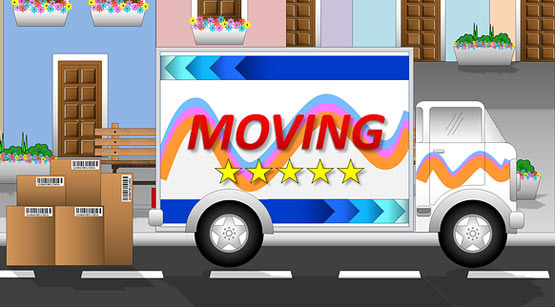
Recently, I considered moving to a neighborhood just 20 minutes away from downtown San Francisco and got a quote... even for a one-bedroom, the moving estimate came out to $1,200. Even calling an independent company I found on Craigslist would cost at least $800. I only have a bed, a desk, and a few boxes, but here, moving companies calculate everything in detail, including truck distance, parking space, elevator availability, and how many floors of stairs there are, and charge accordingly.
What if I move far away? These days, many people are leaving San Francisco. Places like Utah and Arizona have cheaper housing, cleaner air, and are said to be quite livable. I was curious and looked into it. However, moving from here to Phoenix or Salt Lake City would cost around $3,000 to $4,500.
What about moving even further to Texas, Georgia, or Florida? You can guess. A friend of mine recently moved from San Francisco to Austin and said it cost over $5,000. Even choosing the 'cheapest' company, that was the case. The moving costs completely negate any savings on rent, leaving very little left after the move. Plus, packing, calling a truck, cleaning, and rearranging furniture... the time and stress involved are not even factored in.
As a result, many people decide to move but then back out after seeing a quote. I am the same. I look at housing prices in Utah and think, "Wow, I really should move," but then I see a $4,000 moving estimate and quietly sit down with a cup of coffee to ponder.
Of course, there is also a cultural background to the frequent moving in America. Here, staying in one place for a long time is not considered that important. Young people often change jobs, and there is a strong perception that it helps their careers. The atmosphere is that starting anew with new people in a new environment is completely normal.
But I still have some concerns. Moving is a reset of life. It's not just changing an address; it means giving up familiar spaces, neighborhoods, and lifestyle patterns to start all over again, which is not an easy task.
When I mentioned to friends that I want to move to a place with cheaper rent, the common response I hear these days is this.
"Where are you moving next?"
Every time I hear that, I think, "Where should I go..." but after just thinking about it, a few months pass by.
Perhaps moving is ultimately decided not by the heart but by the bank account.







 Khan Film Blog Production |
 dermoon |
 hoosierdaddy |
 sun walker |
 Let's Be Like a Salt-like City Person |
 Nuchuhan Exploration BLOG |
 Sugar Cream Door Bulletproof Noodles |
 Peter Pan Pet |
 Moscow Kim |
 Korean Mom |
  My NYC |
  moo moo |
  Mr Oh |
  forevergee |
  festival |
  manchester |
  constant |
  Leapfrog Move |
  vibranto |
  Tora Tora |
  yellowbutter |
  Dolly |
  US Embassy |
  NYC saladbar |
  Finding Superfoods |
  lightyear |
  song bang |
  vexomo |
  Indiana Jones |