
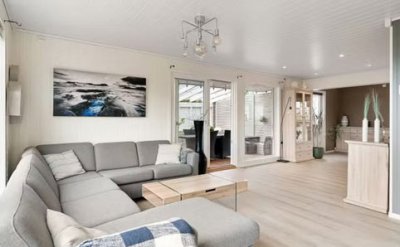
When considering renting or buying in Concord, the first three items to check are the rent itself, the property tax burden, and the HOA management fees that may apply depending on the building. New Hampshire has no state income tax or sales tax, so it compensates for this with property taxes, which can be easily overlooked if you are moving from another state.
According to data from the Tax Foundation for 2026, New Hampshire's effective property tax rate is 1.66 percent, ranking it among the top four in the nation, with an annual property tax of $6,667 on a home valued at the state median of $402,500. This is nearly 80 percent higher compared to the national average effective tax rate of 0.92 percent. If you are renting, this burden is included in the rent, and if you are buying, you need to factor in that property tax will be an additional cost alongside your monthly mortgage.
Looking at the rent itself, as of June 2026, the average rent for all apartments in Concord is around $1,751, with one-bedroom apartments at $1,447 and two-bedroom apartments at $1,849 (RentCafe June 2026). In contrast, newly constructed apartments show studio rents at $1,156, one-bedroom at $1,475, and two-bedroom at $1,704 (Apartments.com new listings data). Compared to the overall average, new two-bedroom apartments are actually priced lower, likely due to the recent supply being primarily smaller units.
According to tracking by Concord Monitor, the city is currently preparing for 2,300 new housing units. A 30-unit apartment, converted from the old First Congregational Church building, has recently been completed, and on Old Loudon Road, a senior housing project with 144 units is underway, aiming for occupancy between late 2026 and early 2027. There are also plans for a townhome development with 83 units on Fisherville Road.
When checking both older and newer properties, the second thing to consider is the management fee structure. New condos or townhomes often have higher HOA monthly fees due to the community amenities included. In contrast, older properties may have no HOA or lower fees, but you should consider the potential for upcoming major repairs, such as roofs or boilers. The New England region has long winters and heavy snowfall, which can accelerate the aging of roofs and boilers compared to other areas.
The third thing to check is the school district. In the Concord area, schools in Bedford or Burlington are often mentioned among Korean families, but school district boundaries can change frequently, so it's advisable to verify the assigned school for the specific address before signing a contract.
Nationally, new constructions often come with a rent premium of about 10 to 20 percent over older properties, reflecting the latest insulation materials, smart home features, and energy efficiency standards (based on RentCafe, Apartment List new construction trend reports). However, the average rent for newly confirmed listings in Concord has actually appeared lower than the overall average. This may be a temporary phenomenon as new complexes that have recently opened may set lower rents to quickly fill initial tenants.
New condo construction warranties typically range from one to ten years, covering structure and systems, which means lower repair burdens in the early occupancy period, but this also means that HOA fees will be an additional monthly cost (based on nar.realtor, bankrate.com HOA guide). Older properties may have lower initial rents or sale prices, but you should consider that the time for roof and boiler replacements may be approaching. Ultimately, in Concord, it is necessary to calculate total expenses by considering property taxes, HOA fees, and potential major repair costs together.
In summary, Concord has one of the highest property tax burdens in the nation, so judging solely by rent can lead to an underestimation of actual monthly expenses. Whether choosing new or older properties, it seems realistic to calculate property taxes and management fees together. This article is not investment or legal advice, and it is recommended to consult with a local real estate expert before making any contracts.
 DawnDream
 EndureBurger







 cheesepup |
 breezem |
 yentra |
 virex |
 vexon87 |
 ovelion |
 hamooo |


 Springs Korea |
  nixon |
  mini hometown |
  Gleeee |
  MacMorningBlog |
  ASURA |
  Elastico |
  shaket |
  vionoo |
  chocolate |
  Whisper |
  Star Voyager |
  InDiGo |
  Rocky Mountains |
  Whoever It Is, I Don't Know |
  Why Not Me |
  Plastic Rose |
  Rice Shop Uncle BLOG |
  Victory 1988 |
  Gook Rule |