
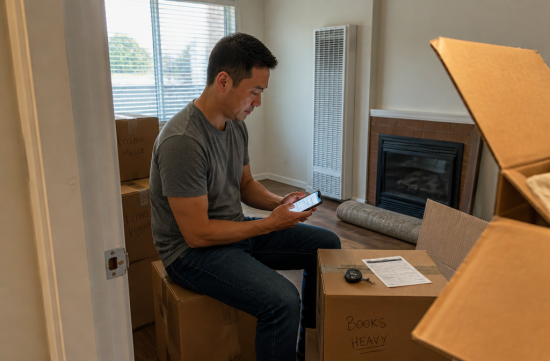
In response to a comment on my previous moving post, someone asked, "If I changed my address at the post office, do I still need to update the DMV?" The short answer is no.
The USPS mail forwarding request is not linked to DMV records. Even if you change your address at the post office, your driver's license and vehicle registration addresses remain unchanged.
In fact, I didn't know this before and ended up neglecting it for a while. When you're busy unpacking after a move, administrative tasks like this often get pushed aside.
So today, I'll outline the address change regulations in California and what can go wrong if you delay. Let's start with the legal provisions.
For driver's licenses, the relevant law is Vehicle Code 14600. It states that you must notify the DMV of your new address within 10 days of moving.
Vehicle registration has a separate law, Vehicle Code 4159. The registered owner must also report both the old and new addresses within 10 days after moving.
Some blogs mention that vehicle registration is 20 days, but that's mixed up with cases where someone moves from another state and is registering in California for the first time. If you're moving within the state, both are 10 days.
10 days. Wow, that's shorter than I expected, right? That's before you even finish unpacking your moving boxes! Haha.
So, what happens if you don't do it? The violation itself can be categorized as a traffic ticket.
However, the amount varies based on the county court's fine schedule and various additional fees, so I won't specify a number here. If you're curious about the exact amount, it's best to check the traffic fine information directly from your county court.
The real issue is the mail. The registration renewal notice from the DMV will go to your old address.
According to the DMV's official manual, if the notice is returned as unclaimed because you didn't change your address, it will be discarded. They do not resend it to your new address.
This makes it easy to miss the renewal date. I couldn't find any official guidance stating that not receiving the notice would waive late fees.
Ultimately, it's safer to assume that the responsibility for renewal lies with the vehicle owner, even without the notice. If you're late, penalties will be added to the registration fee.
If you're caught driving a vehicle with an expired registration, that's another violation altogether. A simple delay in updating your address can lead to a cascade of issues. What seems minor at first can end up costing you time and money.
There are three ways to report the change: online at dmv.ca.gov, by mailing in DMV Form 14, or visiting a DMV office.
I highly recommend doing it online. There's no fee, and it only takes a few minutes.
In the online form, you can select not only your license but also any vehicles registered in your name, so if you have two cars, make sure you check both. Some people tend to only do one. If you have a leased vehicle or a company car, the process may differ, so check those separately.
Here's a point where many get confused: changing your address does not automatically issue a new driver's license or registration card.
Only the DMV records are updated, and the address printed on your card remains the same. If you need a new card, you'll have to request a reissue for a fee.
According to DMV guidelines, the obligation to report is handled as a record change, while card reissuance is optional. So, I prefer to just carry my old card until my license renewal. I think it's a good way to save money.
Also, keep in mind the processing time. It typically takes about 3 business days for the DMV records to be updated.
So if your registration renewal period coincides with your address change, it's best to change your address first and then renew online a few days later. If you do it right away, the sticker might go to your old address. By following this order, you can reduce the hassle of waiting for a resend.
If you feel like the renewal notice hasn't arrived, don't wait—call DMV at 800-777-0133 or check online for renewal eligibility. Waiting for the notice and missing the deadline is the biggest waste.
One more thing to add: you also need to change your address with your car insurance company. Since the garage address is used to calculate your premium, if you only change the DMV and leave the insurance as is, your documents won't match later.
If you're a renter who moves frequently, you need to be even more careful. If you move every year, you might get confused about which address is registered with the DMV.
If you're unsure, don't rely on memory—check your currently registered address with the DMV directly. If you're uncertain whether you've reported it, it's better to do it again for peace of mind.
To summarize: change your address online within 10 days after moving, check all vehicles, contact your insurance company, and reissue your card if needed.
Honestly, if the government linked the post office address change with the DMV, we wouldn't need to write posts like this. Still, it's frustrating to see late fees coming out of my wallet because of the system.
If it were me, I'd just take care of it on my phone the evening of moving day. Investing 5 minutes to prevent future headaches is the best deal.
 dreamer68
 ArizonaZang




 Noodle Noodle |
 figtop |

 Toaster Pizza Magic Show |
 DO Main TODAY |

 Caribbean |
 Archaic Kim |


 US Embassy |

 Pronunciation Yo |

 U.S. Military Recruitment Information |
 strawberry |
 US Regional Information Local News |
 USA Business News |
 Blondee |
 E whisper |
 Potato House |
 freshmint |
 Ansaso |
 Golado |
 babybay |
 honeycom |
 French Macarons |
 Exploring American Life Information |
 Sunshine Blog |
 Community Cross |
 Sayonara H |
 What can make money? |
 Information Search LifeMAN |
 morvex37 |
 neontrail |