
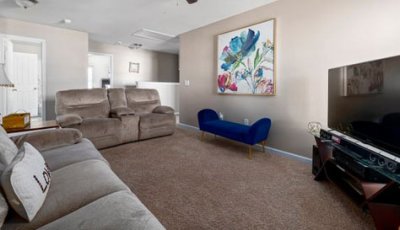
A family that was paying over $2,000 a month in rent in Burlington one day decided to do the math. They wondered if this amount could cover a mortgage payment. However, when they plugged in the numbers, the answer turned out to be more complicated than expected.
The key metric for this calculation is the price-to-rent ratio, which is the ratio of home prices to rental prices. This is calculated by dividing the home price by the annual rent. A lower ratio indicates that buying is more favorable, while a higher ratio suggests renting is better. In cities like Burlington, where both home prices and rents are high, it's important to see how this ratio actually plays out.
According to Zillow, the median home value in Burlington is $516,143, which has decreased by 1.9% over the past year. The median rent, based on the same data, is $2,100. When converted to annual rent, this amounts to $25,200, and dividing the home price by this figure gives a ratio close to 20. Generally, a ratio below 15 favors buying, while above 21 favors renting, placing Burlington right on the borderline.
Interestingly, while home prices have slightly decreased over the past year, rental prices vary across different sources. Zumper reports that the average rent in Burlington has decreased by 2% over the past year, while RentCafe claims it has increased by 5.15%. The differences arise from the types of properties surveyed, indicating that even within the same city, the rental experience can vary significantly depending on the neighborhood and type of home.
Now, let's compare the $2,100 rent with a mortgage payment. If you buy a home priced around $510,000 with a 20% down payment and finance the rest with a 30-year loan, the monthly payment often comes out higher than the rent at current interest rates. Adding Vermont's unique property tax rates further widens the gap. This is why the calculation of being able to cover a mortgage with rent is not as straightforward as it seems.
To break it down with numbers: if you buy a home for $516,143 with a 20% down payment, the loan principal would be about $413,000. At current interest rates, just the principal and interest would result in a monthly payment around $2,500, and when property taxes are included, it often exceeds $2,800. Compared to the $2,100 rent, this results in a difference of nearly $700 per month, and in a smaller market like Burlington, the conditions of each listing can significantly affect this gap. Since there aren't many listings, the choice of neighborhood and type of home can greatly influence monthly expenses. Comparing neighborhoods slightly away from downtown reveals that the options can vary significantly even within the same budget.
However, this doesn't mean buying is always unfavorable. If you can prepare a substantial down payment to reduce the loan amount, or if you plan to stay in the area for nearly a decade, the situation changes. As the loan principal decreases, the gap between monthly payments and rent narrows, and the burden of initial costs becomes relatively lighter the longer you stay. Conversely, if your stay is short or you anticipate moving, there's little reason to rush, even during a period of stagnation in home prices.
Within Burlington, areas frequently visited by Korean families tend to overlap with those that have high school ratings and short commutes. However, school district boundaries change frequently, so if you are considering a purchase, it's advisable to check the assigned school for that address on sites like GreatSchools.
In summary, Burlington is a city where the price-to-rent ratio hovers around the boundary between buying and renting. While it's worth calculating whether rent can cover a mortgage, it's safer to consider the size of the down payment and your living plans together. This article does not constitute investment or legal advice, and if you are approaching a contract or loan, it's recommended to consult a real estate professional.
 DietFailed
 SojuBoy






 Sugar Cream Door Bulletproof Noodles |
 urbanmint |
 |
| 
 Premium Gas Camp |
 CA Real Estate |
 xelton52 |
 Joseon Dynasty Seal Enthusiasts |

 nuvex11 |
  UCLA Captain |
  lattecu |
  dynamite |
  frostingline |
  Hakuna Matata |
  Your Curiosity Resolved |
  Way to easy |
  Chino Min |
  nexabyte |
  moonshine 7 |
  Sunset Oregon |
  victoria 68 |
  golfmaster |
  Montgomery Mom |
  squidogame |
  Noodle Noodle |
  Rhode Island Good People |
  Big North |
  Famous Attractions in the United States |
  Jin Soo V |