

A customer who recently purchased a condo in Lexington repeatedly asked the same question right up until the contract was signed: What if a tenant doesn't move in? I want to start by addressing the concern that vacancy is more significant than expected, especially since Lexington is a steady market within the Boston commuting area with consistent demand for school districts.
According to RentCafe, the average rent in Lexington as of March 2026 is around $3,544. A one-bedroom unit averages $2,892, a two-bedroom unit is $3,701, and a three-bedroom unit is $4,307. Zumper reports a median rent of $3,025 during the same period, which differs slightly due to variations in sample size and aggregation methods. Regardless of the source, these figures are significantly above the national average, indicating steady demand for the Lexington public school district.
School district ratings can be referenced through metrics like GreatSchools or Niche, but since assignment boundaries frequently change, it's essential to verify the assigned school for the specific address you are considering for purchase.
Applying the 1% rule to this rent level suggests that the purchase price should be around $350,000 for the rent to exceed 1% of the purchase price. However, the median prices for condos or townhouses in Lexington often exceed this benchmark, making them not the most aggressive investment options based solely on cash flow. Nevertheless, the 1% rule is just a starting point; actual calculations should also consider appreciation and school district premiums.
Investment property loans have different conditions compared to owner-occupied loans. A down payment is typically required to be between 15% and 25%, and while a credit score of 620 may allow for approval, a score of 740 or higher is needed for favorable interest rates. Interest rates are generally about 0.5 to 0.75 percentage points higher than those for owner-occupied properties. Lenders will only consider up to 75% of the expected rental income as qualifying income, requiring a lease agreement or appraisal rent schedule for this assessment.
Since 1994, Massachusetts has prohibited rent control statewide, with Cambridge being the only exception. Most areas, including Lexington, do not have caps on rent increases. A ballot initiative to revive rent control in 2026 was addressed, but the Massachusetts Supreme Court excluded it from the November voting. However, landlords cannot act arbitrarily; they are required to provide written notice to tenants 30 days before a rent increase, and retaliatory measures are prohibited.
The FY2026 residential property tax rate in Lexington has been announced to be between $12.31 and $13 per $1,000. When converted to an effective tax rate, this is around 1.22% based on median values, which is higher than the Massachusetts state median of 1.15% and the national median of 1.02%. Investors coming from other states should factor in property tax burdens from the negotiation stage of the purchase price.
If the property is located at a distance that makes direct management difficult, considering property management services is common, with fees typically ranging from 8% to 12% of the monthly rent. Additionally, it is a common practice to set aside about 1% of the asset's value annually for maintenance reserves. Rental properties require landlord insurance rather than standard homeowners insurance, which includes coverage for rental loss and tenant liability, but premiums are generally higher.
If you plan to sell your Lexington property in the long term and transition to other investment properties, you can defer capital gains taxes through a 1031 exchange. Calculating the cap rate can also provide a useful benchmark when comparing Lexington properties with school district premiums to those in nearby towns. This article does not constitute investment or legal advice, and it is advisable to consult with a tax advisor and real estate attorney before finalizing any contracts.
 PopcornDance
 GarlicNotGingr








 |
| 
 Premium Gas Camp |
 CA Real Estate |
 cheesepup |
 breezem |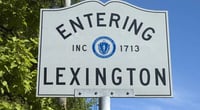
 Masa Masa |
 neapolis |


 Cap Com |
  nixxon |
  kevin Kim |
  beerdreamer |
  Kims Spring |
  White bunny |
  Kansas City Representative Singer |
  shadow 007 |
  sun walker |
  Choco Choco Star |
  midnight blue |
  honeypot |
  summer |
  adventure77 |
  flexible |
  Shintongbangtong Shin Naerin James Park |
  truepixel |
  Kathy's Blog |
  Hae Naem |
  quatspace |