
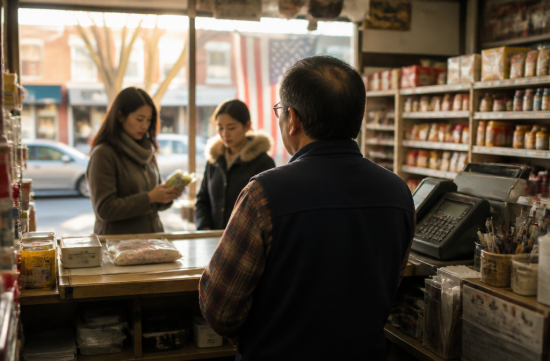
While visiting a local grocery store, I noticed that the display for Black History Month was still up, even though it wasn't February. It made me curious. Among Koreans, Black History Month often feels like someone else's issue, but in fact, few communities are as deeply intertwined with ours as the Black community.
First, we need to acknowledge something. The opening of immigration to Asians in 1965 would not have been possible without the Black civil rights movement. It's important to recognize that the long struggle of the Black community laid the groundwork for our parents' generation to step onto American soil.
However, the actual encounters between the two communities were marked by conflict rather than reconciliation. In March 1991, a fifteen-year-old Black girl, Latasha Harlins, was shot and killed by Soon Ja Du, the owner of a Korean market. This tragic event stemmed from a misunderstanding over a stolen orange juice. The court sentenced Du to probation, community service, and a fine, which ignited outrage within the Black community.
The following April, the acquittal of the white police officers who beat Rodney King led to riots in Los Angeles. During the chaos, over 2,300 Korean-owned businesses were looted or burned, resulting in damages of around $400 million. Koreatown was neglected and failed to receive adequate police protection, falling off the political agenda.
Understanding why Koreans chose to open businesses in predominantly Black neighborhoods is also crucial. The first-generation immigrants, who struggled with English and lacked significant capital, found opportunities in small markets and laundries in Black areas. Both communities faced similar challenges in accessing bank loans, leading to a shared experience of marginalization. Thus, this conflict was less about individual Koreans and Blacks and more about the systemic issues that pushed two minority groups into the same disadvantaged neighborhoods.
Experts also point out that the media exaggerated the conflict between Blacks and Koreans at the time. The real issues were misunderstandings, lack of communication, and the city administration's neglect of the conflict.
Interestingly, the aftermath of the riots saw a shift. A few days after the unrest, 30,000 people from Black, Korean, Latino, and white communities gathered in Koreatown for a peace march. Subsequently, organizations like the Black-Korean Alliance emerged, creating spaces for direct dialogue between the two communities, a trend that continues today.
Reflecting on this history leads to a crucial question: What can we do about it? Expecting the government to resolve racial conflicts through laws or policies is naive. The real change came not from political statements but from everyday interactions—store owners and customers learning each other's names, children attending the same schools, and businesses trading with one another.
Even now, when I visit a Korean market, I see owners chatting with their Black neighbors at the checkout. Each of these small interactions helps to gradually wash away the bitterness from thirty years ago. I believe that rather than grand slogans, the simple act of buying from each other's stores, remembering each other's children's names, and exchanging greetings during holidays is far more powerful.
So, don't let Black History Month pass by unnoticed. This month, consider visiting a restaurant run by a Black neighbor or attending a local Black community event. If you have children, it might be helpful to explore the stories of Latasha Harlins and Soon Ja Du together. Instead of blaming others or feeling guilty, we should start by understanding each other's histories.
The reason I bring this up is not to induce guilt. It's important to recognize how two communities, both immigrants and minorities, rooted themselves in this country around the same time and how they became neighbors beyond misunderstandings. Understanding history is entirely different from being trapped by it.







 logger |
 Conflite Teacher |
 Unknown Dog Walk blog |
 Khan Film Blog Production |
 Yoyma |
 vegas mom |
 korvix |

 neroyo |
 Home Run King Byeon Seung-yeop Blog |
  Fruitop |
  Exploring American Life Information |
  sing sing |
  ORAVEZIN Oppa |
  Lego My Ego |
  Anna Life |
  summita |
  Ari Songhan American Immigration Life |
  marketbox |
  Investment Campus Home Ownership |
  yentra |
  Iowa Egen Aunt |
  donut33 |
  gravity |
  American Golf Course Travelogue |
  There Are Such Things in the World |
  Agenda Center |
  digital |