

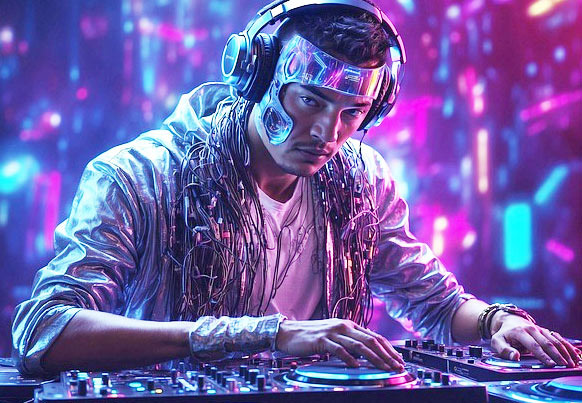
I started listening to DJ music in Las Vegas in my mid-twenties.
Back then, I thought of it simply as 'loud and exciting music.' However, as time has passed, it's fascinating to reflect on how much this city and the American club DJ culture have changed, and how I have adapted to those changes.
In the early 2000s, Las Vegas clubs did not have the flashy LED screens or massive stage productions that we see today. The DJ booth was not elevated in the center of the stage like it is now. House and trance music were the mainstream, and when a hip-hop DJ took the main stage, the club atmosphere would completely change. DJs of that era carried turntables and vinyl, and the competition was about 'how well you could select tracks' rather than mixing skills. When legends like Tiësto or Paul Oakenfold came to Las Vegas, it became a special event that attracted EDM fans.
As we moved into the mid to late 2000s, changes began to become noticeable. With the spread of CDJs and digital DJ software, DJs could command the stage with just a USB instead of a vinyl bag. During that time, DJs like David Guetta began mixing house music with pop, bringing club music into the mainstream radio charts. As a result, Las Vegas clubs started to grow larger, and investments in lighting and sound systems became more significant.
Then, in the early 2010s, the real 'EDM boom' arrived. DJs like Swedish House Mafia, Avicii, and Calvin Harris held long residencies at mega clubs in Las Vegas, transforming club performances into star concerts. The large stage productions seen at Ultra or Coachella made their way into Las Vegas indoor clubs. I vividly remember dancing all night with friends at clubs like XS or Marquee during that time. The energy when big room house music played, and thousands jumped simultaneously is something I will never forget.
By the mid to late 2010s, the genres diversified. Future bass and trap EDM mixed into the club sound, creating a much more colorful atmosphere. Names like DJ Snake, Flume, and Marshmello began to take the stage in Las Vegas, and setlists mixing hip-hop, Latin, and pop naturally blended together. From that point on, I began to feel that DJ performances were not just dance parties but 'shows that convey a story.'
And now, in the 2020s, the DJ trends in Las Vegas clubs are transforming once again. After the pandemic, the pent-up demand for performances exploded, leading to immersive stages where technology and art are fully combined.
In particular, the Sphere venue symbolizes that change. When melodic techno DJs like Anyma or Tale of Us play music against a 16K resolution 360-degree screen and VR-like visuals, the space becomes not just a club but a massive work of art.
I also saw Anyma perform at the Sphere, and it was a completely new experience where the music was felt not just through the ears but also through the eyes and body. It's as if the future of club performance culture envisioned in the 50-year-old Japanese animation Macross is actually coming to life.
Twenty years ago, going to a club and dancing excitedly when my favorite track played was all there was, but now it has transformed into a complex culture that includes stage production, visual arts, and storytelling. Cutting-edge sound systems and dazzling LED display technologies seem to create new experiences without hesitation.
And now, DJs are no longer just people who play music; they have become artists who design the audience's emotions on stage.
At 40 years old, I don't go to clubs every weekend like I used to, but I still seek out new DJ trends and performances.
It's not just about the music; it's because witnessing this flow of change and momentarily immersing myself in it still excites me.
The club and DJ culture in Las Vegas will continue to evolve.
And I plan to keep watching that evolution.




 Egg Steamed Pot |
 novapixel |
 xylora |
 vegas mom |
 Coco and Lulu |
 Say IT Now |
 celion78 |
 neroyo |
 zanero |
 korvix |
  vibranto |
  Tora Tora |
  yellowbutter |
  Dolly |
  US Embassy |
  NYC saladbar |
  Finding Superfoods |
  lightyear |
  song bang |
  vexomo |
  Indiana Jones |
  meloncat |
  mortrix |
  Esther 1983 |
  fortbliss |
  Moscow Kim |
  My Two Way |
  toastyfox |
  FLORIDA Acus |