
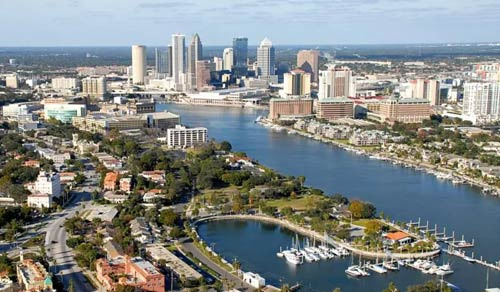
The median household income in Tampa, the largest city in West Florida, is approximately $62,000 according to the Census ACS 2023.
This is about 21% lower than the national average of $78,538, and nearly the same as Jacksonville, Florida ($63,000). While the numbers may suggest it is an average Sun Belt city, the data reveals Tampa's unique industrial structure and demographic changes.
The data shows that Tampa's employment base is more diverse than expected. The finance and insurance sectors host large operational centers for Raymond James, Citigroup, and JPMorgan Chase, providing white-collar jobs with middle incomes. The healthcare sector employs tens of thousands at Tampa General Hospital, BayCare Health System, and AdventHealth. Additionally, as a port city, the logistics and transportation industry centered around Port Tampa Bay is also a major employer. This combination of finance, healthcare, logistics, and tourism contributes to the median income of $62,000.
According to the data, Tampa has seen a significant influx of population since the pandemic. Between 2020 and 2023, the population of Hillsborough County (including Tampa) increased by tens of thousands, particularly with notable migration from high-income states like New York, New Jersey, and Illinois. Many of these migrating households had income levels higher than the local average, which may have contributed to thickening the upper income distribution in Tampa. Nevertheless, the fact that it remains below the national average seems to be due to the large size of the low-wage service and tourism employment sector.
Looking at housing price data, the median price for single-family homes in Tampa is approximately $380,000 to $450,000 as of 2024. Based on the median income of $62,000, the income multiplier is about 6.1 to 7.3 times, which is significantly higher than the traditional benchmark of 3 to 4 times. During the pandemic, Tampa's home prices surged by about 60% to 80%, and although they have seen some adjustments due to interest rate hikes, they still remain high as of 2024. For first-time homebuyers, Tampa is no longer considered an 'affordable alternative city.'
The rental market shows a similar trend. As of 2024, the average rent for a one-bedroom apartment in Tampa is between $1,600 and $1,900 per month. The rent-to-income ratio compared to the monthly equivalent of the median income ($5,167) is between 31% and 37%, which may slightly exceed the acceptable threshold of 30%. However, compared to Miami ($2,200 to $2,800) or Fort Lauderdale, the rental burden is relatively lower, which is one reason Tampa is gaining attention as an alternative living destination in South Florida.
There has been a perception that Tampa has a relatively low risk of hurricanes compared to other cities in Florida. However, the direct hit from Hurricane Milton in 2024 is changing that perception. The pressure for rising homeowners' insurance premiums may also become a reality in Tampa, potentially increasing the actual cost of living. This could be a variable that raises the burden of housing costs relative to income.
While Tampa's median household income of $62,000 is lower than the national average, its employment base, which combines finance, healthcare, and logistics, appears to have a more stable income structure than a simple tourist city. However, the rising home prices and insurance premiums are increasing the real cost of living, indicating that understanding the context beyond the income figures is essential for accurately reading the Tampa real estate market.
 CleoPartner
 skyvalleydreamer1990








 My Town My Way Blog |

 Arizona AZ Cowboy |
 Valley Hong |

 Mr Oh |

 ollege Mom |

 Living in Florida |


 My Two Way |

 FLORIDA Acus |
 ASURA |
 rapids |
 Softember |
 mykiwi blog |
 Maria Mom |
 Watch for possible danger |
 northpeak |
 Far East Movement |
 Light of the World |
 mariashin |
 lavender |
 Bridgo |
 Tamfa Fan |
 Sunny Sunday |
 mini hometown |
 torvia |
 Chichiki Chicago Train |
 Univ Student |
 See It |
 Con Cheese |