
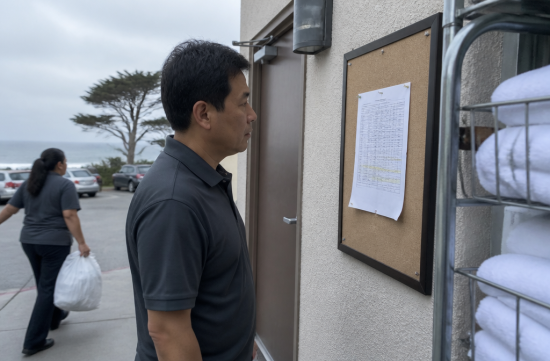
By the end of October, the parking lots of coastal hotels start to empty out little by little. The restaurant reservation books that were fully booked all summer show noticeable empty spaces on weekdays.
At this time of year, there's a common saying you hear around: when the season ends, so does the work.
For those working seasonal jobs in the tourism industry, fall is not a welcome season. Work hours may be reduced, or they may receive notice to take a break until next spring.
So today, I want to calmly outline how to survive a year working seasonally. There are no grand secrets; knowing the systems and timing in advance is key.
First, let's look at the scale of the tourism industry in this area. According to data released in April this year by Dean Runyan Associates, commissioned by Visit California, visitor spending in Monterey County is projected to reach $3.3 billion in 2025, the highest ever recorded.
The same data indicates that the tourism industry supported nearly 28,000 jobs. With lodging-related spending alone at $2.3 billion, that's an impressive figure.
The problem is that these jobs are not evenly distributed throughout the year. Staffing peaks during the summer season and major events, while customer numbers decline from late fall to early spring.
Therefore, planning for a year as a seasonal worker starts with figuring out how to get through the off-season. The first thing to consider is California unemployment benefits.
Being a seasonal worker does not mean you cannot receive unemployment benefits. If your work has been interrupted or hours reduced due to company circumstances, you may be eligible to apply.
According to the California Employment Development Department (EDD), weekly benefits range from $40 to $450. The amount is calculated based on the highest earning quarter during the base period.
The base period usually consists of the four quarters prior to the application date. This means that the wages earned during the busy summer season are included in this calculation.
In most cases, benefits can be received for up to 26 weeks. The first week is a waiting period and is not paid, so it's better to apply immediately if your work has stopped.
When applying, you should state the reasons truthfully. Accurately writing that you were laid off or had reduced hours due to the end of the season will help avoid issues later.
While receiving benefits, you must be able to work and actively seek employment. Taking this lightly can lead to your benefits being stopped.
The second point is partial unemployment benefits. Many people who continue to work with reduced hours often overlook this aspect.
According to EDD regulations, they deduct the greater of $25 or 25% from your weekly income, and only the remaining amount is deducted from your benefits. This means that even if you work a little, you may still receive some benefits.
For example, if your weekly benefit is $315 and you earned $200 that week, $50 would be deducted, so you would receive $165. It's safest to check the exact amount using the EDD calculator.
At this time, income should be reported accurately based on the week worked, including pre-tax amounts and hours worked. If you report less and later receive a notice of overpayment, you will have to pay it back.
The fastest way to apply for benefits is through your EDD online account. You need to submit your payment request every two weeks to continue receiving benefits, so setting reminders on your phone can be helpful.
The third point is to identify job openings that hire during the off-season in advance. In November and December, there's an increase in short-term hiring in retail and logistics due to the holiday shopping season.
In February, a major golf tournament is held in Pebble Beach, temporarily boosting demand for event staff and lodging. These schedules are similar each year, so it's good to mark them on your calendar.
It's also worth looking into public sector opportunities. The city of Monterey recruits temporary seasonal workers for part-time positions of up to 29 hours per week, with each department managing its own hiring.
The fourth point is to know the wage standards. In 2026, California's minimum wage will be $16.90 per hour, regardless of employer size.
Some cities apply a separate higher minimum wage for hotel workers, but this varies by location. It's advisable to check the city ordinances to see if your workplace falls under this.
Finally, managing your finances is crucial. Developing the habit of spreading your peak season income over 12 months can make a significant difference.
During the summer when tips are plentiful, spending can easily increase as well. Setting aside a few months' worth of off-season living expenses can make winter much less stressful.
In summary, the steps are straightforward. Apply for unemployment benefits immediately if your work stops, check for partial benefits if your hours are reduced, and look for short-term jobs during the holiday season and in February.
If I were working seasonally, I would use the EDD calculator around September to estimate my benefits. Knowing the numbers for a winter with certainty versus uncertainty makes a big difference in mindset.
Since regulations can change, please check the official EDD guidelines once more before applying. I hope everyone gets through this winter safely and sees you all busy again in the spring season.
 HeartMaker







 limestone |
 loran |

 DeArizona Blog |

 Swift Falcon |
 Tonky |

 Experiences Living in America |

 Until the Day It Gets Better |

 Roman Pan |


 selvon |
 Mr Song Song |
 zonter88 |
 Let's Be Like a Salt-like City Person |
 Raymond K. |
 sunnyvale |
 Podongi Dad Blog |
 nexium |
 Washington Monument |
 dynamic |
 Key spots |
 berrypup |
 Yo Lock Me Up |
 Oh my Julia |
 bibigoo |
 silents |
 Team Korea Psychoanalysis Research |
 North Dakota Ragdoll Cat Owner |
 El Dorado |
 Cap Com |