
While organizing my credit card statement last month, I stopped at the dining out expenses. I thought I hadn't eaten out much this month, but when I added in the delivery app charges, the amount was much higher than I expected.
At first, I resolved to cook more often. However, as I examined the reasons one by one, I realized the issue wasn't my cooking skills but rather my habit of going grocery shopping without any plan.
From my own experience, when I enter the grocery store without checking what I have in the fridge, I often end up buying the same ingredients again or forgetting to buy what I actually need.
According to data from the U.S. Department of Agriculture's Economic Research Service, grocery prices for home-cooked meals are expected to rise by 2.3 percent in 2025, while dining out costs are projected to jump by 3.8 percent. This is nearly double the increase, indicating that cooking at home is relatively much less expensive.
Even when considering the cost per meal, the difference is clear. Various household surveys indicate that a meal eaten out costs about $15 per person, while the cost of ingredients for a home-cooked meal ranges from $4 to $6. When you extend this difference over a month or a year, it becomes evident why credit card statements can look so different.
Industry research also points in a similar direction. Studies show that up to 62 percent of supermarket sales come from unplanned impulse purchases, with about half of those occurring while shopping. Conversely, 80 percent of consumers who carry a grocery list reported that they are less likely to overspend compared to when they don't have a list, and having a list alone can reduce spending by nearly 23 percent.
Reflecting on these numbers, I realized that the first step to reducing dining out expenses isn't improving cooking skills but rather addressing the grocery shopping phase. No matter how well you cook, if you don't have ingredients in the fridge or if they are ambiguously leftover, you will ultimately resort to using a delivery app.
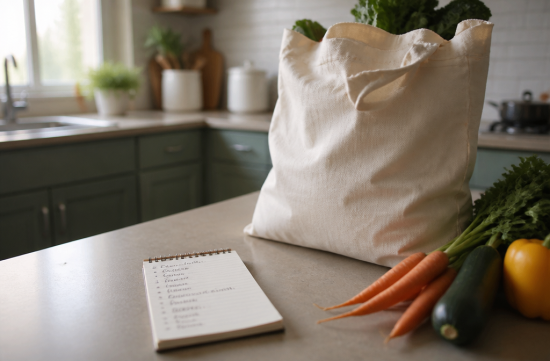
These days, before I go grocery shopping, I open my phone's notes app to check the fridge and pantry first, then decide on three or four meals I will actually prepare this week before writing my list. By fixing the order to checking the fridge, deciding on meals, and then writing the list, I've reduced the time spent in the store and the number of surprises at the checkout.
Dividing the list by category is also quite helpful. By organizing it into sections like vegetables, proteins, and dairy, I reduce the chances of passing by items I don't need while wandering around the store. Working in IT, I feel that once you establish a system, the response time improves significantly; similarly, once you set a structure for grocery shopping, the results can be noticeably different.
After maintaining this list habit for about three months, I looked at my credit card statement again and noticed a significant decrease in combined dining out and delivery expenses. This wasn't due to improved cooking skills, but rather a reduction in waste caused by unplanned shopping and a decrease in the number of times I ended up ordering out due to lack of ingredients.
Talking with neighbors at the local grocery store, I've heard similar stories. Many have found that changing their list habits was more effective in reducing dining out costs than taking cooking classes. This feeling seems to be especially strong among dual-income households or those with children.
In conclusion, if you want to reduce dining out expenses, I recommend grabbing a grocery list before learning new recipes. A small habit can significantly change your monthly credit card statement.
 SunrayMaker
 RememberLife
 MagicStone71






 hot chocolate |

 Chichiki Chicago Train |

 Noodle Noodle |

 Twist Kim |

 U.S. Weather Bureau News |

 Experiences Living in America |

 Until the Day It Gets Better |

 Roman Pan |


 sunnyvale |
 Podongi Dad Blog |
 nexium |
 Washington Monument |
 dynamic |
 Key spots |
 berrypup |
 Yo Lock Me Up |
 Oh my Julia |
 bibigoo |
 silents |
 Team Korea Psychoanalysis Research |
 North Dakota Ragdoll Cat Owner |
 El Dorado |
 Cap Com |
 Trot King News |
 Blondee |
 some fame |
 rapidfire |
 walnutbo |