

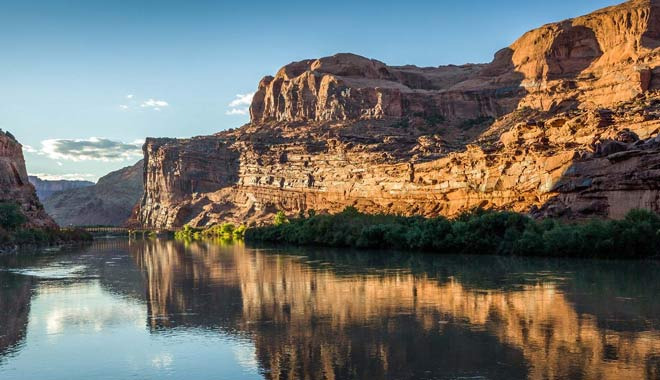
Have you heard of the Colorado River?
However, most people live without knowing much detailed information about it.
Let's find out how the Colorado River shaped the American West and how many cities and lives it has supported.
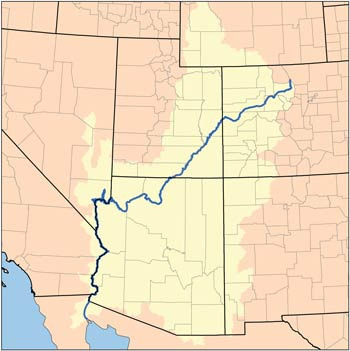
First, the Colorado River is a massive waterway that runs through the southwestern United States and northern Mexico, with a total length of about 2,330 km, making it the sixth longest river in the U.S. When you imagine the long stretch of water cutting through cliffs at times and bringing life in the middle of the desert at other times, it feels like a history in itself.
Its source is the northern Rocky Mountains of Colorado. As melted snow gathers and begins to flow, it passes through Utah, Arizona, and Nevada, eventually reaching Baja California and Sonora in Mexico before flowing into the Gulf of California.
Just looking at the map, the route seems long and dramatic. It carves through barren canyons, passes between deserts and cities, and is responsible for the drinking water, agriculture, and energy for millions. The Grand Canyon, as we know it, is actually a natural sculpture created by the Colorado River carving through rocks over millions of years.
The overwhelming moment when you first face that place, the wind, the silence, and the endless cliffs, with the Colorado River flowing at the bottom, is astonishing just by the fact that it is the protagonist of that history.
And another landmark that cannot be overlooked is the Hoover Dam.
The reason Las Vegas could become the sparkling city it is today is ultimately thanks to the dam created by blocking the Colorado River. Lake Mead, formed by the dam's construction, is an artificial lake but serves as a water reservoir for the western United States and remains a key source of power and water supply today. While people may only remember the flashy neon signs, it is strangely thrilling to realize that the water of this river and the electricity from the dam flow behind them.
However, it is not all praise. News of declining water levels due to increased usage and drought is heard every year. There are times when the river's end does not reach the sea as it used to, and water distribution issues remain a concern for several states.
Still, when you think about it, the fact that a city thrives and agriculture is sustained in the middle of the desert is a miraculous thing that the Colorado River has provided, isn't it?
As a traveler, facing this river brings another feeling. The road running over the red soil of the Utah canyon, the sudden appearance of water in the seemingly abandoned desert landscape. In the moment when the waves sparkle and flow slowly, it feels profoundly that this river is both a lifeline for millions and nature itself.
It also brings back memories of nights spent camping by the river, watching the stars while eating instant noodles, and moments of kayaking, letting my body flow with the current. A presence that is massive yet gentle, deep yet open.
Perhaps the Colorado River can be said to be 'the waterway that made the West what it is.' It nurtures cities in the desert, carves canyons, connects people's lives, and continues to flow without rest, carrying on history.
Next time on a road trip, I want to slowly travel down this river again. Because the water we see now is infused with millions of years of geological layers, time, and human desires. The feeling of being small in front of nature is something the Colorado River always leaves me with.




 Your Curiosity Resolved |
 LIZ Legal Information Blog |
 coloradoman |
 Jean Claude Bundang Blog |
  DREAM BIG |
  frostbite |
  330 Forever My Love |
  El Dorado |
  dralix58 |
  Gorama Round |
  Skydiving |
  dreamport |
  Yellow Snowman |
  Toaster Pizza Magic Show |
  velvetnom |
  Anytime Journey |
  Mrs. Duluth |
  jaxter |
  Atlanta Mama |
  Baguette Blog |
  Tan Sol |
  US Embassy |
  Korean Mom |
  My NYC |