
When looking at homes in Irvine, there's a question that often comes up: "Does this home have Mello-Roos? If so, when does it end?" However, it's surprisingly rare to find someone who can answer this question accurately right away.
To put it simply, the end date varies not by home but by the special tax district (CFD) to which the home belongs. Therefore, it's easy to make mistakes if you judge solely based on the neighborhood name or listing description.
Mello-Roos is a special tax created under the California Mello-Roos Community Facilities Act established in 1982. It is a structure where homeowners in newly developed areas share the costs of infrastructure such as schools, roads, and parks.
Irvine has grown as a master-planned city, so this structure is particularly common. Even within Irvine, older villages and new developments like Great Park and Portola Springs have completely different situations.
First, it's important to know that there are two types of CFD special taxes. The facility type, which issues bonds to build facilities, has a legally defined end date.
On the other hand, the service type special tax, which covers maintenance or service costs, can be charged as long as the service continues. This means there may not be a specific end date.
If you mistakenly think, "Once the bonds end, everything will disappear," you could run into trouble. It's common for a home to have both facility and service types attached.
So how do you actually check? I recommend a three-step process.
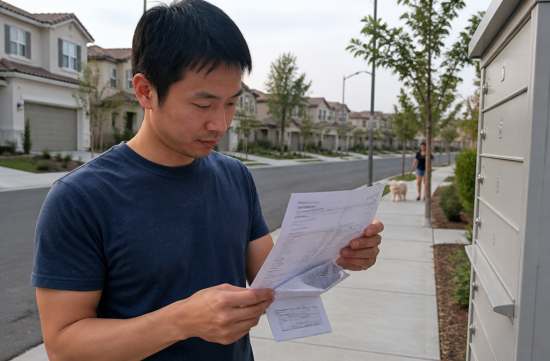
The first step is to look at the property tax bill. You can check the property tax bill for the home by entering the address or APN (Assessor's Parcel Number) on the Orange County Treasurer-Tax Collector's website.
In the Special Assessment Charges section of the bill, you will see the CFD names and amounts listed line by line. Start by identifying how many districts the home falls under.
Next to each item, you'll find the phone number of the agency that issued the debt. The county also advises contacting this number for detailed inquiries.
The second step is to ask that agency directly. In Irvine, this is often the city hall or the Irvine Unified School District (IUSD).
You should ask three specific questions.
Is this special tax a facility type or a service type? When is the final maturity date of the bonds? Is the maximum tax rate structured to increase annually?
The third step is to verify the documents. Each CFD has a document called the Rate and Method of Apportionment, abbreviated as RMA, which outlines the tax rate and assessment method.
The RMA specifies the maximum special tax and assessment period. Many times, you can find CFD-related documents on the city or school district's website by searching for their names.
For example, IUSD publicly shares the annual financial status report for CFD 09-1 on its website. You can also see the remaining principal amount of the bonds in such reports.
The California Debt and Investment Advisory Commission (CDIAC) under the state treasurer's office also compiles and publishes annual reports on CFD bonds. Any agency that issued CFD bonds after January 1, 1993, is required to provide these reports.
For the Great Park area, you need to pay a bit more attention. According to city documents, CFD 2013-3 is a district created in 2013 by the city and the developer, which contains several improvement areas.
Since the bond issuance times differ for each improvement area, the amounts and durations can vary even between developments just across the street from each other. New improvement area bonds were issued as recently as 2025, so this is still an ongoing situation.
There are also tables circulating in online communities that summarize the end years by village. While they can be a reference, I do not recommend relying solely on this information when making an offer, as it is compiled by individuals.
There are also opportunities to verify during the sales process. California Civil Code Section 1102.6b states that sellers must make a good faith effort to provide buyers with a Notice of Special Tax from each assessment agency.
This notice and the preliminary title report from the title company will also contain CFD information. If you receive it early in escrow, be sure to review it right away.
Honestly, many people just sign these documents and move on. It's a bit disappointing since this is money that continues to appear on the bill every year.
And one more thing: just because the remaining period is short doesn't mean it's a good house. Homes near the end of Mello-Roos often have their prices somewhat reflected in the market.
Special taxes also factor into mortgage assessments. When calculating the loan limit, you need to add the CFD amount to the basic property tax to get the actual figure.
If it were me, I would pull the district list from the bill before making an offer, confirm with the issuing agency whether it's a facility type and check the maturity date, and then cross-reference with the notice during escrow. This order should help avoid major mistakes.
The conditions vary significantly by district and are updated annually, so be sure to double-check with the relevant agency, agent, or escrow officer before making a final decision.
 CornCafe
 NoPayBeauty








 Something is popping in the situation |

 lumix88 |

 quiet river |

 Doori Ark |

 My Town My Way Blog |

 U.S. Weather Bureau News |

 Forever Tiger Teacher |

 Piano Teacher Blog |

 All About Cars |

 humpday sonata |
 Shining Our Own World |
 Raymond K. |
 gravity |
 714 Success Era Real Estate |
 Investment Beginner Company Information Encyclopedia |
 musicque |
 The Gelaton |
 ovelion |
 Chicagonian |
 Freedom Yea |
 AZ Road Master |
 glenix39 |
 orvella |
 vella |
 comets |
 Banana |
 Yes Dorian |
 Minnesota Sonata N |
 zentar |