
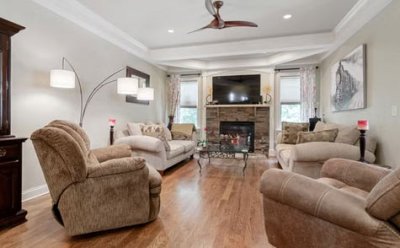
A couple who has lived in the same single-family home in Hilo for nearly 40 years has recently started seriously looking into moving to a condo. The reason was the yard. Due to Hilo's rainy climate, grass and trees grow continuously, and they found it increasingly difficult to manage. They understood that moving to a condo would eliminate this burden, but they were curious about what other costs might increase. They also wanted to spend the hours they used to spend mowing the lawn on something else.
To put it simply, maintaining a single-family home incurs many unexpected costs, such as landscaping, roofing, and termite control. In contrast, most of these costs are included in the monthly maintenance fees for a condo, making expenses more predictable. However, it's important to note that the maintenance fee itself becomes a fixed monthly expense.
Let's break down the electricity bill first. Hilo is served by HELCO (Hawaii Electric Light Company), and the rate is 45.8 cents per kilowatt-hour, plus a basic monthly fee of $14.36. Compared to the statewide average of 52 cents per kilowatt-hour, Hilo's rates are relatively lower, but they are still more than double the rates on the mainland. However, Hilo's mild temperatures throughout the year mean that there is less need to run heating and cooling systems, which helps lower the actual bill. In simple terms, while the rates are high, the shorter usage time makes direct comparisons with hotter areas on the mainland difficult.
The difference in home prices is more significant than expected. The median price for a single-family home in Hilo is $571,000, while a condo is $170,000. This means that condos are selling for less than a third of the price of single-family homes. Considering that this price difference can be redirected towards retirement living expenses or medical costs, moving to a condo is not just a matter of convenience but also makes financial sense. In simple terms, by giving up the yard, they could use that amount of money for living expenses after retirement.
To summarize the property tax system, Hawaii County, which governs the Big Island, operates a homeowner exemption program that applies different reductions based on age for owner-occupied homes. For those aged 60 to 69, $80,000 is deducted from the assessed value, and for those 70 and older, $100,000 is deducted. It's important to note that the age is calculated based on December 31 of the year prior to the tax year, so this helps avoid confusion about when to apply. The property tax rate for owner-occupied homes in Hawaii County is approximately 0.615%, which is relatively low compared to the national average. This exemption is not automatically applied; homeowners must apply each year and submit documentation proving that their Hilo address is their primary residence. It's also good to know that this exemption can be reapplied after moving to a condo, so moving does not mean losing the benefits. As one ages, paperwork can feel cumbersome, but it's best not to overlook this aspect.
Ultimately, when considering the burden of yard maintenance, electricity costs, and the reduced property taxes from the exemption, condos can present a more favorable picture in terms of both purchase price and maintenance costs. However, keep in mind that condo HOA fees are separate, so be sure to check the maintenance fee details for each listing. To put it simply, comparing the yard maintenance costs and large repair expenses of a single-family home alongside the HOA fees of a condo is the most reliable way to make a decision. While it may be hard to leave a beloved yard, moving before physical limitations set in can ultimately be a more comfortable choice. This is not investment or legal advice, and it is recommended to consult with professionals before making any contracts.
 MagicCore79
 mintforestexplorer1971






 Sugar Cream Door Bulletproof Noodles |
 urbanmint |
 |
| 
 Premium Gas Camp |
 CA Real Estate |
 Hawaii Maui Kahului |
 HAWAII Korean Church News |

 Hilo Cat |
 Living with a Consistent Heart |
  horse |
  moodansa 77 |
  zymit |
  maplefox |
  Fun Flex Life |
  hopeful |
  Reeno |
  Coastal city |
  meonetoo |
  Winter bear |
  Peach Jam Eating Laughter |
  Nando Raldo |
  American Man in a Mask |
  wendra |
  silver |
  bada2002 |
  horizon |
  Nanana Nanana Nanana |
  victoria jung |
  Kkikki Ppappa Shout Out Loud |