
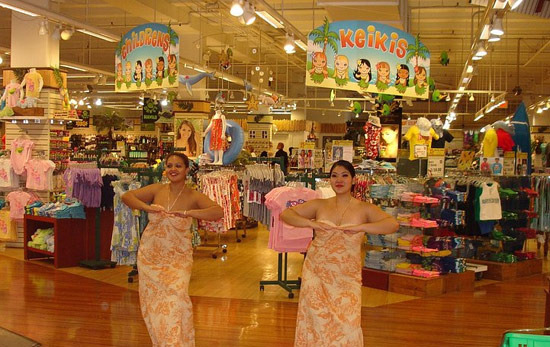
Walking through downtown Hilo, there are quite a few souvenir shops. But do these shops actually make a profit?
From my perspective, I find the profitability of such businesses intriguing, yet I feel skeptical when I think about running one myself.
The profit structure of a souvenir shop is simple. They sell when there are many tourists and endure when there are not.
The problem is that the endurance period can be long. Hilo has a lower tourist density compared to Maui or Oahu, and the difference in visitors between peak and off-peak seasons is significant.
As of 2025, the total number of visitors to Hawaii is 9,642,991, but this number is not evenly distributed across Hilo. During the off-peak season, tourist foot traffic drops noticeably.
The costs are also considerable. Hawaii's cost of living index is 193, which is double the national average.
Rent for commercial spaces, minimum wage for employees, and inventory costs are all high.
Considering that the average annual salary for hotel employees in Hawaii is $29,430 (with an hourly wage of $14), just hiring one employee can create a significant fixed cost burden.
While cruise tourists do stop in Hilo, they typically have their accommodations and meals taken care of on board, making it difficult to expect additional spending beyond souvenirs.
However, there are successful shops. The common factor is their focus on items that can only be found in Hilo.
Local artist works, coffee from the Big Island, and handmade Hawaiian crafts serve as differentiating points rather than mass-produced souvenirs.
The solution lies not in competing with large chain souvenir shops but in offering products that can only be made locally.
The conclusion is this: running a souvenir shop in Hilo in a conventional manner makes it challenging to turn a profit.
However, if you can create products that embody local identity and develop a solid off-peak strategy, there is potential. The key is to break away from a structure that relies solely on the tourist season.
 DakotaThanks
 AnovaSam




 moname |
 mapsina |
 Mr. Largo |
 Victory 1988 |
 Infinite Style |
  Hilo Cat |

 Puddle Puddle |
 Hawaii Maui Kahului |
  My Beloved Hometown Hwagae Market |
  yorvik12 |
  Tart Tart |
  Min's blog |
  Tora Tora |
  pixel77 |
  cuteasducks |
  Lemon Kim |
  What can make money? |
  An ant castle |
  Haha and Bomi Blog |
  glenview 89 |
  Valley Hong |
  novapixel |
  Idaho's Sumi's House |
  Mr. Midwest America |
  wildfire |
  legalway |
  postcard |
  cheesecake07 |