

A family preparing to move to Philadelphia was surprised during a private school admission consultation to find that there was already a long waiting list for their desired grade. This is not uncommon at popular private schools. Therefore, comparing two or more schools can be a practical approach.
Two frequently mentioned schools near Philadelphia are William Penn Charter School and The Episcopal Academy. Penn Charter is located on School House Lane in Philadelphia, with tuition ranging from $23,500 for Pre-K to $38,650 for upper grades. The average GPA is 3.65, the graduation rate is 100 percent, and the average SAT score is 1330, with an ACT score of 29. In the last five years, the matriculation list has included schools like Amherst, Brown, Columbia, Cornell, Dartmouth, Duke, Harvard, Stanford, and Yale. The Episcopal Academy is located in Newtown Square, with tuition around $46,300 per year, and the average SAT score is reported to be between 1350 and 1390. Established in 1785, it has a long history and is known for its recently developed expansive campus of 123 acres. Graduates have consistently gone on to attend Princeton, MIT, Harvard, and Stanford.
When it comes to budget, there are distinctions between the two schools. Penn Charter is situated in downtown Philadelphia, offering good urban accessibility, while The Episcopal Academy is located in the suburban area of Newtown Square, boasting a large campus and a quiet environment. It is worth noting that about 40 percent of Penn Charter students receive financial aid. For families concerned about waiting lists, applying to both schools at least a year in advance can provide peace of mind.
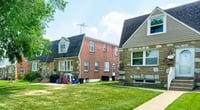
Looking at housing costs, according to RentCafe data, the average rent in Philadelphia as of August 2026 is $2,036, which is a 1.99 percent increase from the previous year. For a two-bedroom, the average is $2,350. However, this is an overall average for the city, so neighborhoods close to the schools may be higher or lower, so it's best to check individual listings for accuracy. Some families choose to rent first while waiting for the results of the school waiting lists, then transition to buying a home once admission is confirmed. This way, they can avoid the situation of hastily choosing a home that may not be convenient for commuting.
In Pennsylvania, property tax rates vary by county, so families moving from out of state should not judge based solely on their previous location. School district boundaries change frequently, so it's advisable to verify the assigned school for a specific address before purchasing. This article is not investment or legal advice, and it is recommended to consult with professionals before making any agreements.
Ultimately, it comes down to prioritizing what matters most within the same budget. If urban accessibility and commuting convenience are important, the area around Penn Charter may be more suitable, while if a large campus and quiet residential environment are preferred, the vicinity of The Episcopal Academy may be a better fit. Fortunately, both schools are within the Philadelphia metropolitan area, so whichever is chosen, urban access is not significantly inconvenient. Families feeling pressured by waiting lists may find it helpful to take their time and visit both schools for consultations. Observing the school atmosphere and commuting routes before finalizing a housing contract can help reduce future regrets. Both schools have a long history and a consistent record of college admissions, making it unsurprising that their waiting lists are long. However, it's important to emphasize that the difference between families who prepare in advance and those who do not ultimately lies in the timing of their applications.
 Walker1976
 Diadromes







 garlic bread |
 Sugar Cream Door Bulletproof Noodles |
 urbanmint |
 |
| 
 Premium Gas Camp |
 American General Knowledge Expert |
 U.S. Weather Bureau News |
 Pennsylvania Information News |
 DelphiaMo |
 Information on Apartments Across the United States |
  Round and Round Children's Song Kingdom |
  Mia Flori |
  nova nova |
  healthy |
  leaves |
  sparkling |
  maryland park |
  persiste |
  conte |
  blueman |
  Going Once |
  Eldorado 88 |
  cherrydino |
  middlekick |
  Moscow Kim |
  nivex85 |
  quanta7 |
  Tomato Health Club blog |
  horse |