

Most people who come to me for retirement planning have more than one concern. They weigh when to start receiving Social Security, how to withdraw from their 401(k), and what to do with their home all at once. Among these, a common question from those who have lived in Philadelphia for a long time is about reverse mortgages. This is often due to the rise in home values while their available cash remains limited.
A reverse mortgage is a product that allows homeowners aged 62 and older to borrow against the equity in their home. Unlike a traditional mortgage, where payments are made monthly, funds are received from the lender in a lump sum, monthly payments, or as a line of credit. The principal and interest are repaid when the home is sold, the owner passes away, or the home is no longer used as the primary residence. The most common product is the HECM, which is the only type of reverse mortgage insured by the federal government.
In the broader context of retirement planning, reverse mortgages are often compared with two other funding sources. One is a home equity line of credit (HELOC), which requires monthly payments, and the other is downsizing, which involves selling the home to access cash. While a HELOC may have lower interest rates, the monthly repayment obligation remains. Downsizing allows for full cash access to equity but requires leaving a familiar neighborhood. A reverse mortgage can be seen as a middle ground, allowing homeowners to continue living in their homes without repayment obligations, but it comes with costs and conditions that need to be considered.
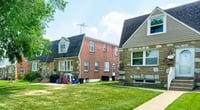
Looking at the Philadelphia housing market, the typical home value based on Zillow is $221,032, which has decreased by 2.2% over the past year, while the median sale price according to Redfin is around $275,000. There are significant regional variations within the city, so the actual usable equity can differ by address. The effective property tax rate, combining city and school district rates, is approximately 1.3998% (as of 2025), and due to a reassessment in 2025, the average homeowner's tax will increase by about $330 annually. Even with a reverse mortgage, property taxes and insurance premiums must still be paid, so a financial capability assessment to determine if one can manage these costs is necessary.
In terms of costs, there are origination fees, initial mortgage insurance premiums of about 2%, and annual costs around 0.5%, along with closing costs, making the initial burden greater than that of a traditional mortgage. The advantages include the ability to create cash flow for living or medical expenses without monthly repayment obligations, and since it is a non-recourse loan, heirs are not required to pay any excess if the home value falls below the loan balance. However, over time, the homeowner's equity may decrease, potentially leaving less for heirs, and failure to continue paying taxes or insurance could lead to default, which is important to keep in mind.
One more point to mention is that interest accumulates on the loan balance each month. Since there are no payments, the balance grows over time, reducing the remaining equity. After the owner passes away, heirs can choose to sell the home to settle the loan, buy it at the lower of 95% of the appraised value or the loan balance, or transfer the home. Decisions must be made within a specified timeframe, so it is advisable to discuss this with your children in advance.
In Pennsylvania, the population aged 65 and older makes up 20.4% of the total (as of 2024), which is higher than the national average, and this number continues to grow. Amid this trend, interest in reverse mortgages is increasing, but it is also important to remember that scams targeting the elderly are being reported. HECM applications require mandatory counseling from a HUD-approved agency, and this time should be used to calmly assess whether it aligns well with your overall retirement plan. It is also recommended to discuss thoroughly with your children before making a decision. This article does not constitute investment or legal advice, and it is advisable to consult with a professional before entering into any contracts.
 AliAluAlo
 ArkansasGo







 urbanmint |
 |
| 
 Premium Gas Camp |
 CA Real Estate |
 cheesepup |
 American General Knowledge Expert |
 DelphiaMo |
 Northeastern |
 American Grape Shine Muscat |
 Information on All Regions of the United States |
  Mau Nui |
  novapixel |
  fixed |
  AL ALASKA |
  amola |
  History Repeats Itself |
  Doori Ark |
  Rainbow Bridge to the Sky |
  Sunny Fullerton |
  U.S. Weather Bureau News |
  GOGO SING |
  Gold Bar |
  Banana Style Life |
  Tesla X |
  Old English |
  forestcloud |
  forever young |
  Arlington house |
  liquid asset |