

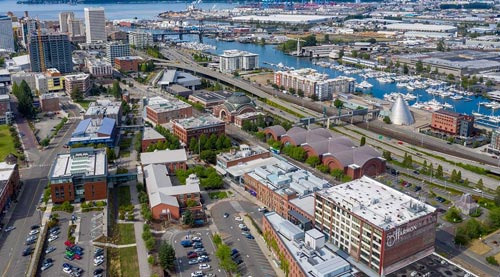
If you need to commute to Seattle but find rent burdensome, consider Lynnwood, Washington as an option.
According to estimated living cost indices, Lynnwood is around 120. While this is 20% higher than the national average, it is significantly lower compared to Seattle (148) or Bellevue (158) within the same metropolitan area. This gap is why Lynnwood is often seen as a practical alternative within the Seattle commuting zone.
The biggest difference lies in housing costs. Rent for a 2-bedroom apartment in Lynnwood is definitely lower than similar apartments in Seattle or Bellevue. Although the monthly difference may seem small, it adds up to a substantial amount over a year.
Transportation is currently one of Lynnwood's fastest-growing advantages. With the extension of the Lynnwood Link Light Rail set to open in 2024, public transit will take about 35 to 45 minutes to reach Westlake Station in downtown Seattle. The Sound Transit monthly pass varies in price depending on the distance traveled.
Commuting by car means navigating congested sections of I-5 and incurring separate downtown parking fees. Therefore, switching to light rail often results in reduced actual expenses. It's now common to see couples sharing an umbrella while waiting for the train on rainy mornings.
Grocery prices in Washington state are generally about 10-15% higher than the national average. However, there are plenty of Korean and Asian markets in the Snohomish County area, making it easy to find Korean ingredients. The Korean community near Seattle is also well-established in Lynnwood, Everett to the north, and Redmond and Bellevue to the south.
Utilities are a pleasant surprise. Thanks to hydroelectric power, electricity rates in Washington are lower than the national average, and the mild weather in the Pacific Northwest keeps cooling costs down. Winters are also milder compared to eastern cities at the same latitude, resulting in relatively lower heating expenses.
However, frequent rain throughout the year can increase spending on clothing and health-related items. Taxes should also be considered. Washington has no state income tax, but the sales tax in Snohomish County, where Lynnwood is located, is 10.4%, which is relatively high nationally, reducing some of the benefits for families with high consumption.
If you're seriously considering moving, it's best to calculate in order. First, list your current rent alongside the market rates for similar properties in Lynnwood. Next, decide on your commuting method and compare monthly costs for vehicle maintenance, parking, and transit passes.
Be sure to multiply the monthly difference by 12 to see the annual total. Don't just compare rent; include total expenses like electricity and water bills to avoid skewed judgments. It's also helpful to create a separate section for one-time moving costs and initial deposits to calculate how long it will take to recover those expenses.
Planning how to split shopping between large supermarkets and Korean markets in advance can help reduce unnecessary spending. It's also wise to stagger large purchases that incur sales tax to avoid overwhelming expenses.
Testing your commuting route during peak hours is the most accurate way to gauge travel time. Checking how to get from home to the station and transfer routes will reveal time costs that numbers alone may not show.
Since it rains frequently in the area, if you find yourself walking to the station often, it's better to budget for waterproof outerwear and a sturdy umbrella from the start. While these may seem like small items, they are used daily, and trying to save on them can lead to having to buy them twice.
It's also worth keeping an eye on how infrastructure in Snohomish County evolves in the future. For families commuting to Seattle daily, I would prioritize the distance to the light rail station when choosing a home.
Note that the indices, rates, and taxes mentioned here are estimates and may change, so be sure to check the latest information and official sites before making any decisions.
 NightWriter
 ChubWhaler





 crystalx |

 compass |

 forward |

 harvest |









 Raccoon Ramen Night |
 ovelion |
 Something is popping in the situation |

 lumix88 |

 quiet river |
 Top |
 DOCTOR MED |
 Mia Flori |
 zorvik79 |
 There Are Such Things in the World |
 liquid asset |
 Banana |
 nova nova |
 Cahty Chung |
 NFL Forever |
 denvik37 |
 Choco Choco Star |
 Entering Art Directly |
 Mini Mee |
 Exciting chichichi |
 My Circle |
 Fun Flex Life |
 dermoon |
 Starbucks Reserve Roastery Closure |