

If you were dropped from SCRIE last year due to income, you should check again this time. The household income limit has increased from $50,000 to $75,000 per year.
SCRIE is a New York City program that freezes rent for tenants over 62 years old. It is operated by the Department of Finance (DOF) under the name Rent Freeze Program.
This article is based on the FAQ from the Department of Finance updated on November 19 and the application form from November 10. Many old notices still list the limit as $50,000, so be sure to check the date.
First, let's discuss eligibility. You must be over 62 years old, your name must be on the lease, and you must actually live in the apartment.
Your income must be below $75,000 when combined with all family members living together. If you live with adult children, their income counts as well.
Additionally, your rent must exceed one-third of your monthly household income. The calculation is simple: divide your annual income by 36.
If your annual income is $30,000, your rent must exceed $833.33; if it's $50,000, it must exceed $1,388.89; and if it's $75,000, it must exceed $2,083.33. This is a table provided directly by the Department of Finance.
The most common condition in Flushing is actually the type of apartment. It must be a rent-stabilized or rent-controlled apartment.
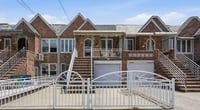
Single-family, two-family, or three-family homes do not qualify. If you are renting a floor in a residential building, that means you are out of luck, which is disappointing for me as well.
NYCHA apartments, homes using Section 8 vouchers, subleases, and non-regulated co-ops are also excluded.
Mitchell-Lama or HDFC buildings have different procedures. Even if you qualify for SCRIE, you need to contact the Housing Preservation and Development (HPD) at 212-863-8494 instead of the Department of Finance.
If you are unsure whether your home is a regulated apartment, do not guess. It is best to request your rent history from the state DHCR.
Fortunately, the office is nearby. It is located at Jamaica Gertz Plaza, 92-31 Union Hall Street, and the phone number is 833-499-0343.
Calculating income can be more favorable than you think. New applicants who file taxes use their federal adjusted gross income (AGI) as a basis, excluding taxable IRA withdrawals.
Those who do not file taxes will combine their income using the Department of Finance's calculation sheet. SSI, public assistance, gifts, and inheritances are not included in this calculation.
So, how much will your rent be frozen at? It will be the greater of your previous lease rent or one-third of your monthly income.
Using the Department of Finance's example, if your current rent is $1,000, your previous rent was $800, and one-third of your income is $700, your rent will be frozen at $800.
It is important to note that it is the previous rent that serves as the basis, not the current rent. Therefore, when applying for the first time, you must submit both your current and previous leases.
You do not need to worry about the landlord's reaction. The difference will be deducted from the landlord's property taxes by the city. Neither the tenant nor the landlord loses out, so I think this is quite a practical design.
This raises the question: Isn't rent frozen this year anyway?
That's correct. For stabilized apartment leases starting between October 1, 2026, and September 30, 2027, the increase rate is 0% for both one-year and two-year leases. This is per Order 58 from the Rent Guidelines Board.
However, that 0% applies only to this cycle. The previous cycle had increases of 3% for one year and 4.5% for two years, and we do not yet know what the next cycle will be. I believe it is better to apply now while the rent is frozen.
Building major capital improvements (MCI) also need to be considered separately. If an MCI order is issued within 90 days of your application date, it will prevent any increase; if it is more than 90 days, you will be responsible for the costs.
Applications can be submitted online at nyc.gov/nyctap, which is the fastest method. You can apply at any time during the lease period, so there is no reason to wait until renewal.
You only need to gather four documents to get started: an ID showing your date of birth, recent tax returns and 1099s for all household members, a signed current lease, and a previous lease. Make sure to submit copies, not originals.
If you are concerned about the language barrier, you can list a child, friend, or organization in the tenant representative section. A copy of the notice will also go to them. However, they cannot sign on your behalf.
Those who applied after July 1, 2026, and were denied due to exceeding the income limit, or those whose renewal was denied due to income after expiring on June 30, will be reviewed again by the Department of Finance under the new limits. Still, I would recommend calling 311 to confirm.
After approval, the key is renewal. You must renew every one or two years, and you will receive an application about 60 days before expiration. You must submit your application within six months after expiration.
For reference, the $75,000 limit is stated in current state law to be in effect until June 30, 2028. Whether it will be extended remains to be seen.
Results may vary based on household composition and income, so please confirm with the Department of Finance or a professional for final judgment. For today, I would suggest focusing on one task: finding your previous lease in the drawer.
 espressotop





 Vasila's Newlywed Blog |

 nova nova |

 mememe |

 Lotus B |









 Raccoon Ramen Night |

 ovelion |

 Something is popping in the situation |

 lumix88 |

 quiet river |
 Cahty Chung |
 NFL Forever |
 denvik37 |
 Choco Choco Star |
 Entering Art Directly |
 Mini Mee |
 Exciting chichichi |
 My Circle |
 Fun Flex Life |
 dermoon |
 Starbucks Reserve Roastery Closure |
 Noodle Noodle |
 Round and Round Children's Song Kingdom |
 Exciting FM Radio |
 vexon87 |
 Helpful Life Stories |
 leaves |
 glenview 89 |
 Wang Ga Nae |