
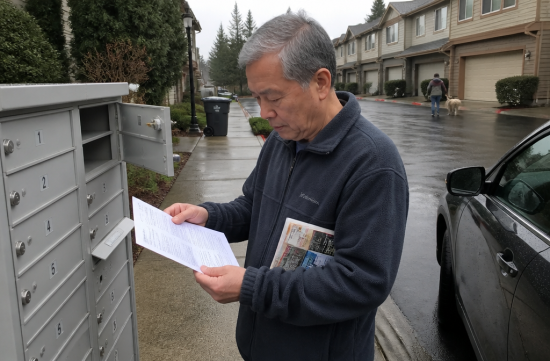
Every year, there are people who come in seeking advice after receiving a fine notice from their HOA. Most cases are similar. They may have put their trash cans out a day late, parked a car in front of their garage for too long, or had a tenant violate the rules.
The initial amounts are not usually large. The problem arises when these issues are ignored, leading to warnings, fines, and late fees piling up. So today, we will outline what to look for in the regulations based on Washington State law.
First, you need to know what laws apply to your community. Developments created after July 1, 2018, follow the Washington Uniform Common Interest Ownership Act, commonly referred to as WUCIOA, RCW 64.90.
Older developments have generally been governed by the Homeowners Association Act, RCW 64.38. However, starting January 1, 2028, all developments will transition to the WUCIOA system as per SB 5796 passed by the state legislature in 2024.
Since it is now late 2026, there is just over a year left until this transition. If you live in an older community, it is likely that the board will revise the regulations. If you receive a notice of amendments, do not overlook it.
The legal framework regarding fines is surprisingly simple. RCW 64.90.405 states that the association can impose reasonable fines after providing notice and an opportunity for explanation.
There is one additional condition. Fines must adhere to a fine schedule that the board has adopted and communicated to the owners. The previous law, RCW 64.38.020, has a similar intent.
So when you receive a bundle of regulations, first check if there is a separate fine schedule. It is often attached to the Rules and Regulations or board resolutions rather than the main CC&R text.
There are three things to look for in the fine schedule. First, does it only issue a warning for the first violation? Second, how much do the fines increase? And third, is there a daily accumulation structure?
The daily accumulation type is the most concerning. Even if the daily amount seems small, it adds up significantly over a month. The term "fine bomb" usually comes from this situation.
Washington State law does not set a cap on the amount of fines. Instead, there is a standard that they must be reasonable, and the board must not act arbitrarily in enforcement.
This arbitrariness clause can be quite useful in practice. If your neighbor faced no consequences for the same issue while you received a fine, make sure to document it. Photos and dates will suffice.
Next, check the provisions regarding the explanation process. The regulations should specify whether you need to submit a written objection within a few days of receiving the notice and if you can request a board hearing.
If you miss this deadline, it becomes difficult to contest the fine. Many cases I have seen involved individuals who mistakenly discarded the notice, thinking it was just an English advertisement. Always open your HOA mail.
If you are a landlord, be sure to check the tenant provisions. WUCIOA allows the association to fine both the tenant and the landlord if the tenant violates the regulations.
However, this only applies if the violation is not corrected within 10 days after the association has notified you. It is advisable to include a compliance clause in the lease agreement and promptly forward any notices to the tenant.
Many people worry about the possibility of losing their homes. To put it simply, fines alone cannot initiate foreclosure proceedings.
RCW 64.90.485 allows foreclosure lawsuits only when unpaid assessments exceed three months' worth and $2,000. This calculation excludes fines, late fees, interest, and attorney fees.
That said, it is not a reason to feel completely secure. If you refuse to pay fines and stop paying assessments, the situation changes drastically. The principle is to pay assessments on time, even if you contest the fines.
The procedures for overdue assessments are also outlined in the law. The association must send the first late notice by mail within 30 days of the delinquency, and for the next 15 days, no further collection actions can be taken.
During this 15-day period, the fees that can be charged are also limited. The management fee can be up to $10, and late fees can only be charged once, capped at either $50 or 5% of the overdue amount, whichever is lower.
After this period, collection costs and reasonable attorney fees can be charged. This is where a small delinquency can turn into a large bill.
Understanding this structure can also be helpful when purchasing a home. The resale certificate received before closing will include any unpaid amounts and ongoing disputes. Be sure to read it carefully and check that no fines from the previous owner carry over.
In summary, first check the applicable laws and the accumulation method of the fine schedule. Mark the objection deadlines on your calendar.
And do not stop paying assessments. By following this principle, you can avoid most fine bombs.
Each community has different wording in their regulations, and revisions will continue during the transition before 2028. If the amounts are significant or foreclosure discussions arise, it is best to consult with an attorney experienced in HOA disputes based on your individual situation.
In my experience, those who have read the regulations thoroughly tend to fare better than those who have argued with the HOA. I encourage you to pull out your bundle of regulations from the drawer this weekend.
 GoingOnce
 SunnyBridge92








 Choco Choco Star |

 gentle |
 neapolis |

 moo moo |

 ultron78 |

 crystalx |
 mini hometown |

 Good Neighborhood, Wealthy District Information |
 harvest |

 ssome |
 skykong |
 Shining Our Own World |
 gardener 007 |
 golfmaster |
 Nanana Nanana Nanana |
 Who's watching? |
 endone |
 RockStar |
 Casa Mia |
 You Only Live Once |
 Hardworking CPA |
 Joyce 77 |
 Runner Kim |
 My Town My Way Blog |
 My Miami Stories |
 Entip |
 Tony Park |
 DJ DC BLOG |